
I still remember my first date in China. I reached for my wallet when the check came. The look of pure confusion on my companion’s face told me everything. I had crossed a line I didn’t even know was there.
That moment taught me a powerful lesson. In Chinese culture, money is deeply tied to dignity and social standing. Paying a bill isn’t just a financial act. It’s an act of gaining “Face” or Mianzi.
This concept is central to understanding social interactions. It’s especially true in dating. The simple question of who handles the bill carries immense weight.
In many Eastern societies, including China, Taiwan, and Hong Kong, men typically pay. This gesture is seen as an expression of love and care. There’s even advice that suggests someone should “RUN” if a man refuses to pay most of the time.
This contrasts sharply with common Western perspectives. There, splitting the check is normal. It’s often viewed as a sign of mutual respect and independence.
Navigating this difference requires real cultural awareness. I’ve asked myself all the questions. Should I offer? Will I cause offense? What’s the right answer?
This article is my attempt to share what I’ve learned. It’s about more than just a meal tab. It’s about respect, intention, and avoiding awkward misunderstandings.
Understanding the Concept of Mianzi (Face).
I once thought ‘Face’ was just about avoiding embarrassment. In Chinese culture, it’s a core social principle. Mianzi is about maintaining dignity and social standing in every interaction.
Cultural Significance in Chinese Dating.
This concept influences nearly half of all social decisions. Dating is a prime example. How people handle money directly reflects their respect and intentions.
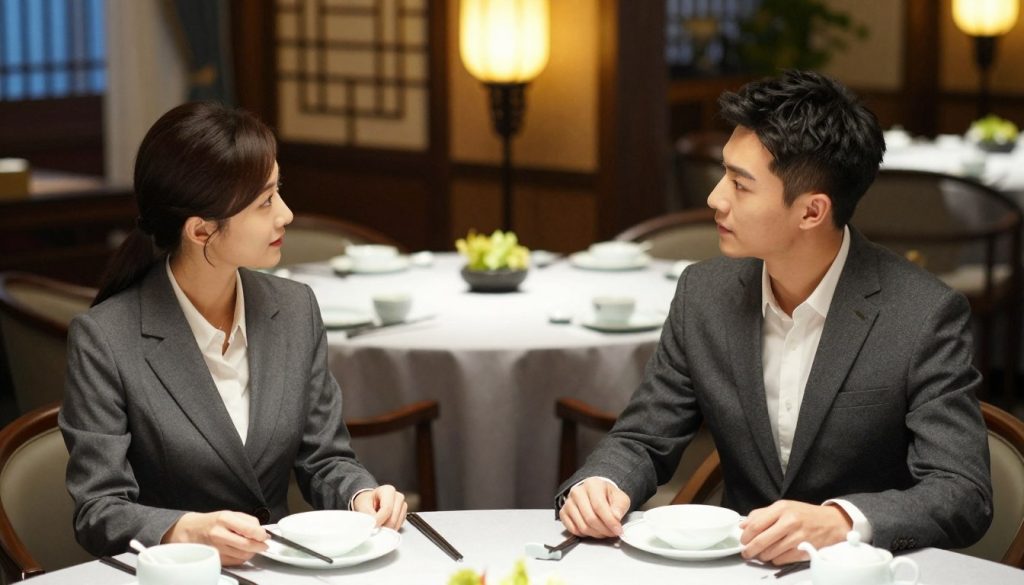
When a man pays, he’s not just covering costs. He’s showing he values the woman and the potential relationship. It’s an act of care and a display of capability.
How Does Mianzi Influence Bill Payment?
The fact is, precise splitting sends a specific signal. It can imply a business transaction, not a love connection. My friends have said it might suggest you think the other person is poor.
This thing about Mianzi makes the bill a powerful symbol. The action speaks louder than the cost.
| Action on a Date | Common Perception in Chinese Culture |
|---|---|
| Paying the full bill | Shows generosity, serious interest, and a desire to provide. |
| Insisting on a 50/50 split | Can be seen as rejecting the gesture, potentially cooling romantic interest. |
| Calculating exact shares | Often viewed as overly transactional, harming the feeling of a genuine connection. |
| Offering to get the next one | Generally positive; shows reciprocity and appreciation for the gesture. |
Understanding this chinese culture context is key. It transforms a simple meal into a meaningful social exchange.
The Golden Rule: The Inviter Pays.
There’s a fundamental principle I discovered that governs payment etiquette on initial encounters. The person who extends the invitation is generally expected to cover the costs. This custom is deeply ingrained.
In traditional Chinese dating, this almost always means the man handles the bill for the first date. It’s a non-negotiable social script for many. I learned this rule quickly through observation.

Signaling Financial Stability and Generosity.
This act isn’t about old-fashioned gender roles. When a guy pays, he’s communicating two vital things. He shows he has financial stability and the generosity to be a supportive partner.
Many women view this as a subtle “Provider Test.” It’s a gauge of his future capability to care for a family. The willingness to invest time and resources signals serious romantic interest.
I’ve seen girls lose interest instantly when a man suggested splitting the check. It’s often read as a lack of commitment. He’s seen as not wanting to invest in the potential relationship.
Understanding this transforms the bill from a transaction into a gesture of respect. It sets the tone for everything that follows.
Why Is Splitting the Bill Signalling a Transactional Relationship?
The most awkward silence I’ve ever experienced happened over a calculator at a restaurant table. I suggested we split the check down to the last cent. My companion’s smile vanished instantly.
That moment taught me a harsh lesson. Calculating exact shares can make a romantic evening feel like a business meeting. It shifts the focus from connection to cost.
This action often sends an unintended message. It might imply you view the other person as unable to afford their share. Worse, it suggests you see the relationship as a transaction, not something built on emotion.
Implications for Romantic Interest.
How you handle the bill communicates your intentions clearly. One person paying the bill shows investment and care. Splitting it suggests you’re keeping things casual or temporary.
I’ve seen this thing damage potential connections. It can harm the other’s dignity, or Mianzi. They might feel you don’t see long-term potential.
Understanding this one simple rule prevents misunderstandings. It helps you avoid sending the wrong signal on a date. The goal is to build a connection, not balance a ledger.
Who pays on a date in China?
Survey data reveals a fascinating gap between expectation and reality in Chinese dating culture. The traditional answer is clear, but modern life adds complexity.
Cultural Expectations and Social Standing.
From my talks with chinese people, the norm is firm. Men are expected to cover the bill. This isn’t just about dinner or food.
It’s a demonstration of love and provider capability. Many female friends told me they never paid, even in long-term relationships. This was normal for both partners.
Modern Challenges vs. Traditional Norms.
However, surveys show a different picture. Women contribute about 28% of costs on average. They expect to pay around 40%.
The fact is, men still shoulder most of the burden. This creates tension, especially since monthly expenses are similar for both genders.
Over 20% of couples argue about money. This shows modern challenges are pressing against traditional norms.
| Aspect | Traditional Expectation | Modern Reality |
|---|---|---|
| Who Pays? | Man covers the full bill. | Women contribute about a quarter. |
| Social Signal | Shows care and capability. | Can feel transactional if split exactly. |
| Financial Pressure | Man as provider. | Both have similar expenses, leading to arguments. |
| Long-term Pattern | Man pays consistently. | More shared costs over time. |
The way money works says a lot about social standing. While tradition dominates, practical realities are slowly shifting the culture.
The Myth and Reality of AA Zhi (Going Dutch).
The term ‘AA Zhi’ sounded so familiar when I first heard it in Mandarin. I assumed it was the direct equivalent of “going Dutch” from my own western culture. The idea seemed universal, split the bill equally.
I quickly learned the difference was profound. This kind of arrangement has a very specific place.
Defining AA Zhi in the Chinese Context.
AA comes from “Algebraic Average.” It means dividing the total cost equally. In the Chinese language, it’s a practical term among friends or colleagues.
For a romantic first date, however, it’s a different story. Suggesting AA Zhi can be a major faux pas. Chinese people often see it as a signal of disinterest.
It turns the evening into a casual transaction, not a romantic pursuit.
Comparing with Western Bill Splitting.
In many Western contexts, splitting the pay bill is standard. It symbolizes mutual respect and financial independence. Both people are capable of handling their share.
In China, the social script flips. I’ve seen girls and guys wrestle to scan their WeChat Pay first. There’s a competitive, almost generous, spirit to covering the cost.
This point highlights a core cultural clash. One action carries two opposite meanings.
| Aspect | AA Zhi (Chinese Context) | Western Bill Splitting |
|---|---|---|
| Common Context | Among friends or business meals. | Common on romantic and casual dates. |
| Cultural Meaning | Can imply a lack of romantic intent or closeness. | Often viewed as a sign of equality and respect. |
| Typical Practice | Often avoided on early romantic dates; competition to pay is common. | Bills are separated easily, sometimes by the server. |
| Perceived Signal | “Let’s keep this transactional.” | “We are independent and equal partners.” |
Understanding this thing is crucial. It explains why the same action, splitting things, can confuse a lot of people across cultures. The context defines everything.
Impact of Cultural Differences on Dating Behavior.
Navigating the dating world across cultures taught me that money talks in different languages. The entire idea of courtship differs between the East and West.
In my experience with western culture, there’s usually a lot of casual dating before commitment. Chinese dating often skips that middle ground. One good date and you’re practically in a relationship.
Contrasts with Western Culture.
I’ve noticed people from different cultures face real problems. A Western guy expecting to split costs with Chinese girls can be seen as rejection.
The fact is, western culture values independence and equality. Splitting bills after the first date is normal. Chinese culture emphasizes family values and traditional roles.
Men providing demonstrates readiness to be a husband and wife partner. This difference reflects deeper values about relationships.
Understanding this language of love helps avoid misunderstandings across the world.
| Aspect | Western Culture | Chinese Culture |
|---|---|---|
| Pace of Commitment | Slow, multiple casual dates. | Fast, often serious after one good date. |
| Financial Independence | Highly valued; splitting costs is common. | Less emphasized; men paying shows care. |
| Family Influence | Individual choice prioritized. | Parents, especially mothers, have significant say. |
| Payment Signal | Equality and respect. | Love, provider capability, and serious intent. |
These contrasts shape how people interact in the dating world. Being aware of them is crucial for cross-cultural connections.
College Students and Changing Dating Norms.
Budget realities on campus are quietly rewriting the old rules about paying bill expectations. My talks with university students showed a clear tension.
Tradition says one thing, but a fixed monthly allowance says another. This is where norms are bending out of necessity.
Survey Insights on Payment Splitting.
Research revealed a fascinating financial picture. Female students reported average monthly expenses of 1,682 yuan.
Male students reported slightly less at 1,568 yuan. Yet, women still cover only about 28% of date costs.
The expectation gap is telling. Men hoped their partners would pay 30%. Women themselves felt they should pay closer to 40%.
Budget Constraints and Evolving Attitudes.
A basic dinner in Shanghai costs around $81. That’s nearly half a student’s entire monthly budget.
It’s no surprise over 20% of young chinese people argue with partners about money. The pressure is real.
From my conversations, girls and guys both see the old model as unsustainable. They want more equal splitting over time.
| Factor | Student Reality | Cultural Expectation |
|---|---|---|
| Monthly Budget | ~1,600 yuan | Man as sole provider. |
| Date Cost | ~$81 (Shanghai) | Man covers the full bill. |
| Payment Share | Women pay 28% | Man pays for everything. |
| Long-Term View | Shared costs over months | Man pays consistently for years. |
Attitudes are evolving faster than practice. Financial pressure is the true driver of change for younger generations on their dates.
Social Media and Peer Influence on Bill Payment Practices.
The influence of peer opinions on dating behavior is magnified a thousandfold by social media. I’ve spent a lot of time in these digital spaces.
Every question about etiquette gets a passionate answer. These platforms shape what people think is normal.
Real-Life Experiences and Online Opinions.
Popular talk shows are a big part of this. On “U Can U Bibi,” I heard a guest argue fiercely.
She said women shouldn’t pay a single yuan. The reasoning was striking. A man should feel lucky for the chance to date her.
Paying is framed as basic respect. This viewpoint gets millions of views and likes.
My own experience with apps like TanTan shows a contradiction. Meeting is easier, with profiles getting 50k+ likes.
But traditional expectations about dinner payment remain rigid. The digital introduction doesn’t change the old script.
Online forums are full of real-life stories. I’ve read many where a guy refusing to pay ended the relationship instantly.
These shared experiences create powerful peer pressure. They reinforce norms instead of challenging them.
The collective voice online acts like a rulebook. Chinese people reference it when making decisions.
It makes it hard for individual couples to do things differently. Straying from the expected path often brings judgment.
Social media, at times, amplifies the loudest traditional voices. This shapes how a potential partner might act on the next date.
Practical Tips for Navigating Bill Payment Etiquette.
Based on my trial and error, here are actionable tips to navigate payment etiquette without offense. The moment the bill arrives doesn’t have to be stressful. With a little preparation, you can handle it in a smooth way.
Handling the First Date Check.
For the first date, my best advice is simple. The guy should confidently pay the bill without making it a big question. I learned that hesitation creates awkwardness for the other person.
Girls can offer a kind gesture instead. Suggest paying for coffee or dessert next time. This shows partnership without challenging tradition.
If you invited them out, plan to cover the dinner bill. It’s a courteous one-good move. For Western men, avoid insisting on splitting for the first few times.
Be ready with your payment method. Signal the server discreetly. This keeps the focus on connection, not calculation.
Communicating Preferences Early On.
Clear language is key to avoiding a problem later. Discuss your preferences early, but not at the table. Frame it as a conversation about how to pay the bill going forward.
After the initial dating phase, talking about sharing costs is healthy. You might say, “I’m happy to get this, but maybe you can get the next one?” It’s a good starting point.
Offering to pay your half can feel respectful once you’re established partners. The goal is mutual understanding, not a rigid rule.
Future Trends in Chinese Dating and Gender Roles.
The landscape of love in China is slowly but surely transforming, driven by new economic realities. Over the coming years, I believe dating norms will evolve as women gain more financial power.
This shift challenges old provider models. It redefines what love and partnership mean.
Evolving Perspectives on Financial Equality.
Younger, well-educated women are leading this change. They no longer see a guy paying as the sole proof of commitment. Their own careers and ambitions matter just as much.
China ranked 99th globally for gender equality. This shows there’s a long way to go. Yet, modern dating is where progress often starts.
The goal for many remains finding a wife or husband and building a family. But the path there is getting a modern update.
| Aspect | Traditional Model | Emerging Trend |
|---|---|---|
| Financial Role | Man as sole provider; pays to show love. | Shared responsibility; splitting costs over time. |
| Ideal Partner | A wife focused on home; a husband as breadwinner. | Equal relationship with shared goals and careers. |
| Payment Signal | Man always pays on a date. | Flexible arrangements; sometimes going half. |
| Global Influence | Insulated from Western world views. | Younger generations blending global ideas with local culture. |
I see a kind of quiet revolution happening. It’s not about rejecting tradition outright. It’s about couples crafting their own rules for things like money.
True partnership is becoming the new goal. This is the exciting trend for the next years.