
A quick kiss or a long hug in a park might seem normal to you. In many places, however, public displays of affection make people deeply uncomfortable. These intimate moments are often saved for the privacy of one’s home.
While Western cultures often embrace public intimacy, other societies have different standards. For generations, many couples kept romance completely private. Even simple acts like holding hands in public were once considered too bold.
Today, a fascinating tension exists. Younger generations are becoming more open to showing affection openly. At the same time, older generations and traditional values emphasize modesty and restraint.
This isn’t just about kissing. It covers a whole range of behavior, from linking arms to more obvious gestures. The discomfort comes from deep cultural roots and social norms that are slowly evolving.
This article will explore the history, current attitudes, and the role of social media in this change. Understanding these subtle cultural rules helps everyone interact with more respect.
Cultural Norms Surrounding Public Affection
The rules for expressing romance openly are deeply tied to a society’s history and values. For generations, traditional norms emphasized modesty and restraint.

Understanding Traditional Values
Confucian principles have long influenced social behaviour. They promoted keeping intimate matters private. Diao Yuquan, a lecturer, notes such displays were not part of Chinese traditional culture.
He views them as imported from abroad. This perspective is common among older generations. They see public affection as conflicting with established norms.
Modern Shifts in Attitudes
Today, a significant change is underway. Students and younger generations see showing affection as a natural emotional expression.
Globalization and media exposure fuel this shift. Psychological professor Yuan Xin observes this trend. He says it suggests society is now quite open.
A clear generational divide exists. Younger people embrace openness, while many parents hold more conservative views.
Historical Perspectives on PDA in Chinese Society
Social attitudes toward couples’ behavior in shared spaces have undergone a profound historical shift. For much of modern history, extreme conservatism was the norm.
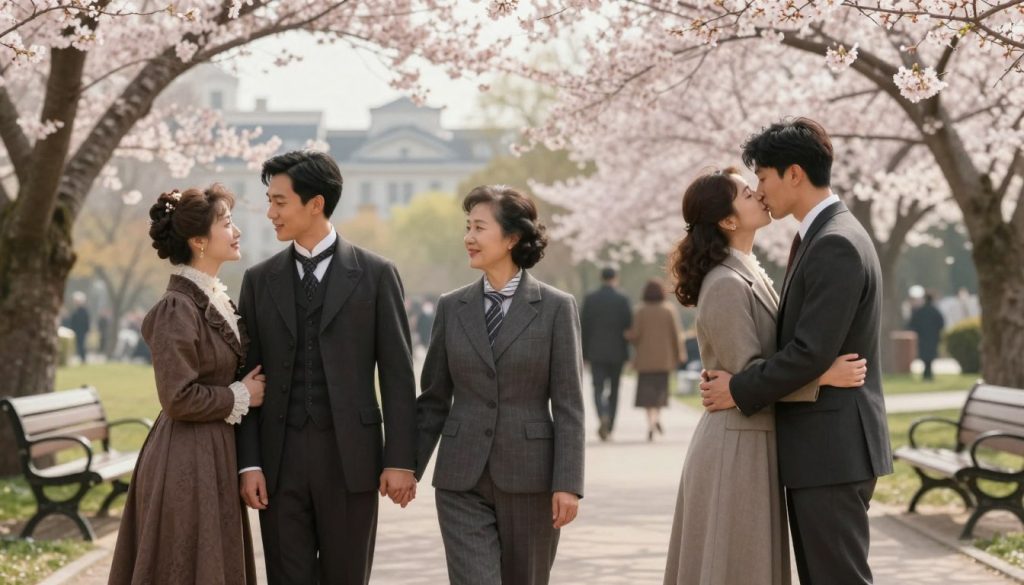
Romantic gestures were strictly confined to the home. Even a simple act like holding hands outside could cause deep embarrassment. This reflected a society that valued modesty above all.
Evolution of Social Norms Over Time
Major political and social movements shaped these private views. Personal relationships were not for public view. Change began with economic reforms and opening to the world.
New perspectives on personal freedom slowly emerged. Urbanization played a huge role. Cities offered anonymity and exposure to different lifestyles.
Several key factors drove this gradual shift:
- Economic Reforms: Opening markets introduced new cultural ideas.
- Urban Growth: City life created more private spaces in public.
- Global Exchange: Education and travel exposed youth to norms around intimacy.
What was once completely taboo is now more common. Yet, significant cultural resistance remains. The timeline shows a slow but steady move toward accepting public displays affection.
Impacts of Public Displays on Social Comfort
Shared spaces become awkward when intimate moments unfold in front of strangers. These public displays of affection can make bystanders feel like unwilling participants.
The discomfort isn’t about being old-fashioned. It’s about respecting that not everyone wants to witness private moments between couples.

Psychological professor Yuan Xin highlights an educational gap. He notes many young people lack guidance on boundaries between private life and public actions.
“It’s important to know what behaviors are suitable for the right situations. It’s called respect for others and society,” Yuan said.
This situational awareness is key. Personal freedom to express affection must balance with the collective comfort of those sharing spaces.
Keeping hugs and kisses for private places shows social consideration. It demonstrates maturity and cultural competence.
PDA In China: Understanding Public vs. Private Affection
The line between public and private affection is drawn by unseen cultural hands. For young couples, gestures like hand-holding feel like natural emotional expressions, not performances.
One college student described feeling love-struck, wanting to hold her boyfriend’s hand forever. This authenticity drives many public displays.
The Discomfort with Visible Intimacy
Visible intimacy crosses a deep cultural boundary. It makes observers feel they’re witnessing something meant to remain private.
What counts as acceptable public display affection varies widely. Hand-holding is often fine, but kissing remains controversial for many.

A recent graduate explained her perspective clearly. She highlighted the human element in emotional goodbyes.
“I have a long-distance relationship so it’s precious time for me to spend time with him,” she said. “When we parted at the bus station, we couldn’t help kissing.”
This tension between genuine feeling and social expectation is real. Each couple must navigate these unspoken rules daily.
Media's Role in Shaping Perceptions of Affection
Social media platforms have become a powerful lens through which public affection is viewed and judged. Every shared moment can become a viral story.
This digital spotlight changes how we see romantic gestures. Private acts now face public scrutiny instantly.
Impact of Viral Controversial Posts
Online media often highlights extreme cases. This focus can distort reality.
Liu Neng, a commentator, explains this effect well.
“Media plays a great role in exposing extreme PDA cases to stir a sensation, which creates the illusion that young couples are crossing the line.”
Viral posts about couples on buses or trains spark huge debates. These incidents seem common online but are rare in daily life.

Social Media as a Cultural Mirror
Platforms like Weibo and WeChat serve a dual purpose. They are both personal albums and public stages.
Student Li Xiaotong shares photos of her relationship online. For her, it’s a way to announce her happiness and create memories.
This turns affection into a social ceremony. Friends witness and celebrate the relationship.
Yet, this sharing also invites judgment. Bystanders’ photos can lead to online shaming.
Social media reflects changing attitudes while also amplifying conflict. It is a mirror and a megaphone at the same time.
Case Studies and Controversial Public Incidents
July saw a series of online firestorms after videos and photos of couples’ intimate moments on public transport spread across the internet. Controversial posts of canoodling couples on buses and metro coaches sparked a heated discussion nationwide.
In one case, a senior citizen tried to stop a pair who were cuddling and kissing on a bus in Qingdao. His intervention annoyed the male partner. Their argument nearly turned into a physical fight.
Local television broadcasters covered the bus confrontation. Websites later picked up the story, amplifying its reach. This intensified the public debate over acceptable behavior.
Bus and Metro Coach Confrontations
Another case involved a couple on a Shenyang metro coach. Two photos showed them fondling and kissing. The photo set went viral on a microblogging platform.
Many netizens called the Shenyang couple’s actions “embarrassing” and even “disgusting.” This revealed deep public disapproval for such displays on crowded trains.
Incidents Caught on Video
A workplace scandal added another layer. A woman was caught feeding her boyfriend in their office by company security video. Both employees were fired for this show of intimacy.
Before leaving, the couple took a defiant kissing selfie in the office. They posted it on social media. This act showed generational resistance to strict workplace norms.
Incidents caught on video become permanent records. They fuel ongoing debates about boundaries in shared spaces. These controversial posts continue to spark heated discussion about where personal expression ends and social respect begins.
Comparative Attitudes: Students Versus Parents
When it comes to showing affection in public, students and their parents often see things very differently. A recent survey of 1,302 college students highlights this growing generational gap in social norms.
Student Acceptance of PDA
More than sixty percent of surveyed students accept couples showing affection openly. For them, gestures like hugging are natural. About 80% of students find hugging acceptable, and over 63% are fine with a quick kiss.
Li Xiaotong, a mass communications student at Peking University, captures this confident attitude. She states, “There is nothing to hide for young people.” This view reflects broader exposure to global culture.
Parental Reservations and Concerns
Parents show much lower tolerance. While over 96% of both groups approve of holding hands, only 38% of parents accept public hugging. Just one-fifth find quick kisses tolerable.
Many parents believe holding hands is sufficient. They see kissing and hugging as “too much to see and hard to accept.” This clear divide shows how traditional values still shape older generations’ comfort levels.
The Influence of Social Media on Displaying Affection
A single photo of a hugging couple can trigger thousands of comments. This online activity lays bare generational conflicts over public behavior.
Platforms like Weibo and Douyin have become the main arena for this debate. Every viral incident sparks a heated discussion about what is acceptable.
Viral Reactions and Debates Online
Online reactions to public intimacy range from supportive to fiercely condemning. This polarization reflects deeper cultural tensions.
Sociologist Liu Neng from Peking University observes this evolution. He notes that ideas about proper behavior change with time.
“There is no doubt that Chinese are more open than before. People now tend to express their affection rather than suppressing it. That’s not bad for mental health.”
Liu Neng, sociologist
He argues that attitudes toward PDA reflect how tolerant a society is.
Social media often amplifies the loudest, most extreme opinions. Moderate voices get drowned out in the noise.
This creates digital echo chambers. People with similar views reinforce each other, deepening divides.
The effects of this online battleground are clear:
- It turns private moments into lasting public records.
- It fuels ongoing discussion long after an event.
- It highlights divergent opinions rather than building consensus.
These platforms measure social progress. Acceptance of public affection signals a more liberal society.
Balancing Personal Expression with Social Expectations
Navigating affection in shared spaces requires both emotional honesty and social awareness. Every couple wants to express genuine feelings. Yet they must also consider the comfort of people around them.
Luo Xuelei, a college instructor, offers a moderate view. He believes seeing couples show affection openly is normal. However, he stresses that such displays should have limits.
Professor Yuan Xin identified a gap in education. Many young people lack guidance on where to draw the line between private life and public actions.
“It’s important to know what behaviors are suitable for the right situations. It’s called respect for others and society,” Yuan said.
This situational knowledge is key. Hand-holding is often fine in a park. A prolonged kiss is better saved for a private moment.
Social maturity means understanding different contexts. What feels right on a campus may not fit a crowded bus. Balancing expression isn’t about hiding emotion. It’s about thoughtful behaviour that shows empathy for everyone sharing the space.
Final Reflections on Navigating Public Affection
The debate over public affection ultimately centers on respect for shared spaces. Traditional values and modern openness create a complex landscape. Generational differences fuel ongoing tension.
Attitudes are evolving, yet significant discomfort persists across society. While hand-holding gains acceptance, intimate gestures like prolonged kissing make many people uneasy. Keeping hugs private isn’t about restriction; it’s about social harmony.
Cultural sensitivity matters greatly. Balancing personal expression with collective comfort shows maturity. Successful navigation requires empathy for others in public areas.
Moving forward, mutual respect and awareness will guide this gradual social change.