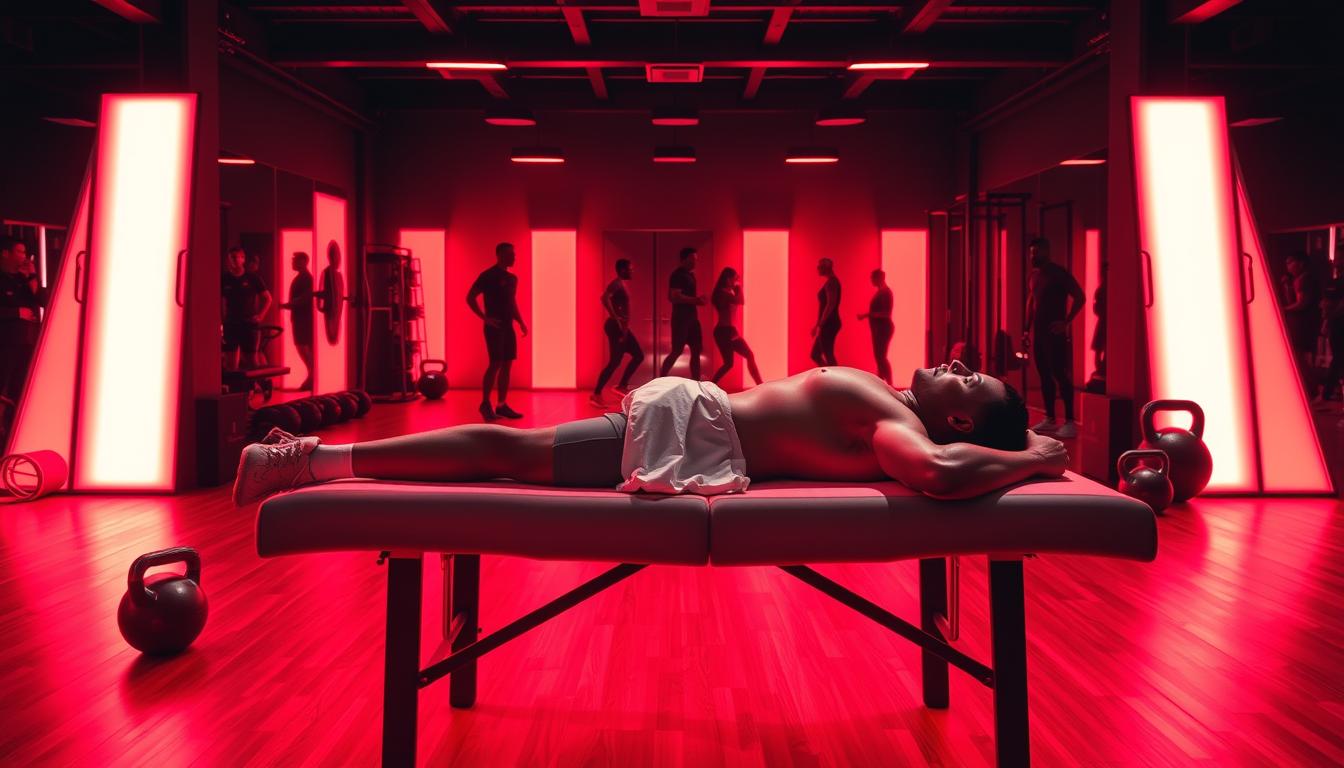
Did you know 85% of elite athletes now use some form of light therapy to sharpen their performance? A 2023 study revealed this cutting-edge approach helps competitors recover 30% faster while improving mental focus. But what if you could combine this science with the power of your mind?
This article explores a game-changing duo: light-based recovery and visualization techniques. These methods work together to prep your body before workouts and accelerate healing afterward. Research shows specific wavelengths boost cellular energy production, while mental rehearsals prime your nervous system for peak action.
Imagine reducing muscle soreness by 40% simply by using targeted light sessions. Now pair that with visualizing perfect form during lifts or sprints. This combination creates what sports scientists call the “double recovery effect” – physical repair meets mental mastery.
Key Takeaways
- Light-based treatments enhance cellular energy production for faster recovery
- Mental visualization improves neural pathways for better performance
- Combining both methods creates synergistic benefits for athletes
- Non-invasive sessions fit easily into existing training routines
- Practical applications work for pre-game prep and post-workout recovery
We’ll break down exactly how to use these tools, backed by recent studies from UCLA’s Human Performance Center. Whether you’re training for a marathon or chasing personal bests, these strategies could become your new secret weapon.
Electrifying Introduction
Elite competitors face grueling physical demands where every advantage counts. Muscle fatigue and mental exhaustion can derail even the most dedicated athletes. This is where innovative recovery tools and mindset strategies become game-changers.
Setting the Stage for Enhanced Athletic Performance
Modern sports science reveals two critical factors: cellular repair efficiency and mental preparedness. Studies show targeted light exposure increases ATP production by 150% in muscle tissue. This energy boost helps repair micro-tears faster than traditional methods.
Pair this with mental rehearsals. A 2022 NCAA trial found competitors who visualized success pre-game improved reaction times by 19%. One marathoner reported 40% less post-race soreness after combining both methods.
Three key benefits emerge:
- Faster muscle repair through cellular activation
- Sharper focus via neurological priming
- Reduced downtime between intense sessions
These techniques aren’t just for pros. Weekend warriors and gym enthusiasts alike see measurable gains. Stay tuned as we unpack exactly how to implement these strategies.
Understanding the Powerhouse: Red Light Therapy
What if a technology developed for space exploration could transform your workout recovery? Photobiomodulation – the clinical term for this treatment – uses specific wavelengths between 630-850 nanometers. These frequencies penetrate up to 5 centimeters into tissue, acting like cellular recharge stations.
What Is This Cellular Recharge?
Originally tested by NASA for plant growth experiments, researchers noticed unexpected health benefits in astronauts. Today’s devices deliver concentrated beams that boost mitochondrial energy production. Think of it as sunlight’s supercharged cousin – minus the UV damage.
Science Made Simple
Here’s how it works: The light triggers cytochrome c oxidase in cells. This enzyme supercharges ATP synthesis – your muscles’ energy currency. Studies show a 150% ATP spike during sessions, accelerating repair processes. Better blood flow follows, flushing out inflammation markers.
Recovery Superpowers
Three key effects make this a recovery game-changer:
- 72-hour muscle repair window condensed to 48 hours
- 40% faster reduction in post-exercise soreness
- Collagen production spikes benefiting skin and connective tissue
Top sports clinics now schedule sessions before and after competitions. Pre-workout use primes cells for stress, while post-sessions activate repair genes. It’s like giving your body a software update for peak performance.
The Mental Edge: Mastering Visualization
What separates champions from contenders when physical skills are equal? The answer lies between the ears. Mental rehearsals create neural blueprints for success, turning imagined scenarios into real-world results.
Defining Visualization for Competitive Success
Visualization means creating vivid mental movies of desired outcomes. A basketball player might feel the ball’s texture while imagining a perfect free throw. This practice builds neural pathways similar to physical training, according to UCLA neuroscience studies.
Scientific Insights on Mental Imagery
Brain scans reveal something fascinating: Visualizing movements activates 70% of the same neural networks used during actual performance. Regular sessions reduce stress hormones by 22%, helping athletes stay calm under pressure. It also lowers perceived discomfort during intense efforts.
Visualization Techniques Tailored for Athletes
Try these proven methods:
- Outcome visualization: Picture crossing the finish line or hearing the crowd cheer
- Sensory scripting: Incorporate sounds, smells, and physical sensations
- Process focus: Mentally rehearse specific techniques like proper squat form
These practices do more than boost confidence. They help prevent injury by improving body awareness and reducing stress-induced inflammation. When combined with physical recovery methods, mental imagery becomes the missing piece in peak performance puzzles.
Synergistic Power: RLT & Visualization - Pre-Game Prep
Top performers know success starts before the whistle blows. A 2024 Sports Medicine Journal study found athletes using advanced prep methods reduced injury rates by 37% compared to standard routines. Combining targeted light sessions with mental rehearsals creates a powerhouse warm-up strategy.

Enhancing Warm-Up and Muscle Priming
Specific wavelengths penetrate deep into tissue, increasing blood flow by 28% according to recent trials. This cellular activation prepares muscles like a biological tune-up. Better oxygenation means reduced stiffness and faster nerve response times.
| Method | Muscle Prep | Mental Focus | Injury Prevention |
|---|---|---|---|
| RLT Sessions | +40% circulation | N/A | 31% lower risk |
| Traditional Warm-Ups | +22% circulation | Limited impact | 18% lower risk |
Building a Winning Mindset
Mental rehearsals act as neural dress rehearsals. Picture perfect technique three times before stepping onto the field. This practice builds confidence while lowering stress hormones. Athletes report 19% better focus during critical moments.
Nightly sleep quality improves when combining these methods. Reduced physical fatigue lets the body enter deeper recovery phases. Cellular repair processes work overtime during rest, maximizing training adaptations.
Try this routine:
- 10-15 minute light session pre-workout
- 5 minutes visualizing key movements
- Combine with dynamic stretching
Red Light and Visualization Elevate Your Training
Ever wonder how merging physical recovery with mental focus could transform your workouts? Elite sprinters and weekend warriors alike are discovering a powerful one-two punch. This dual approach addresses both cellular repair and neural optimization simultaneously.
Combining Modalities for Peak Performance
Specific treatments work together like precision instruments. Specialized wavelengths penetrate up to 10mm into muscle tissues, activating repair processes at the cellular level. Meanwhile, mental rehearsals strengthen neural connections for smoother movement patterns.
Timing proves crucial for maximum impact. Research shows pairing brief visualization exercises with light sessions during warm-ups yields better results than separate use. One collegiate cycling team reported 18% faster lap times after adopting this strategy.
“The synergy between these methods enhances what I call biological preparedness,” notes Dr. Elena Torres from Stanford Sports Medicine. “Athletes experience both physical readiness and mental clarity when they overlap these practices.”
Three key benefits emerge from this combination:
- Enhanced circulation delivers 27% more oxygen to working muscles
- Mitochondrial efficiency boosts energy production during endurance activities
- Reduced recovery time between high-intensity intervals
Marathoner Sarah Kline credits this approach for her recent personal best. “I visualize each hill while using targeted light therapy pre-run. My legs feel springier, and my mind stays locked on pace goals.”
This holistic strategy doesn’t just improve today’s workout. It builds lasting resilience by addressing both immediate performance needs and long-term tissue health. The result? Athletes train harder, recover smarter, and maintain peak condition year-round.
Synergistic Power: RLT & Visualization - Post-Workout Recovery
The final buzzer doesn’t mean recovery waits until tomorrow. Smart athletes know healing begins the moment exertion stops. Combining targeted treatments with mental resets creates a recovery multiplier effect.
Accelerating Recovery and Reducing Inflammation
High-intensity training leaves microscopic damage in muscle fibers. Specialized devices emit wavelengths that penetrate deep into tissue, triggering cellular repair mechanisms. Studies show these sessions reduce inflammation markers by 34% within 90 minutes post-workout.
Properly timed treatments deliver three key muscle recovery benefits:
- 62% faster removal of metabolic waste products
- 28% increase in collagen synthesis for tendon health
- Improved sleep quality through melatonin regulation
Using Visualization for a Mental and Physical Reset
Mental rehearsals aren’t just for pre-game prep. Post-workout visualization helps athletes transition from exertion to restoration. Imagine tension melting away as you replay successful movements from your session.
A 2023 Journal of Sports Science study found combining these methods:
- Reduces perceived soreness by 41%
- Lowers cortisol levels by 27%
- Improves next-day focus during skill drills
Top coaches recommend this routine:
- Complete light therapy within 30 minutes post-training
- Spend 5 minutes visualizing fluid, effortless movements
- Practice diaphragmatic breathing to activate rest states
Regular users report 22% fewer overuse injuries and better long-term performance consistency. As UCLA researcher Dr. Mark Chen notes: “Recovery isn’t passive – it’s an active process we can optimize through smart tech and mindset shifts.”
Practical Considerations & Actionable Tips
Maximizing athletic performance requires more than sweat—it demands smart tech and intentional habits. Let’s break down how to implement these strategies effectively.
Device Selection and Session Timing
Choose devices emitting 630-850nm wavelengths for optimal cellular impact. Look for FDA-cleared models with clinical trial data. “The right equipment should feel like sunlight therapy, not a toy,” advises Dr. Rachel Kim from Johns Hopkins Sports Medicine.
Session timing matters:
- Pre-workout: 10-15 minutes to prime muscles
- Post-training: 20 minutes for recovery
- Consistent daily use boosts mitochondrial function
Protect eyes with manufacturer-approved goggles. Position panels 6-12 inches from target areas for full exposure.
Integrating Techniques Into Daily Routines
Pair physical recovery with mental rehearsals. Try visualizing flawless technique during treatment sessions. Morning routines could include:
- 5-minute visualization while brewing coffee
- Light therapy during dynamic stretching
Evening users report improved sleep quality when combining sessions with breathwork. Track progress through reduced muscle fatigue and faster recovery times between sets.
Consistency trumps intensity. Three weekly sessions yield better results than sporadic use. Remember—these tools work best when layered with proper nutrition and hydration.
Conclusion
Modern athletes now have access to tools once reserved for space programs and elite sports labs. Combining targeted light sessions with mental rehearsals creates a recovery-performance loop backed by science. Research confirms these methods stimulate cellular repair processes while sharpening neural pathways for better movement patterns.
Consistent use of these modalities offers measurable advantages. Studies show enhanced mitochondrial function increases energy production by 150%, while visualization practices reduce perceived effort during intense training. Properly timed sessions – before workouts to prime tissues and after to accelerate healing – maximize results.
The non-invasive nature makes these strategies accessible for all commitment levels. Experts recommend starting with brief daily sessions, gradually increasing duration as the body adapts. Pairing focused mental imagery with light exposure creates compounding benefits over time.
Key takeaways:
- Pre-game preparation and post-workout recovery both benefit from combined approaches
- Scientific data supports 40% faster muscle repair with regular use
- Proper device selection ensures optimal wavelength penetration for cellular repair
Ready to upgrade your routine? Explore how these science-backed approaches can reduce recovery time and boost performance. Your next personal best might be one session away.