
If your partner hasn’t introduced you to their family after half a year, you’re probably feeling confused and anxious. I get it. In a Western context, this might just seem like moving slow.
In Chinese culture, it often means something deeper. It’s not simply about “not being ready.” There are complex social dynamics at play that most outsiders completely miss.
Research shows over 93% of Chinese people say “face,” or social standing, is very important to them. This directly affects big steps like family introductions.
Here, six months often acts as a critical probationary period. Your partner is likely evaluating if the connection has serious, long-term potential before involving their inner circle.
Meeting parents in China is a major milestone. It signals serious marriage intent. This article will decode the hidden meanings, from social status checks to communication styles.
The Hidden Dynamics Behind Delayed Introductions.
In Chinese dating culture, the absence of a family introduction after six months often signals a deeper cultural evaluation is underway. This period isn’t just casual dating. It’s an unofficial probationary phase.
Your partner is assessing long-term potential. They are deciding if you’re worth integrating into their close network.
The Role of the Probationary Period in Chinese Culture.
Why six months? This timeline is rooted in how connections build value. In the guanxi system, trust grows slowly.
Personal bonds must prove stable before expanding to family. It’s a test of compatibility and commitment. The same concept applies in business throughout Chinese society.
High-Context Communication and Indirect Signals.
True feelings are often shown through actions, not words. Tone and body language carry more weight than direct statements.
People may avoid saying “no” directly to be polite. A reply like “it’s not convenient” usually means no. Changing the subject when you mention family is a clear indirect signal.
| Communication Style | Primary Mode | Example | Cultural Preference |
|---|---|---|---|
| Low-Context | Explicit, verbal | “I don’t want to meet your parents yet.” | Common in Western cultures |
| High-Context | Implicit, non-verbal | Avoiding the topic or giving a vague reason. | Predominant in Chinese culture |
| Mixed Signals | Actions contradict words | Saying “soon” but never setting a date. | Can cause cross-cultural confusion |
Understanding this can turn frustration into clarity. What seems like evasiveness is often normal relationship progression there.
Mianzi and the Status Equation in Relationships.
In Chinese society, your worth isn’t just personal. It’s measured by a social currency called ‘mianzi’. This concept of ‘face’ is your reputation and standing.
It functions as a form of capital that influences major life steps. Introducing a partner is a public audit of that social ledger.
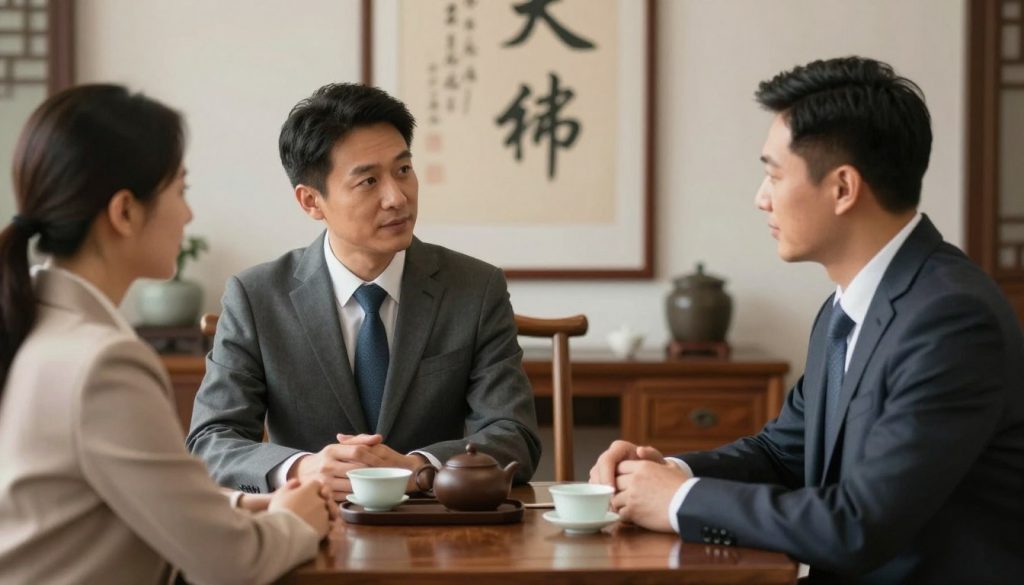
Your partner may feel they can’t afford the ‘cost’ yet. If their own status markers aren’t prestige-ready, a delay makes sense.
How Job, Living Standards, and Relationship Status Affect Mianzi.
Specific markers are scrutinized. A job title and career trajectory matter greatly. So does living situation—owning property versus renting.
Even relationship history is part of the equation. A partner with past failures might wait to prove this bond is stable.
As Ting-Toomey notes, face-saving protects an individual’s role in their network. In this collectivist culture, it’s about the entire family’s honor.
Your partner calculates if an introduction will give face or cost it. They must present a united, confident front to their guanxi circle.
This isn’t about ego. It’s a profound social obligation. Understanding this can turn personal doubt into cultural insight.
Guanxi Integration Gap.Hidden Relationship. Face-Saving Delay. Gatekeeping.
Think of your partner’s family and close friends as a members-only club you haven’t been invited to join. That’s the guanxi integration gap. It’s the space between your personal bond and their trusted inner circle.
Keeping the connection hidden is often a deliberate choice. Your partner might be unsure about long-term fit. They could be avoiding family questions they can’t answer yet.

This tactical delay protects everyone’s social standing. It prevents premature judgment. Your partner is acting as the gatekeeper, controlling access between two separate networks.
In this system, introductions are a serious voucher of trust. Your partner must be confident you’ll honor the family’s reciprocal ties. Building that confidence is how you bridge the gap.
The Marriage Pressure Cooker: Meeting the Parents.
In Western dating, meeting parents is a step. In China, it’s a declaration of intent. This isn’t a casual “hello.” It signals you’re on the immediate path to marriage.

Family Expectations and the Path to Marriage.
The moment you walk in, the mental calculations begin. Parents assess career stability, housing plans, and wedding costs. Your entire future becomes a topic for discussion.
The interrogation is direct. Expect questions about salary, savings, and property ownership. They’ll ask when you plan to marry, often in the first meeting.
| Aspect | Western Context | Chinese Context |
|---|---|---|
| Primary Meaning | A relationship milestone | A pre-engagement announcement |
| Common Questions | “How did you meet?” “What do you do?” | “What is your salary?” “Do you own a home?” |
| Implied Timeline | Open-ended, no set clock | Engagement expected within 6-12 months |
| Family’s Role | Supportive observers | Active participants with significant say |
This is why your partner might stall. They may not be ready for that conversation themselves. They know their parents will apply intense pressure.
In this society, filial piety gives parents a major role. The six-month delay can be a shield. It protects you both from this pressure cooker while they figure things out.
Social Media "Ghosting" and Its Cultural Implications.
In China, your social media presence, or lack thereof, is a loud statement about your relationship status. WeChat Moments is not a casual feed. It’s a curated stage for one’s entire network of family, colleagues, and friends.

If you’re never in their photos, it’s a specific form of silence. This digital “ghosting” hurts. It often means the bond is kept private intentionally.
Your partner might be managing face. Revealing a connection that doesn’t yet meet social expectations could cost them standing. In this high-context society, actions like posting are a core form of communication.
Publicly sharing your image is a major face-giving gesture. It tells their guanxi network, “This person is part of my public identity.” Your absence means you’re not yet integrated into that broader world.
Some people are genuinely private. But posting everything except you sends a clear signal. If you suddenly appear online after months, it often means a threshold has been crossed. Your partner is ready to publicly bring you into their guanxi circles.
The Expat/Outsider Factor in Intercultural Relationships.
Intercultural relationships add a unique layer of complexity to the already intricate process of family introductions in China. If you’re a foreigner, you’re not just a new partner. You represent an entirely different cultural system.

Your partner faces a double challenge. They must manage the normal gatekeeping while preparing their family for the “shock” of an intercultural bond.
Navigating Traditionalist Pushback and Cultural Barriers.
Traditionalist parents often have specific fears. They worry about cultural incompatibility and whether you’ll adapt to Chinese family life. A major concern is you taking their child to another country, breaking close family ties.
Language barriers with future in-laws are a real hurdle. So are questions about grandchildren’s cultural identity. Your foreigner status directly impacts your partner’s social calculations.
| Concern | Local Relationship Context | Intercultural Relationship Context |
|---|---|---|
| Cultural Fit | Assumed shared background | Major point of scrutiny; questions about traditions and daily life |
| Geographic Stability | Likely within China | Fear of partner moving abroad, long-distance challenges |
| Family Integration | Language is shared | Significant language barrier with in-laws; need for translation |
| Social Perception | Normalized within network | Potential source of gossip or judgment from extended family |
This dynamic mirrors international business. Foreign firms need local advocates to access the market. Similarly, you need your partner to skillfully advocate for you within their guanxi network.
As the outsider, you have less power and contextual understanding. A longer delay might simply reflect the extensive preparation needed to bridge these cultural gaps successfully.
The Role of Guanxi in Business and Personal Relationships.
The same principles that guide multi-million dollar deals in China also shape the journey of a romantic partnership. This cultural framework isn’t just for the boardroom. It governs all significant bonds.
In Chinese business, you can’t just show up with a contract. You need months of relationship-building first. The same timeline applies to family introductions in personal life.
From Friendship to Trust: The Journey of Guanxi.
These connections start with simple friendship. There may be no immediate benefit. Trust grows through repeated interactions and reciprocal favors.
Only when the personal bond is strong do you move to formal promises. In business relationships, a contract is signed with someone you truly trust. In personal relationships, family meetings happen when commitment is proven.
| Development Stage | Business Context | Personal Context |
|---|---|---|
| Initial Connection | Networking, mutual contacts | Dating, meeting through friends |
| Building Rapport | Social dinners, casual meetings | Shared experiences, quality time |
| Testing Reliability | Small projects, favor exchanges | Handling conflicts, showing commitment |
| Earning Trust | Contract signing based on relationship | Family introduction, marriage talks |
| Network Integration | Long-term partnerships | Joining family events, social circles |
This isn’t a cold calculation. It’s how Chinese culture blends personal and practical considerations. For an international business partner or a romantic partner, proving your value to the network is the key step.
Building Trust Through Gatekeeping and Network Management.
When two different social circles meet, someone must act as the trusted connector. In your situation, your partner is that person. They stand between your world and their family’s close network.
This role is called gatekeeping. It’s a sophisticated form of management. Your partner needs credibility in both networks to make an introduction work.

They are spending their social capital. This is the trust they’ve built with their family over years. Introducing you is a major investment of that trust.
Your partner is carefully preparing both sides. They might talk about you positively to their parents first. They also watch to see if you show traits their family values, like stability.
This guanxi networking protects everyone. It prevents awkward meetings that could hurt family ties. Strong existing bonds give your partner more room to introduce someone new.
You can support this process. Show respect for family, career dedication, and long-term commitment. This proves you’re worth the trust they are placing in you.
Real-World Cases in Guanxi and Face-Saving Strategies
Consider the Chinese scholar who turned down a prestigious European fellowship to protect his father’s dignity. His father was unemployed. The son never explained his choice aloud.
His father understood through unspoken signals. This is a powerful case of face-saving in action. Family ties and silent sacrifice define these dynamics.
Lessons from Business Networks and Personal Encounters
In business, similar strategies create success. I’ve seen embassy officials visit clients with exporters. Their presence gives face and opens doors.

This isn’t just corporate networking. It’s a core pattern in Chinese society. Rushing integration often backfires.
Whether sealing a deal or a relationship, trust in the guanxi system builds slowly. These real-world examples show why patience is a strategic virtue.
Strategies for Mastering High-Context Communication in China.
Mastering communication in China means learning to listen with your eyes, not just your ears. The real message is often in the silence or a slight shift in tone.
In this high-context culture, what’s left unsaid carries more weight than the words spoken. Your partner’s actions are their truest form of communication.

Pay close attention to what’s not discussed. If family topics are always deflected, that’s a clear signal. Phrases like “it’s not convenient” usually mean no.
Change your way of asking. Instead of demanding a meeting timeline, show curiosity. Ask, “What are your parents like?” This opens dialogue without pressure.
Reading the “meta-communication” is key. Notice if they include you in future plans or introduce you to friends. These actions show real integration into their life.
Navigate conflicts indirectly to avoid causing face loss. Use a mutual friend for insight rather than direct confrontation. This way preserves harmony.
Demonstrate cultural competence. Show respect for local customs and express interest in the language. This builds your partner’s confidence in your ability to handle their family’s communication style.
Developing these skills takes time and immersion. Your effort signals that you understand the context. It makes the step of family introductions feel much less risky for everyone involved.
Bridging Cultural Gaps: A Call to Action.
Let’s turn cultural insights into practical steps you can start today. Moving from confusion to clarity requires a strategic way of engaging.
Your goal is to build trust and show you understand the role of personal bonds. This is the core of strong guanxi.
Effective Techniques for Indirect but Assertive Inquiries.
Schedule a calm talk. Use indirect framing like, “I’d love to learn about your family traditions.” This opens dialogue without pressure.
Express your feelings while giving face-saving room. Say, “I feel uncertain about our timeline. Can you share your perspective?” This way respects high-context communication.

Offer to use resources together. Read about Chinese culture or watch films depicting family dynamics. Frame it as a shared learning opportunity.
Cultivation is key. Show long-term commitment through actions. Build relationships with your partner’s friends first. This is smart networking.
Ask a trusted mutual friend for context. In Chinese culture, this indirect way often yields honest insight.
Demonstrate you’re a good investment. Show career stability and respect for family. Your consistent cultivation has a positive impact.
Create a simple action plan. Identify cultural gaps, commit to resources, practice indirect techniques, and set a gentle timeline for reassessment. This management of expectations leads to success.
Remember, building guanxi is about reciprocal respect. Strategic management of these resources and connections bridges the gap effectively.