
I’ve watched the romantic landscape here transform before my eyes. What we’re seeing now, in 2026, is a revolution. Welcome to the era of “Intentional Non-Commitment.”
Gone are the vague “what are we?” talks. Today’s connections are deliberate and strategic. The situationship has been fully codified.
When I first tapped into platforms like Tantan, I realized this wasn’t a simple swipe-right scenario. Locals have gamified modern romance. They seek specific partners, or ‘Dazi’, for specific needs.
This evolution is fascinating. It moves from traditional matchmaking to a system where young singles have real autonomy. The rules are completely different from what many Westerners expect.
My journey through these digital spaces revealed a complex social code. It’s a balance between modern independence and deep-rooted values. This article will decode that unique frequency for you.
Understanding the Rise of 'Dazi' and Intentional Non-Commitment.
Forget the all-in-one romantic package; the new trend is about à la carte companionship. This is the heart of the ‘Dazi’ phenomenon.
What Exactly is a 'Dazi'?
A ‘Dazi’ (搭子) is a partner for a specific purpose, not a catch-all romantic title. Think of it as hiring a specialist instead of a general manager for your social life.
You might have a Meal Dazi for trying new restaurants, a Travel Dazi for adventures, or a Chat Dazi for late-night conversations. Each fills a distinct need without the expectation of a merged future.

This system turns vague hangouts into defined arrangements. It’s brilliantly efficient.
Intentional Non-Commitment: A New Dating Trend.
The magic is in the upfront clarity. Both people agree on the terms from day one. No guessing games.
It’s a pragmatic way for young professionals in fast-paced cities to enjoy companionship. They sidestep intense family pressure while focusing on personal goals.
In my experiences, this honesty is refreshing. It represents a shift where personal fulfillment is prioritized, yet it respects certain cultural boundaries. It’s connection, re-engineered for modern life.
Tantan's Discovery Phase vs. WeChat's Incubation Phase.
If modern romance were a video game, Tantan would be the character selection screen. WeChat is the entire multiplayer campaign. Navigating this scene requires mastering two distinct phases.

The first is high-speed discovery. The second is slow, strategic incubation. Each has a completely different rulebook.
Swiping, Vibe-Checking, and MBTI Compatibility.
I call Tantan the Discovery Phase. It’s all about volume and first impressions. My thumb flies, making split-second “vibe-checking” decisions.
Profiles here are less about hobbies and more about personality codes. Seeing “INFJ seeking ENFP” is standard. This focus on MBTI compatibility is a core feature of these platforms.
The mechanics are simple: swipe right to like, swipe left to pass. A match lets you chat. But with many users and some inactive profiles, a match is just a starting point.
Sharing Contact Cards and WeChat Moments Etiquette.
The real action starts when you exchange WeChat details. This move from Tantan to WeChat begins the Incubation Phase. Sharing your contact card is the new first date.
It grants access to their Moments feed. This curated gallery reveals their lifestyle, friends, and status. It’s the ultimate vetting tool.
Etiquette here is delicate. I strategically like posts to show interest. I avoid “over-talking” or liking old posts. The goal is to seem engaged, not desperate.
| Phase | Platform | Primary Action | Key Social Cue | End Goal |
|---|---|---|---|---|
| Discovery | Tantan | High-speed swiping & matching | MBTI personality type in profile | Initiate contact, gauge basic interest |
| Incubation | Curated sharing & paced messaging | Strategic engagement on Moments feed | Deep social vetting, build rapport slowly |
Decoding the 'Situationship' Communication Code.
I once killed a promising chat with a period—a mistake I’ll never make again. Beyond the words, every message is packed with silent signals. Understanding this code is crucial for navigating modern romance.

The 'Period' vs. 'Emoji' Rule Explained.
Here’s the deal: a period (。) at the end of a text is the digital cold shoulder. It screams formality and disinterest. I learned this after sending a simple “好的。” (Okay.) and watching the vibe freeze.
In contrast, a tilde (~) or a smiling emoji keeps things warm. These symbols signal you’re still emotionally available and invested. This punctuation rule is a fundamental layer of the communication game.
The 24-Hour Reply Window and Busy Professional Excuses.
Then there’s the timing dance. Replying too fast seems desperate. Taking over a day suggests you’ve ghosted. The sweet spot? That infamous 24-hour window.
In 2026, the “busy professional” excuse is an art form. Everyone is swamped with meetings or urgent projects. It provides perfect cover for strategic delays while projecting an image of success.
Decoding genuine busyness requires pattern analysis. Check if they’re active on other feeds but ignoring you. That’s your answer.
| Communication Signal | What It Means | Social Effect | Plausible Deniability |
|---|---|---|---|
| Ending a message with a period (。) | Formality, emotional distance, disinterest | Conversation cooling, potential ghosting | “I was just being grammatically correct.” |
| Using a tilde (~) or emoji | Warmth, enthusiasm, continued investment | Keeps connection alive and friendly | “I’m just a positive person!” |
| Replying within minutes | High eagerness, possibly seen as desperate | May lower perceived social value | “I just happened to see your message.” |
| Using the 24-hour window & “busy” excuse | Strategic pacing, maintaining upper hand | Projects desirable career focus | “Work has been insane, sorry!” |
Navigating Risks and Red Flags in Modern Dating.
One of the most critical skills in today’s connection game is spotting when you’re not the only player on someone’s board. The landscape is filled with subtle hazards, and the most notorious is “Fish Pond Management” or yǎngyú.

This practice involves maintaining a whole pond of romantic prospects. Each fish gets just enough attention to stay hooked.
Identifying Fish Pond Management in Situationships.
I’ve been a fish before. The signs are clear once you know them. Look for wildly inconsistent communication and vague excuses about availability.
People running a pond keep conversations light. They avoid firm plans. A sudden disappearance for days, followed by a dramatic return story, is a classic move.
Their social media feeds are masterpieces of vague curation. They manage their online reputation to appeal to a number of people at once.
Platforms make this easy. A person can juggle situationships across multiple apps. Different “fish” rarely discover each other.
Some dating apps use phone verification to fight fake profiles. Baihe required real-name registration years ago. Yet, this behavior is about character, not security flaws.
Protect yourself. Ask direct questions early. See if actions match words. Your gut feeling often knows the truth before you do.
The search for real connection among singles demands this awareness. In the end, you’ll see whether you’re building something or just swimming in circles.
Setting Boundaries with Direct Communication (Zhi Qiu).
After playing by the unspoken rules for months, I finally discovered the cheat code: throwing a ‘straight ball.’ This is Zhi Qiu (直球), the art of being completely honest about your intentions.

It cuts through the exhausting ambiguity. In this scene, clarity is the ultimate sign of respect.
How to Gracefully Exit a Situationship.
Use Zhi Qiu to end things cleanly. Acknowledge the good times but state your needs directly.
For example: “I’ve enjoyed our time, but I don’t think we’re looking for the same things.” This is honest and preserves the other person’s ‘face’ or dignity.
Most local friends prefer this over being ghosted. It allows everyone to move forward with respect intact.
Transitioning to a More Committed 'Shang-A' Relationship.
Want to move from casual to committed? You also need a ‘straight ball.’ The goal is Shang-A (上岸), or “coming ashore.”
Be explicit. Say, “I really like you and want us to be exclusive.” This directness is appreciated in the local culture.
You’ll get a clear yes or no. It opens an honest dialogue about what commitment level works for both people.
Chinese App Dating Culture: Trends and Traditional Influences.
The profile setup process on some platforms felt more like a mortgage application than a dating profile. I was asked for my annual income, property status, and car model. This directness reflects a core priority: marriage and financial stability.
These features are not bugs. They are designed for singles and families seeking long-term security. It’s a fascinating blend of modern tech and age-old values.

Key Features Shaping Today's Dating Apps.
Popular Chinese dating apps like Baihe use algorithms developed with universities. They assess lifestyle and values for deep compatibility. Jiayuan and Baihe boasted millions of users years ago.
The ecosystem is comprehensive. Dating apps here offer offline matchmaking, counseling, and even wedding planning. You can book a photoshoot to improve your profile through the same app.
Monetization is serious. Membership fees range from $2 to $130 monthly. This shows how much locals invest in finding the right partner.
Real-name registration adds a layer of accountability. Your reputation online matters as much as offline. For users, it creates a more intentional space than many Western platforms.
Understanding these features is key. They reveal that the goal isn’t casual connection. It’s a strategic search for a life partner within a respected framework.
The Evolution of Chinese Dating: From Matchmaking to Mobile Apps.
My friends’ grandparents often met their spouses for the first time at the altar, a reality that feels worlds away from today’s digital matchmaking. The past 75 years have compressed a social revolution into one lifetime.
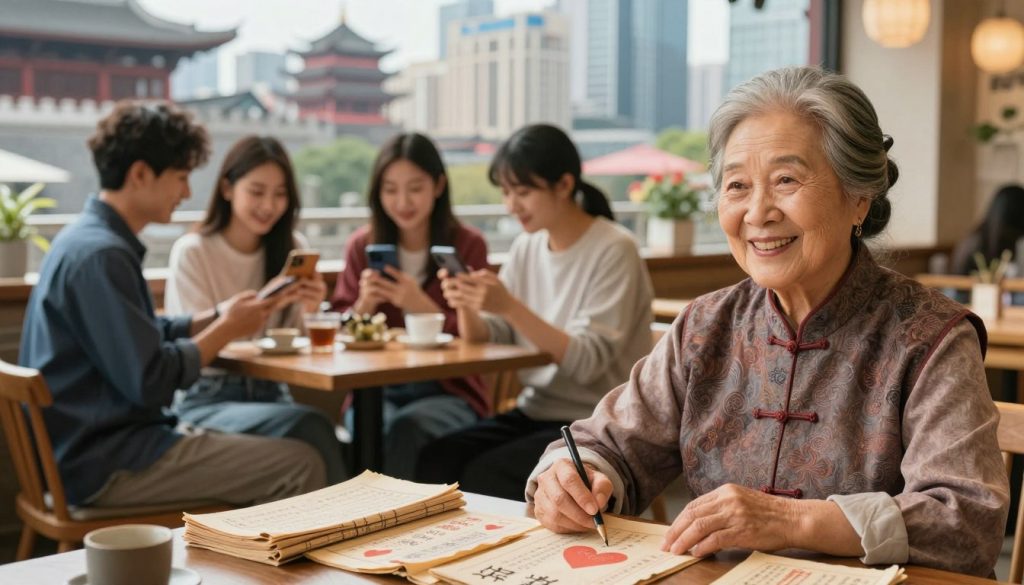
Historic Shifts from Arranged to Self-Selected Partnerships.
Before 1950, marriages were arranged based on “matching doors and parallel windows” (门当户对). Love was irrelevant. The New Marriage Law of 1950 changed everything by requiring consent from both parties.
This was a seismic shift. For the first time, men and women had legal say in their unions. The 1980 update further protected women’s interests, creating a foundation for today’s more autonomous chinese dating scene.
The Impact of Technology on Relationship Goals.
China’s Open Door Policy in 1978 exposed people to Western ideas about love. Fast forward to the early 2010s, and dating apps china began reshaping the landscape.
Platforms like Jiayuan offered unprecedented access. Yet, traditional elements remain deeply embedded. Parents still arrange blind dates, and family approval is crucial.
The stories I’ve heard reflect this tension. People use apps to find partners independently, but most still seek matches satisfying traditional criteria. In just a few years, technology created efficient tools for age-old goals in the modern world.
Cultural Nuances in Chinese Dating Etiquette.
My first real date here felt less like a romantic meetup and more like a job interview with my future in-laws. The cultural rulebook is thick with unspoken clauses.
You’re not just evaluated as an individual. Your entire family background is part of the vetting process. This shapes every interaction.
Family Values, Reputation, and the 'Face' Factor.
I was grilled about my parents’ careers and our home within minutes. For local people, this isn’t nosiness. It’s essential information to see if you’re a viable long-term match.
The concept of ‘face’ (miànzi) governs everything. Criticizing someone publicly causes them to ‘lose face’ and can wreck a relationship. I learned to have tough talks in private, framing issues to protect their dignity and reputation.
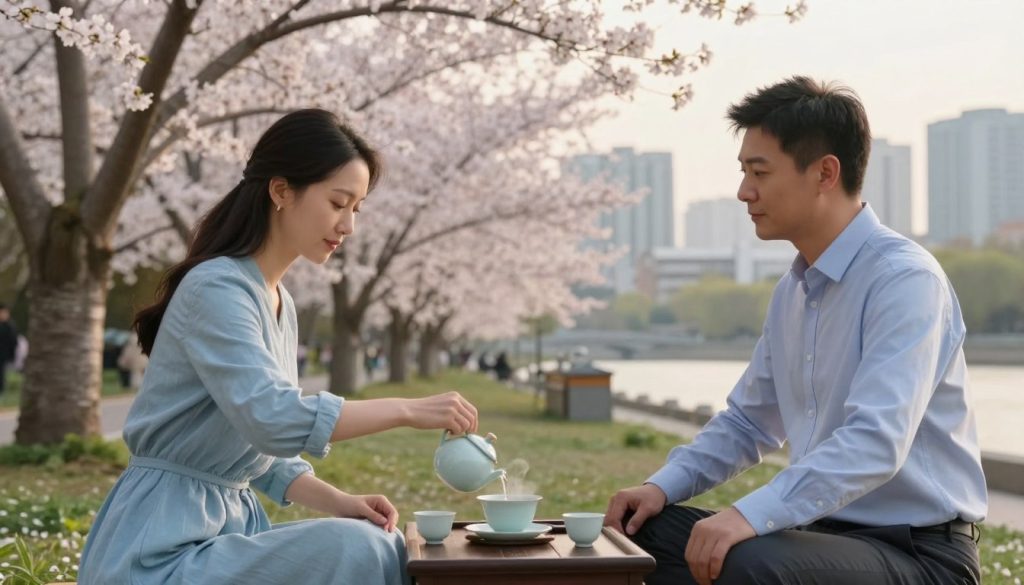
Success here means understanding you’re joining a family system. Your actions reflect on everyone.
Public Behavior, Matching Outfits, and Social Expectations.
Public displays follow different lines. Couples wear matching outfits (qínglǚ zhuāng) as a proud badge of unity. It declares status and creates shared stories.
I’ve also seen couples argue loudly on the street. The communication is direct, not passive-aggressive. Meanwhile, a guy carrying his girlfriend’s purse is a common sight, seen as attentive, not emasculating.
Directness extends to appearance. I’ve been told point-blank to change my hairstyle. This honesty, while jarring, is meant to be helpful.
For expats and locals alike, navigating this scene means prioritizing social harmony over individual feelings. Adapting to these nuances is the point of building a genuine connection in this dating life.
Personal Experiences and Lessons in the Modern Dating Scene.
I once spent six months meeting the same person every Tuesday for hotpot, and we never once discussed our relationship status. This was my perfect ‘Meal Dazi’ setup, found on one of the many dating apps china offers.

We had similar schedules and a shared love for spicy broth. It was companionship without the pressure. That clarity eliminated the usual second-guessing.
My Encounters with Intentional Non-Commitment.
These experiences taught me more than years of traditional dating. The upfront honesty is refreshing. It creates a space for genuine connection.
I’ve also heard stories like Zhou Yixin’s. She found her partner online, expanding her pool beyond her city. Many initially hid how they met due to old stigma.
Shows like “If You Are The One” helped change that. Now, mobile access is the norm. This shift empowers individual search.
The most valuable connections are often the ones where you can be honest about what you don’t want.
My toughest lesson involved mismatched expectations. Someone agreed to a casual arrangement but secretly hoped for more. It reminded me that communication must be continuous.
| Traditional Dating Mindset | Modern Lesson Learned | Key Takeaway |
|---|---|---|
| Every date is a potential life partner audition. | Different partners can fulfill different needs. | Value the connection for what it is. |
| Avoid defining the relationship to keep options open. | Explicit terms prevent future hurt. | Clarity is a form of respect. |
| Success means finding “the one.” | Success is managing expectations and enjoying your time. | One best outcome is mutual understanding. |
| Stories from expats and locals often highlight confusion. | Shared stories reveal common lines and pitfalls. | Learn from the collective experience. |
Today, I see the value in this spectrum of connection. It has taught me to be direct about my needs. Real love can grow from this intentional space.
Conclusion
Ultimately, the search for companionship here is a delicate dance between innovation and tradition. My years exploring these platforms taught me that success isn’t about mastering a single rulebook.
It’s about adaptability. You need to learn the local codes—like the infamous period-versus-emoji rule—while staying true to your own boundaries. For singles and expats alike, entering this scene with clear intentions is the one best strategy.
These services are tools for finding serious partners, not casual flings. That explains their unique features and serious user base. Whether you’re a local or new to this world, remember: beneath all the digital complexity, people everywhere seek the same things—connection, understanding, and a little less loneliness.