
I’ve watched a fascinating revolution reshape how singles connect. In 2026, the old script of “How are you?” and “Have you eaten?” is being tossed out. People are now starting conversations with questions that truly matter.
This movement has a name: Zhi Qiu. It translates to “straight ball” romance. The idea is simple. Why waste weeks on pleasantries when you can discuss life goals immediately?
I see this as more than a local trend. It’s a global shift. Young professionals everywhere face economic pressure and have little free time. They want honesty and efficiency in their search for a partner.
My own journey with this direct-communication style showed me its power. It cuts through the noise. Let’s explore why this happened and what it means for the future of dating.
Understanding the "Zhi Qiu" Phenomenon.
Historically, building a connection in China was a slow, nuanced dance of indirect cues. Today, that script is flipped. The new mindset borrows its name from sports.
Origins and Cultural Context.
In baseball, a “zhi qiu” is a fastball thrown with pure, straightforward force. This metaphor perfectly captures the new romantic mentality. Singles are pitching their life goals and dealbreakers right from the start.
This clashes with centuries of social conditioning. Confucian values prized harmony and “saving face,” making indirectness a virtue. A question like “Have you eaten?” was a gentle way to show care, not just small talk.

Naturally, a generational gap has opened. Many older Chinese find this bluntness shocking. Younger urbanites, however, see it as a necessary and honest efficiency.
Urban life and global app culture accelerated this shift. Millennials and Gen Z now blend global trends with local realities. Conversations now dive straight into practicalities.
I’ve seen profiles where salary expectations or homeownership status are listed openly. On social platforms like Xiaohongshu, users fiercely debate this method. Is it pragmatically brilliant, or does it strip the soul from connection?
This isn’t just a change in tactics. It’s a fundamental rethinking of how we start relationships.
Time Poverty and Urban Dating Burnout.
The concept of ‘time poverty’ is now a central reality for singles navigating the urban dating scene. When every hour is accounted for, the old romantic playbook feels impossible.
I’ve seen professionals treat their search for a partner like a high-stakes project. They need clear timelines and objectives. Wasting weeks on uncertainty is a luxury they cannot afford.

The Impact on Slow Burn Dating.
Traditional romance was a slow dance. You played a subtle game of hints and waited days to reply. That ‘slow burn’ is now seen as inefficient.
Why? Urban burnout is real. After a 996 work week, people have no energy for decoding mixed signals. They crave clarity, not more emotional labor.
Urban Lifestyle Pressures.
Cities like Shanghai and Beijing create immense pressure. Surveys show singles have less than five hours a week for dating activities.
Every coffee date is precious. A mismatch feels like a significant personal and time loss. This scarcity forces a pragmatic shift.
Delays in finding a partner have real costs. People worry about missing key life milestones. This economic realism fuels the need for upfront conversations.
Economic Realism in Modern Relationships.
Economic pressures have transformed financial transparency from a taboo to a trust signal. After 2025, the focus on stability normalized talking about money early. It’s no longer rude to ask about housing or debt on a first meeting.

People now see these talks as practical, not gold-digging. Knowing if someone rents, owns, or lives with parents shapes future plans. Property ownership directly affects relationship timelines.
Discussing Housing, Debt, and Career Upfront.
Career stability is another open book. Singles discuss industries, job security, and relocation willingness upfront. This saves time and aligns ambitions early.
The old expectation for men to provide a house has evolved. Conversations now cover dual-income contributions and mortgage splitting. It’s about building a partnership, not fulfilling a solo duty.
Debt transparency is crucial. Hidden student loans or car payments have broken too many couples. Sharing this early prevents bigger heartbreak later.
Specific questions are now standard. “What’s your savings level?” or “Do you support your parents?” These show a shift from romantic dreams to pragmatic planning. Couples act as aligned financial units.
Embracing Direct-Communication Dating.
Imagine your dating profile not as a highlight reel, but as a transparent manifesto. This is the core of the upfront method. You state your intentions for marriage, casual connections, or a serious partnership right away.
The required mindset shift is huge. You move from ambiguity to clarity. Using “I” statements becomes key. For example, “I want children in five years” replaces vague hints.
This honesty feels risky. We’re taught being too blunt is rude. In reality, clarity is a profound form of respect. It honors everyone’s time.
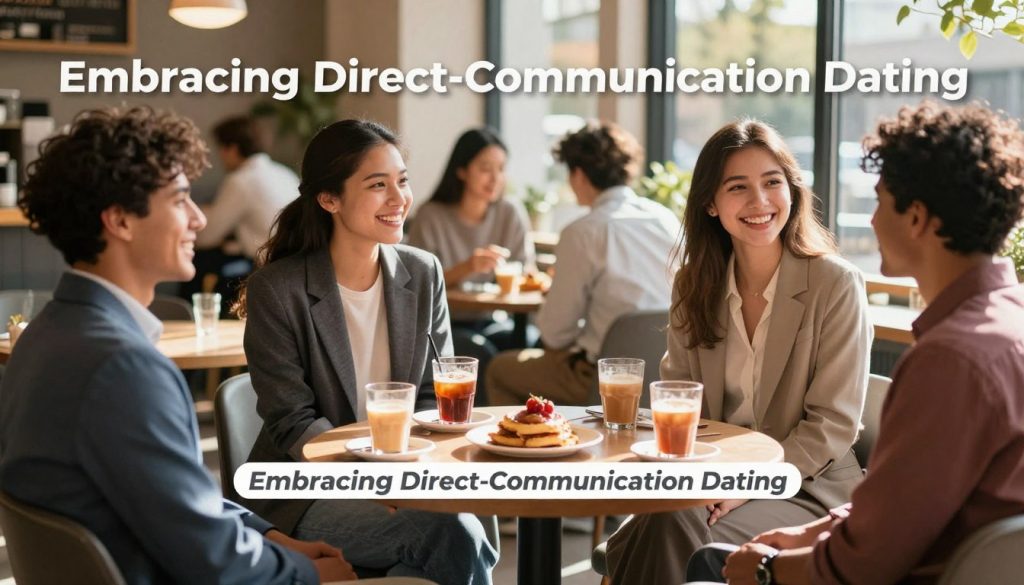
The emotional payoff is real. Anxiety from decoding mixed signals drops. You filter incompatible matches faster. Connections that remain feel more authentic from the start.
Critics say this reduces romance to a cold checklist. They miss the excitement of gradual discovery. Supporters argue it builds stronger foundations.
My practical tip? Write a short list of non-negotiables before you even log on. This prepares you for honest conversations.
Couples who start with this radical honesty often report a unique strength. They skip the games and build from a place of truth.
The Role of AI in Shaping Dating Dynamics.
The dating app landscape in 2026 is no longer just about swiping left or right, it’s become a sophisticated arena powered by artificial intelligence. I’ve noticed these platforms evolving into proactive compatibility coaches.

Vibe-Check Prompts and App Integration.
Apps now generate vibe-check prompts. These are deep questions suggested by AI to start real conversations immediately.
Instead of “How was your day?”, you might see, “What does partnership mean to you?” This cuts straight to core values. Chinese platforms like Momo and Soul have built entire libraries of these practical, forward-looking questions.
Algorithmic Matching and User Insights.
Advanced algorithms now pre-filter matches using Dealbreaker Matching. You set your non-negotiables, and the AI ensures you only see people who meet them.
Other tools analyze your chat patterns. They give feedback on your communication style, helping you refine your approach to the connection game. Of course, this raises privacy questions. Tracking behavior to predict romance feels efficient, but it’s important to stay aware of what data you share.
Exploring the "Dazi" Concept in Today's Dating Scene.
Forget traditional labels; a unique relationship model is filling the gap between casual and committed. Meet Dazi (搭子), a term for a “functional companion.”

This arrangement is built for specific activities. You might have a meal, travel, or gym partner. The rules are clear from the start.
Companionship exists without romantic expectations or heavy emotional duty. It’s a popular answer to urban isolation.
Young singles love the honesty and low pressure. Older generations often see it as fear of commitment. For many, it’s just practical.
People find their Dazi through social media groups and app features. The entire concept thrives on upfront talk about boundaries. This makes it a natural fit for today’s efficient dating culture.
Clear-Coding: Messaging Strategies to Avoid Ghosting.
To combat the anxiety of unanswered texts, a method called “Clear-Coding” is rewriting the rules of digital conversation. This philosophy treats every message as an intentional act of clarity.

It aims to eliminate the ambiguity that leads to ghosting. You state your interest, availability, and next steps plainly.
Crafting Intentional and Transparent Communication.
The technique is simple but powerful. Instead of ending a chat with “Talk later,” you might say, “I’ll text you Thursday evening to finalize weekend plans.” This sets a clear expectation.
Emotional transparency is also key. A direct “I enjoyed our date but didn’t feel a romantic spark” is kinder than a slow fade. It provides closure and respects everyone’s time.
| Clear-Coded Message | Traditional Ambiguous Message | Psychological Impact |
|---|---|---|
| “I’m interested. Can I call you tomorrow at 7 PM?” | “We should talk sometime.” | Reduces anxiety; sets a specific timeline. |
| “I can’t chat this weekend, but I’m free Monday.” | “I’m super busy, sorry!” | Manages expectations; shows continued interest. |
| “I don’t see this moving forward romantically, but I wish you well.” | *Radio silence (Ghosting)* | Provides respectful closure; builds personal integrity. |
This style gives both people a greater sense of control. The receiver isn’t left guessing. The sender practices honest direct-communication.
The main challenge is overcoming the fear that being this clear will scare people away. In reality, it filters for compatible partners who value honesty.
The Three-Message Rule: Rapid Value Alignment.
A new efficiency metric has emerged in the world of modern romance: the Three-Message Rule. This principle gives singles just three text exchanges with a new match to decide if a deeper connection is worth pursuing.

The logic is systematic. The first message checks basic communication style. The second dives into a core value, like family plans or career goals. The third confirms if alignment exists to warrant a real meeting.
Moving On When Values Do Not Align.
This rapid assessment game requires serious emotional discipline. You must be ready to walk away after three messages if fundamental values clash. The goal is to avoid the “maybe I can change their mind” trap.
If a dealbreaker surfaces, a graceful exit is key. Using clear principles, you might send a respectful note. For example, “I appreciate our chat, but our life goals seem different. I wish you well.”
Critics call the rule too rigid, risking missed connections over small misunderstandings. Supporters argue it saves people from investing months in incompatible relationships. It represents the ultimate trade-off between efficiency and traditional romance.
Digital Transparency: Social Credit and Personality Tests in Bios.
Scrolling through dating apps in 2026, I noticed a new kind of bio: a data dashboard of personal metrics. Singles now voluntarily share information previous generations considered extremely private. This digital transparency includes social credit scores and detailed personality test results.

In China, a social credit score reflects financial responsibility and civic behavior. Listing it offers immediate insight into trustworthiness. This practice is controversial but has become a common filter.
Integrating MBTI/Enneagram into Dating Profiles.
Personality frameworks like MBTI and Enneagram have exploded in popularity. Stating “I’m an INTJ” or “Type 3” acts as powerful shorthand. It instantly conveys communication style and emotional needs.
Some apps now offer verified tests within the platform. This lends credibility to self-reported traits. Additional elements like attachment style and love language preferences often appear too.
A clear generational divide exists. Older people view this as oversharing that removes mystery. Younger daters see it as efficient pre-screening that respects everyone’s time.
Accuracy concerns remain. People might select types that make them more marketable. Savvy users often text matches to verify these profile claims directly.
From "Have You Eaten?" to Discussing Future Financial Goals.
In the span of a single generation, the most common greeting among Chinese singles has transformed from a question about basic sustenance to one about financial security. “Have you eaten?” (吃了吗) was never just small talk. It reflected historical food scarcity and a deep cultural value placed on communal care.
Cultural Shifts in Initial Conversations.
Today, that warm, indirect inquiry is often replaced by blunt, practical questions. Modern opening messages might ask, “Do you own property?” or “What’s your five-year career plan?” This represents a fundamental philosophical shift.
We’ve moved from demonstrating care gradually to assessing value alignment rapidly. Parents are frequently horrified reading their children’s app chats. They can’t believe such directness is now standard.
Participating requires psychological adjustment. You must overcome feeling too aggressive or materialistic. Yet many argue this frankness actually preserves romance. It clears practical hurdles early so genuine connections can flourish.
| Traditional Approach | Modern Opening | Core Value Expressed |
|---|---|---|
| “Have you eaten yet?” | “What’s your savings rate?” | From showing care to seeking stability |
| “How was your day?” | “What’s your timeline for marriage?” | From building rapport to screening compatibility |
| Discussing hobbies and family | Disclosing debt and investment plans | From emotional connection to practical partnership |
Impact on Traditional Dating Rituals.
One of the most striking changes I’ve observed is how age-old romantic customs are being streamlined or outright discarded. The lengthy “getting to know you” phase has collapsed into a few focused conversations.
Formal introductions through family or a matchmaker are now rare. They’re replaced by app profiles that list dealbreakers upfront. The traditional “testing” period, where couples were observed in various social settings, is shortcut by immediate disclosure.
Even romantic gestures are changing. Elaborate gift-giving is often swapped for practical discussions about life partnership. The “meeting the parents” milestone now happens much earlier, as family compatibility becomes a key screening factor.
Traditional gender roles are also challenged. The expectation for men to pursue and women to be coy fades. Mutual directness and equal transparency are the new norms.
| Traditional Ritual | Modern Approach |
|---|---|
| Months of gradual rapport building | Weeks of rapid value alignment |
| Family-mediated introductions | Algorithm-based matching |
| Symbolic gift exchanges | Direct talks about financial goals |
| Late-stage parent meetings | Early assessment of family views |
Some call this a cultural erosion. Others see it as a necessary evolution. Yet, core values like family approval and the search for lasting commitment stubbornly persist.
Global Economic and Social Trends Reflected in Dating.
From Seoul to San Francisco, a quiet revolution is prioritizing practical partnership over poetic courtship. This isn’t just a Chinese trend. Shared global pressures are reshaping romance everywhere.
Delayed marriage, student debt, and housing crises make singles everywhere value efficiency. They seek partners who are financially and emotionally aligned from the start.
Cross-Cultural Perspectives on Efficiency vs. Romance.
Similar approaches are emerging worldwide. In the US, “dating résumés” list life goals upfront. India’s marriage markets focus on rapid family compatibility checks.
European speed-dating events cut straight to core values. The global debate is the same. Is this pragmatic wisdom, or does it kill the magic of spontaneous connection?
How Stability Shapes Dating Conversations.
Economic precarity has made financial compatibility a global prerequisite, not a taboo. Conversations about stability now form the foundation of modern romance.
Unique Chinese pressures, like the one-child policy’s legacy, intensify this focus. Yet the core driver—seeking security in an uncertain world—is universal.
| Culture | Approach | Primary Goal | Communication Style |
|---|---|---|---|
| United States | Dating Résumés | Rapid life-goal alignment | Direct, list-based |
| India | Marriage Markets | Family and financial matching | Formal, family-mediated |
| Japan | Konkatsu (Marriage Hunting) | Efficient partner search | Structured, activity-focused |
| China | Zhi Qiu (Straight Ball) | Immediate compatibility screening | Blunt, unambiguous |
Globalization and social media spread these ideas, creating hybrid styles. Singles blend local traditions with a new, shared language of practical love.
My Personal Journey with Direct-Communication Dating.
My adventure into upfront romance began with a mix of curiosity and deep-seated doubt. I worried this pragmatic approach would feel transactional, stripping away the magic of connection.
My first attempts were clumsy. Asking about life goals and finances felt brutally forward. To my surprise, matches often thanked me for the honesty. This mutual relief was my first clue.
Lessons Learned Along the Way.
I learned efficiency has a learning curve. Early on, I was too blunt, turning chats into interrogations. I forgot to pair hard questions with warm curiosity.
One conversation saved me months. Within three messages, we discovered a core mismatch: they dreamed of living abroad, while I was rooted locally. The clarity was painful but priceless.
The biggest surprise? This honesty didn’t create shallow bonds. It built a foundation of trust that allowed for deeper emotional vulnerability later. Practical talks about mortgages could coexist with romantic sparks.
| Aspect | My Old Approach | My New, Upfront Method |
|---|---|---|
| First Date Topics | Hobbies, movies, light banter | Life goals, dealbreakers, family views |
| Conflict Style | Avoidance, hoping issues resolve | Direct address using “I feel” statements |
| Time to Discover Dealbreakers | Months into dating | Within the first few conversations |
| Emotional Outcome | Anxiety from uncertainty | Clarity and accelerated trust |
This journey changed my communication beyond romance. I now express needs and boundaries more comfortably with friends and colleagues. The Zhi Qiu principle taught me that clarity, delivered with kindness, is a profound form of care.
Leveraging Digital Tools: Anubis and App Security in Dating.
Digital safeguards are the unsung heroes ensuring the authenticity of the modern connection game. Behind every profile swipe lies a complex infrastructure fighting bots and fraud.
Understanding Proof-of-Work and Digital Safeguards.
Systems like Anubis use a proof-of-work scheme. It requires a small computational task from your device. For a real user, this load is ignorable.
For mass scrapers or bots, the cost adds up fast. This makes large-scale fake profile creation prohibitively expensive. It’s a crucial filter for platform integrity.
This security matters for your experience. It keeps the user pool real and protects your shared data. In a culture of upfront honesty, this is vital.
Sharing financial details or social scores in a text requires trust in the platform’s walls. The tension between transparency and privacy is real.
Always verify matches with a video call before sharing sensitive info. Use in-app messaging initially. Be aware of scams that exploit the desire for quick clarity.
The future points to blockchain verification and AI that analyzes conversation patterns for fraud. Your search for an efficient partner relies on these silent, digital guardians.
Future Directions: Efficiency vs. Romance Debate.
The heart of the modern dating debate beats around a single, pressing question: is efficiency the enemy of enchantment?
I see two strong camps forming. One argues that reducing romance to a checklist kills its beautiful, unpredictable soul.
Is the "Straight Ball" Approach Killing the Magic or Saving the Future?
Critics say this turns the courtship game into a sterile transaction. They miss the thrill of gradual discovery and surprise.
However, supporters counter that the old “magic” often meant confusion and wasted time. They see upfront honesty as building a more sustainable foundation for love.
Modern life’s pressures make this efficiency feel necessary. The high stakes of partnership demand clarity from the start.
I believe the best path blends both ideas. Use direct talk to filter for core compatibility, but leave room for organic connection to spark. The future of romance might lie in this balanced game.
Conclusion
The conversation about modern romance isn’t about choosing sides, but about finding a personal balance that works. This global shift responds to time poverty and economic realism. It values clarity over ambiguity.
Some fear this reduces people to data points. The magic of surprise can feel lost. Yet, the dignity of honest communication is a powerful reward. So is the relief of finding authentic alignment.
Your journey is personal. Experiment with being clearer about your intentions. Ask important questions earlier.
The goal remains a partnership that honors both practical life and your heart’s deepest wishes. This straightforward method is one valid path toward that timeless aim.