
Let’s talk about the mistakes people often make when they try guided meditation. We’ll look at how making these errors can get in the way of their mindfulness progress. Also, we’ll discuss the common challenges and suggest ways to handle them.
Key Takeaways:
- Patience and consistency are key to successful guided meditation practice.
- Struggling with focus and distractions is a common hurdle in learning guided meditation.
- Setting realistic expectations is important to avoid frustration and disappointment.
- Proper posture and breathing techniques enhance the effectiveness of guided meditation.
- Be kind to yourself and avoid overwhelming self-criticism and judgement during the learning process.
Lack of Patience and Consistency
Many people struggle when they try to learn and practice guided meditation. They often don’t have enough patience and consistency. Our world moves quickly and we expect to see results right away. When we don’t, we get discouraged easily.
But, in guided meditation, being patient is really important. This skill needs time to grow and develop. Just like you don’t become an expert at anything in a day, finding inner peace takes time and effort in meditation.
Being consistent is just as key. It’s not enough to meditate sometimes or only when you want to. Making it a regular part of your day or week helps you get better at it. This way, you slowly turn it into a habit that’s hard to break.
Learning to be patient and consistent in guided meditation takes time. There are some tips that can help you get better at it:
- Create a Schedule: Pick times in your day or week and set them aside for meditation. Make it a fixed part of your routine.
- Start Small: At first, do short meditation sessions. Then, make them longer little by little. This helps you build up without getting overwhelmed.
- Be Kind to Yourself: It’s okay to get distracted or feel restless while meditating. Instead of getting mad at yourself, show some self-compassion. Then, gently go back to focusing on your breath or your anchor.
- Join a Community: Being with others who are also trying to be mindful can keep you going. Look for a local or online group of people who meditate.
Using these tips can help you be more patient and consistent in guided meditation. Always remember, meditation is about the journey. Every time you meditate, you get a bit closer to understanding yourself and finding peace.
Struggling with Focus and Distractions
Staying focused during guided meditation is key to its benefits. Yet, it’s easy to get distracted, making meditation tough. Here, we’ll look at helpful ways to boost focus and handle distractions.
To better focus, make a special spot for meditation in your home. Choose a calm, quiet place. Make sure it’s tidy and relaxing.
Setting an intention before each session can also help. This could be anything, like aiming for inner peace. By having a goal, you focus your energy.
Distractions will pop up sometimes. It’s vital not to fight them. Instead, notice them and gently bring back your focus to your breath or the meditation guide.
Visualization can be useful too. Picture a protective bubble around you. This protects you from distractions. Or, imagine a calming place like a beach, to keep you focused.
“The mind is restless, turbulent, obstinate and very strong, O Krishna, and to subdue it, I think, is even more difficult than controlling the wind.” – Bhagavad Gita
Mindfulness practice helps a lot. It teaches you to just watch distractions, not get caught up in them. This way, you build better focus over time.
Managing Distractions in Guided Meditation: A Quick Guide
Here are some tips for when distractions come during meditation:
- Acknowledge distractions without judgment
- Focus on your breath or the guidance provided
- Use affirmations or mantras to redirect your attention
- Employ physical techniques, such as adjusting your posture or incorporating gentle movements
- Practice self-compassion if your mind wanders or becomes restless
Remember, distractions will happen. Being patient with yourself is key. Each distraction actually helps you get better at meditation if you learn from it. By using these tips, you can have more focus in your meditations.
https://www.youtube.com/watch?v=zSkFFW–Ma0
Setting Unrealistic Expectations
Starting guided meditation means seeing it for what it is. Many people think they’ll find instant deep truths or change overnight. But, expect the journey to be more real than magic. This way, you avoid feeling let down or overwhelmed.
Realistic views are key to success in your mindfulness journey. Here’s why they’re important:
- Progress takes time: Meditation is no fast solution. It’s a slow journey that needs your ongoing effort. Just like Rome, big changes need many days. Knowing this helps you stay patient and focused. Progress is just ahead if you keep at it.
- Embrace imperfections: Being real about meditation lets you accept its ups and downs. It’s fine to lose focus or have thoughts wander. Instead of being hard on yourself, understand this is normal in learning to meditate. It’s all about getting better, not perfect each time.
- Cultivate self-compassion: Realistic goals help you be kinder to yourself. When you don’t stress over reaching certain points, you’ll find peace. This kindness is like good soil for progress. It helps you enjoy every milestone on your path.
- Enjoy the process: Meditation is not just about the end goal; it’s also the journey. Realistic views make you enjoy the now. You won’t rush for results, but live each session fully. This makes the whole experience richer and more fulfilling.
Know that guided meditation is unique to you. Accept the process with an open mind. Ditch any high hopes. Enjoy the calm it brings and the deeper understanding of yourself it offers.
Don't Miss Out on the Benefits
For a great start with guided meditation, try the Mindful Moments app. It has various sessions, made for all experience levels. It enhances your mindfulness journey. Begin today to find peace and new self-insight.
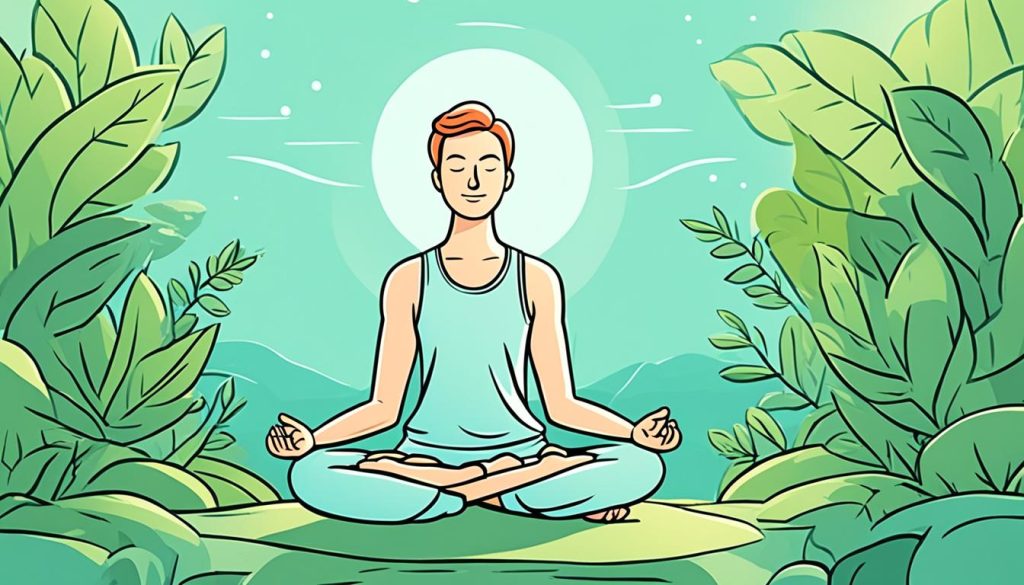
| Unrealistic Expectations | Realistic Expectations | |
|---|---|---|
| Progress | Expect instant results and complete transformation | Understand that progress takes time and consistency |
| Self-Criticism | Harshly judge yourself for any perceived failures | Cultivate self-compassion and embrace imperfections |
| Enjoyment | Focus solely on achieving specific outcomes | Find joy in the process and savor each session |
Neglecting Proper Posture and Breathing
Guided meditation needs the right posture and breathing techniques for success. Both are key but often ignored. Your meditation could be less effective without them.
A good posture sets the stage for meditation. Sitting with a straight spine supports better blood flow. It also lets you breathe freely.
This relaxed yet alert posture brings physical and mental balance. It helps ensure energy flows smoothly. This, in turn, leads to deep relaxation and clear thinking.
Breathing is just as crucial. It uses intentional breaths to focus your mind. Inhaling deeply through the nose and gently out through the mouth calms you.
Focusing on your breathing deepens your meditation. Absorb yourself in each breath, feeling present. This practice not only relaxes your body but also sharpens your mind.
To make your guided meditation better, think about your posture and breathing.
- Find a comfortable seated position: Pick something that keeps your back straight. This could be a cushion, chair, or mat.
- Align your spine: Keep your head, neck, and back in one line. This stops you from slouching.
- Relax your body: Let go of muscle tension. This helps your body to rest and meditate better.
- Focus on your breathing: Notice the feel of air coming in and out. Let it lead you into meditation.
- Practice regularly: Do guided meditation often. This builds good posture and breathing habits. It also deepens your focus.
With the right posture and breath, guided meditation becomes more powerful. They are not just actions. They take you to peace and well-being within.
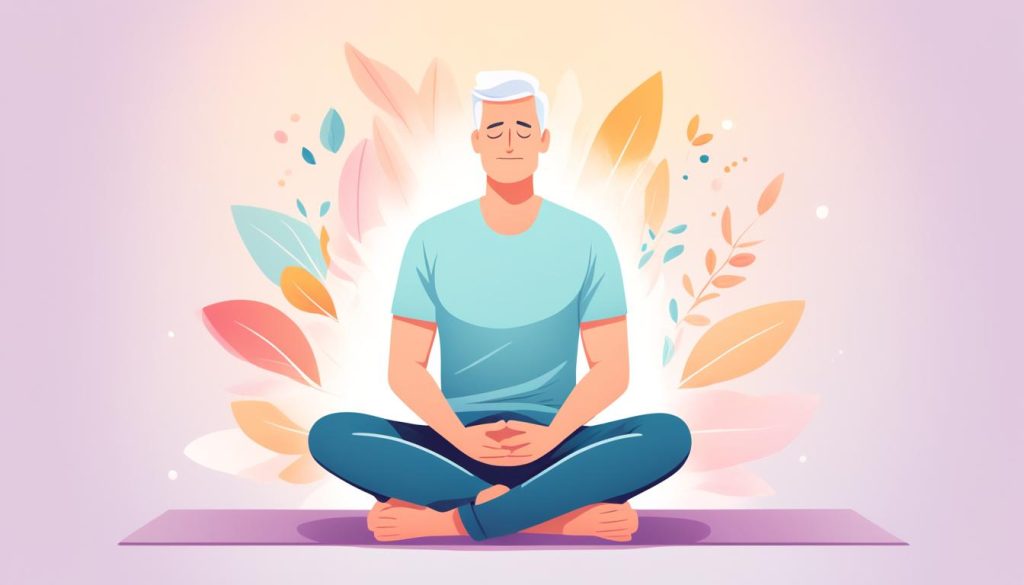
| Benefits of Proper Posture | Benefits of Proper Breathing |
|---|---|
| 1. Enhances circulation | 1. Calms the nervous system |
| 2. Supports deep relaxation | 2. Increases mental clarity |
| 3. Promotes energy flow | 3. Reduces stress |
| 4. Facilitates better focus | 4. Expands lung capacity |
| 5. Cultivates a sense of balance | 5. Anchors attention |
Overwhelming Self-Criticism and Judgement
Guided meditation often triggers self-criticism and judgment. It’s common to get distracted. But rather than being kind to ourselves, we critique our meditation skills.
Being self-aware is good, but too much self-criticism in meditation is bad. It can make us feel frustrated and overwhelmed. This leads us to focus on our flaws instead of the meditation itself, hindering our progress.
To combat self-criticism in meditation, we should start with self-compassion. Meditation is a learning process. It’s crucial to accept that our thoughts will wander without stressing over it.
The Power of Self-Compassion
Self-compassion is key in guided meditation. We should treat ourselves as we would a good friend. This approach fosters inner peace and growth.
When critical thoughts surface, approach them with kindness. Then, let them pass and refocus. This way, you’ll embrace mindfulness and reduce self-judgment.
“In our practice of guided meditation, let us remember that self-criticism is a roadblock on the path to self-discovery. By cultivating self-compassion, we create space for healing, growth, and acceptance.”
By letting go of self-judgment, we invite self-awareness and love. This transformation boosts personal development in a positive setting.
Embracing Mindfulness and Non-Judgment
Mindfulness is vital for reducing self-criticism. It teaches us to observe our thoughts without judgment. This brings peace and understanding.
To let go of self-critique, label those thoughts as “thinking.” Then, gently return your focus to the present. This practice removes self-criticism, making space for self-love and growth.
Guided meditation is about self-discovery. Remember, self-criticism is not helpful in this journey. Everyone is on a path of improvement. Being kind to ourselves is crucial for success.
Approach guided meditation with gentleness and understanding. Let go of self-criticism to heal and accept yourself. True guided meditation leads to inner peace by embracing our real selves.
Conclusion
Learning guided meditation is a journey to find calm and peace within. But, we need to watch out for some common mistakes that can slow us down. In this article, we’ve talked about how impatience, being inconsistent, and letting our minds wander often cause trouble. We’ve also highlighted the problems of dreaming too big, ignoring how we sit and breathe, and being too hard on ourselves.
It’s important to deal with these issues to meditate well. Being patient and steady is key. Doing this helps us make meditation a part of our daily life and enjoy its benefits.
Ignoring other thoughts and focusing better deepens our meditation. Realizing what we can achieve helps us keep going without getting discouraged. Good posture and breathing, and being nice to ourselves, make our meditation even more powerful.
Being aware of these mistakes and fixing them lets us connect better with ourselves and the world. A good meditation practice is more about getting better, not about being perfect. So, welcome the quiet, face the challenges, and see how meditation can change you for better.