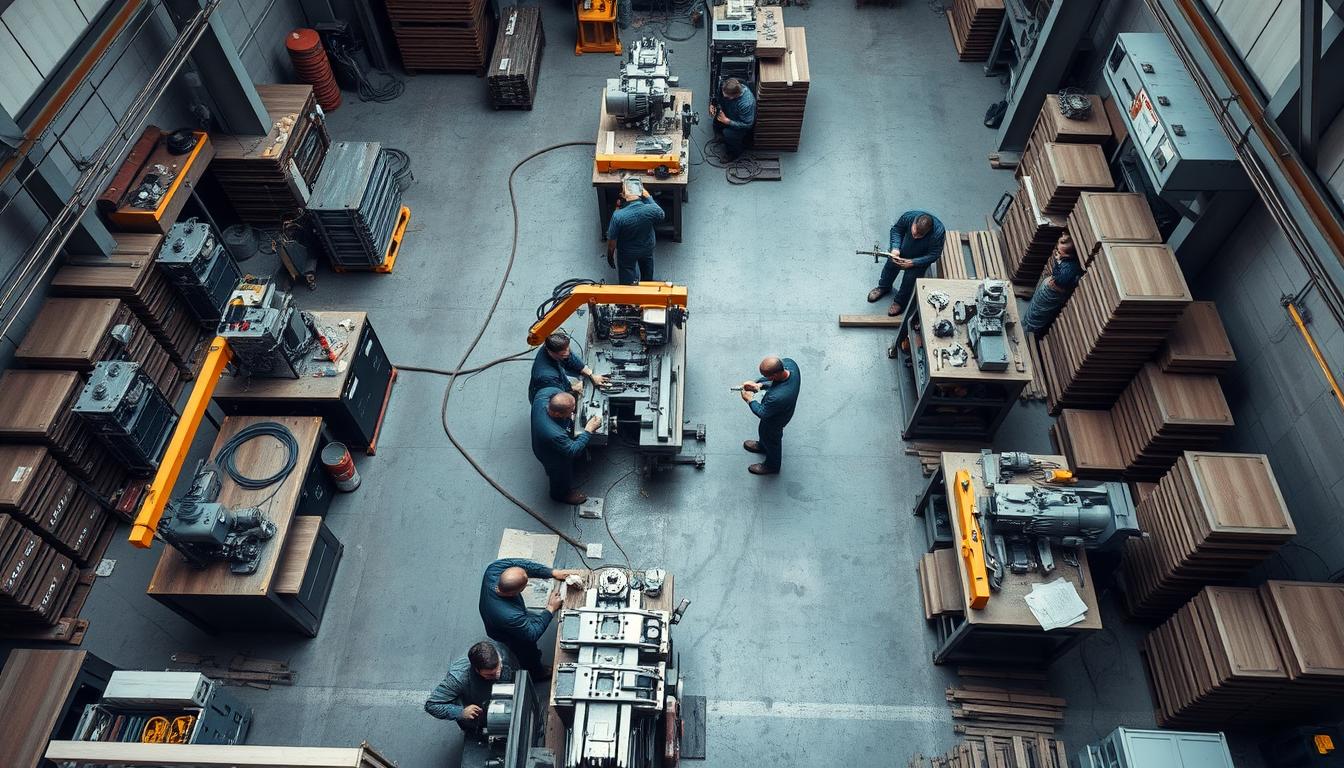
Modern manufacturing faces a big challenge: reducing costs while maintaining quality. This is especially true for metal fabrication, a resource-intensive process. Fortunately, smart manufacturers have found ways to optimize operations and cut expenses.
These include streamlining processes, selecting materials wisely, and choosing the right fabrication partners. Doing this can boost efficiency and competitiveness while improving your bottom line.
Key Takeaways:
- Specialized aluminum or 400 Series stainless steel hardware often requires 10,000-piece minimum orders. This can add six to eight weeks to lead times.
- Card guides in sheet metal parts can cost over $1,000, making them expensive to produce.
- Engraving lasts longer but costs more than silkscreening, which is a cheaper option.
- Automation in sheet metal fabrication aims to cut costs without sacrificing quality.
- Outsourcing metal fabrication can reduce equipment and machinery investment costs.
Understanding Metal Fabrication
Metal fabrication is an important process in modern manufacturing, used to shape metal parts for a wide range of industries. It involves techniques like cutting, bending, welding, and assembly to create components for everything from airplanes and cars to energy infrastructure and construction projects. By precisely shaping metal, fabrication allows for the creation of complex parts and structures essential to various industries, including aerospace, automotive, energy, and construction.
Importance of Metal Fabrication in Modern Industry
Steel is the top choice for structural metal fabrication. It offers an ideal strength-to-weight ratio. Structural metal parts include towers, platforms, and main framework components.
Commercial metal fabrication produces items like guardrails, shelving, and sinks. These products are typically smaller and more precise than structural parts. They often serve decorative or functional purposes.
Metal fabrication uses techniques like forging, casting, and welding. These methods are vital in construction, automotive, and aerospace industries. They help create a wide range of products.
“Metal fabrication is the backbone of modern industry, enabling the production of a vast array of products that power our world.”
| Metal Fabrication Technique | |
| Description | |
|---|---|
| Forging | One of the oldest forms of metal fabrication processes still widely used today for intricate metalwork. |
| Casting | Preferred for mass-produced products as it allows the use of the same mold repeatedly with minimal variance in final outcomes. |
| Drawing | Commonly used in sheet metal fabrication to create box-like or cylindrical vessels. |
| Machining | Involves drilling, turning, and milling, with CNC machines being frequently utilized for precise measurements. |
| Cutting | Utilizes technology like lasers, waterjets, power scissors, and plasma to make exact cuts, often being the first step in metal fabrication. |
| Welding | A common method for joining pieces of metal together in industrial projects, with various types like MIG, TIG, and stick welding being used based on project requirements. |
| Punching | Used to create holes in metal. |
| Stamping | Employed to make indentations such as letters, shapes, or images |
| Extrusion | Used to force metal through a die to create cylindrical shapes common in products like piping or wiring. |
Simplify Designs and Production Processes
Streamlining design and production processes cuts metal fabrication costs a lot. At the same time, simplifying designs reduces time and resources for cutting, bending, and welding. Standardizing parts leads to cost savings through economies of scale and faster production.
Streamline Design for Easier Fabrication
Design for manufacturability (DFM) principles boost production efficiency and cost savings. DFM tackles potential issues during design, making production more efficient. This approach minimizes parts needed and streamlines components, lowering overall costs.
Standardize Parts and Components
Standardizing parts is another effective way to reduce metal fabrication costs. Uniting designers, engineers, and key players helps explore cost-effective strategies early on. Integrating computer-integrated manufacturing (CIM) technology can further boost manufacturing efficiency.
“DFM directly impacts a company’s bottom line and competitiveness by reducing production costs, enhancing product quality, and improving production efficiency.”
| Key Benefits of DFM Description | |
| Cost Reduction | DFM can save big costs for manufacturers by streamlining and simplifying the manufacturing process. |
| Improved Quality | DFM aims to reduce manufacturing and assembly costs while maintaining or improving product quality. |
| Enhanced Production Efficiency | The implementation of DFM can lead to faster time to market, increased production efficiency, competitive advantage, and regulatory compliance. |
| Competitive Advantage | DFM principles can give organizations a competitive edge by offering products with lower costs, better quality, and quicker delivery times. |
- DFM helps in reducing scrap and waste during production, contributing to a more sustainable manufacturing process.
- Various teams like design engineers, manufacturing engineers, product managers, quality assurance and control teams, procurement teams, and more collaborate in the DFM process to achieve optimal results.
Streamlining design and standardizing parts can lead to major cost savings for metal fabricators. This approach improves production efficiency and boosts market competitiveness.
Choosing the Right Fabricator
Selecting the right metal fabricator does a lot in the project success and cost savings. Various factors need careful consideration. Understanding the important elements helps businesses make informed choices and find cost-reduction strategies.
Benefits of One-Stop Fabrication Shops
One-stop fabrication shops offer many advantages. They can reduce transportation costs and minimize communication errors. These shops also streamline the overall workflow, leading to cost savings.
Consolidating all fabrication services under one provider offers convenience. This results in a seamless, end-to-end process. Ultimately, it improves efficiency and cost-effectiveness.
Expertise and Experience Matter
A metal fabricator’s expertise greatly impacts cost savings and product quality. 74% of customers prioritize extensive experience in relevant projects when selecting a company. 82% value a skilled workforce and resources for handling large projects.
Partnering with an experienced fabricator ensures efficient manufacturing processes. It also provides access to cost-saving strategies. This can optimize metal fabrication projects.
| Key Factors in Selecting a Metal Fabricator | |
| Percentage of Customers Prioritizing | |
|---|---|
| Extensive experience in relevant projects | 74% |
| Skilled workforce and adequate resources for large projects | 82% |
| State-of-the-art equipment for efficient fabrication | 65% |
| Strong vendor relationships for timely project completion | 89% |
| Consideration of fabricator location and service range | 57% |
| Competitive pricing and comprehensive project estimates | 68% |
| In-house finishing capabilities for streamlined projects | 76% |
| Adequate facilities to handle projects effectively | 61% |
| Reputation for professionalism and quality work | 83% |
| Commitment to quality and relevant certifications | 70% |
Think about a fabricator’s expertise and capabilities. It ensures efficient manufacturing processes and access to cost-saving strategies. This approach optimizes metal fabrication projects for businesses.

“Partnering with a metal fabricator that has a proven track record and the necessary expertise can ensure efficient manufacturing processes and access to cost-saving strategies.”
Material Selection for Cost Savings
Choosing the right metal and thickness greatly impacts the cost of fabrication. By strategically evaluating different options, businesses can reduce expenses without compromising quality.
Metal Types
- Stainless Steel: Commonly used grades like 304 and 316 offer excellent corrosion resistance but vary in price and specific properties.
- Aluminum: Alloys such as 2024, 6061, and 7075 are popular for CNC machining due to their lightweight and strength. Each alloy has unique characteristics that make it suitable for specific applications.
- Steel: A36 and 1018 steel are versatile options available in various gauges and forms (hot-rolled and cold-rolled), offering different cost and strength advantages.
- Galvanized Steel: Widely used in sheet metal fabrication, usually in 10 to 20 gauge for corrosion protection.
- Copper: Often chosen for its conductivity and aesthetic appeal, commonly available in 1/4″ and 3/16″ thicknesses.
Thickness:
Thicker materials generally cost more due to increased material usage and processing time.
Selecting the minimum thickness necessary for the application’s structural requirements can lead to significant cost savings.
Beyond Material Selection
- Design Optimization: Simplifying designs and reducing the number of parts can lower material usage and fabrication complexity.
- Manufacturing Process: Choosing the most efficient fabrication process (e.g., laser cutting vs. plasma cutting) for the chosen material and design can further optimize costs.
By carefully thinking about these factors, businesses can make informed decisions about material selection, leading to cost-effective metal fabrication without sacrificing the quality and performance of the final product.
| Metal Type | Commonly Used Grades/Alloys | Typical Thicknesses |
| Stainless Steel | 304, 316 | Various |
| Aluminum | 2024, 6061, 7075 | Various |
| Steel | A36, 1018 | Various |
| Galvanized Steel | N/A | 10-20 gauge |
| Copper | N/A | 1/4″, 3/16″ |
Strategic Partnerships and Location
Strategic partnerships with metal fabricators can greatly optimize costs and streamline production, especially when those partners are located near your final destination. Here’s how:
Reduced Shipping Costs:
- Partnering with fabricators close to your end-use location minimizes transportation distances and expenses.
- This is particularly important for large or heavy fabricated components.
Volume Discounts and Flexible Delivery
- Strong supplier relationships often lead to volume discounts, reducing per-unit costs.
- Nearby fabricators can offer more flexible delivery schedules, ensuring timely project completion and potentially reducing inventory holding costs.
Design and Fabrication Expertise:
- Experienced fabricators provide valuable insights during the design phase, helping optimize designs for manufacturability and cost-efficiency.
- This collaborative approach can minimize material waste, streamline production processes, and reduce overall project costs.
Strategic sourcing and partnerships can greatly impact project costs and efficiency. Trusted fabrication partners help minimize expenses and boost competitiveness. Their expertise and location are key factors in achieving these benefits.
“Successful partnerships are built on a foundation of trust, communication, and a shared commitment to innovation and cost-effectiveness.”
Smart partnerships with well-located metal fabricators drive efficiency and savings. These collaborations can greatly boost your business’s bottom line. Choose your partners wisely to maximize these benefits.
Cutting Costs Without Cutting Corners
The metal fabrication industry has seen incredible changes. From Industrial Revolution breakthroughs to modern tech innovations, it’s been transformed. Many sectors rely on metal fabrication and welding for growth and jobs.
Understanding metal fabrication details can boost business profits. This includes knowing common materials and process steps. Smart strategies can lead to big savings and better competitiveness.
Cost-cutting methods include simpler designs and smoother production Smart material choices and using standard sizes can increase efficiency.
Building strong partnerships helps too. These metal fabrication cost reduction, manufacturing optimization, and profitability improvement tactics are vital. They help businesses thrive in today’s changing manufacturing world.
New tech like CAD and CNC machining is reshaping the industry. Companies that use these tools and cut costs will lead the pack. The future of metal fabrication looks bright and full of opportunities.
FAQ
What is metal fabrication?
How can simplifying designs and production processes reduce costs in metal fabrication?
Why is the choice of metal fabricator important for cost savings?
How can material selection impact the overall cost of metal fabrication?
How can strategic partnerships and the geographic location of the fabricator affect costs?
Source Links
- 9 Ways to Cut Down Cost on Metal Fabrication – SPS Ideal Solutions Blog – https://www.spsidealsolutions.com/lower-metal-fabrication-cost/
- 11 Ways to Cut Sheet Metal Fabrication Costs – https://www.protolabs.com/resources/design-tips/11-ways-to-cut-sheet-metal-fabrication-costs/
- What Is Metal Fabrication? – https://www.southernmetalfab.com/blog/what-is-metal-fabrication/
- Metal Fabrication Processes: Understanding the Different Types – https://www.metafab.com/metal-fabrication-processes-understanding-the-different-types/
- Metal Fabrication Quality Control | Superior Manufacturing – https://superiormanufacturing.com/blog/reducing-costs-through-designing-for-manufacturing-dfm/
- Design for Manufacturing (DFM): A Complete Guide – https://www.disher.com/blog/design-for-manufacturing/
- Simplifying Supply Chains with Precision Metal Fabrication – Elemet Group – https://elemetgroup.com/simplifying-supply-chains-with-precision-metal-fabrication/
- 10 Things to Consider When Choosing a Metal Fabrication Company | Swanton Welding – https://swantonweld.com/choosing-a-metal-fab-company/
- Mastering Material Selection at All Metals – https://www.ametals.com/post/mastering-material-selection-at-all-metals
- Smart Strategies for Cost-Effective Metal Fabrication < Badger Sheet Metal Works – https://www.bsmw.com/2024/02/19/smart-strategies-for-cost-effective-metal-fabrication/
- How Strategic Partnerships Fuel Business Success at Pedoc – https://pedocpower.com/how-strategic-partnerships-fuel-business-success-at-pedoc/
- What is Metal Fabrication: Definition, History, Types, Processes and Applications – TechniWaterjet – https://www.techniwaterjet.com/metal-fabrication/
- The Vital Role of Metal Fabrication and Welding in Modern Industries and the Economy – https://www.linkedin.com/pulse/vital-role-metal-fabrication-welding-modern-economy-greg-sheldon
- The Many Benefits of Metal Fabrication – Black Bull Enginering – https://blackbullengineering.co.uk/the-many-benefits-of-metal-fabrication/