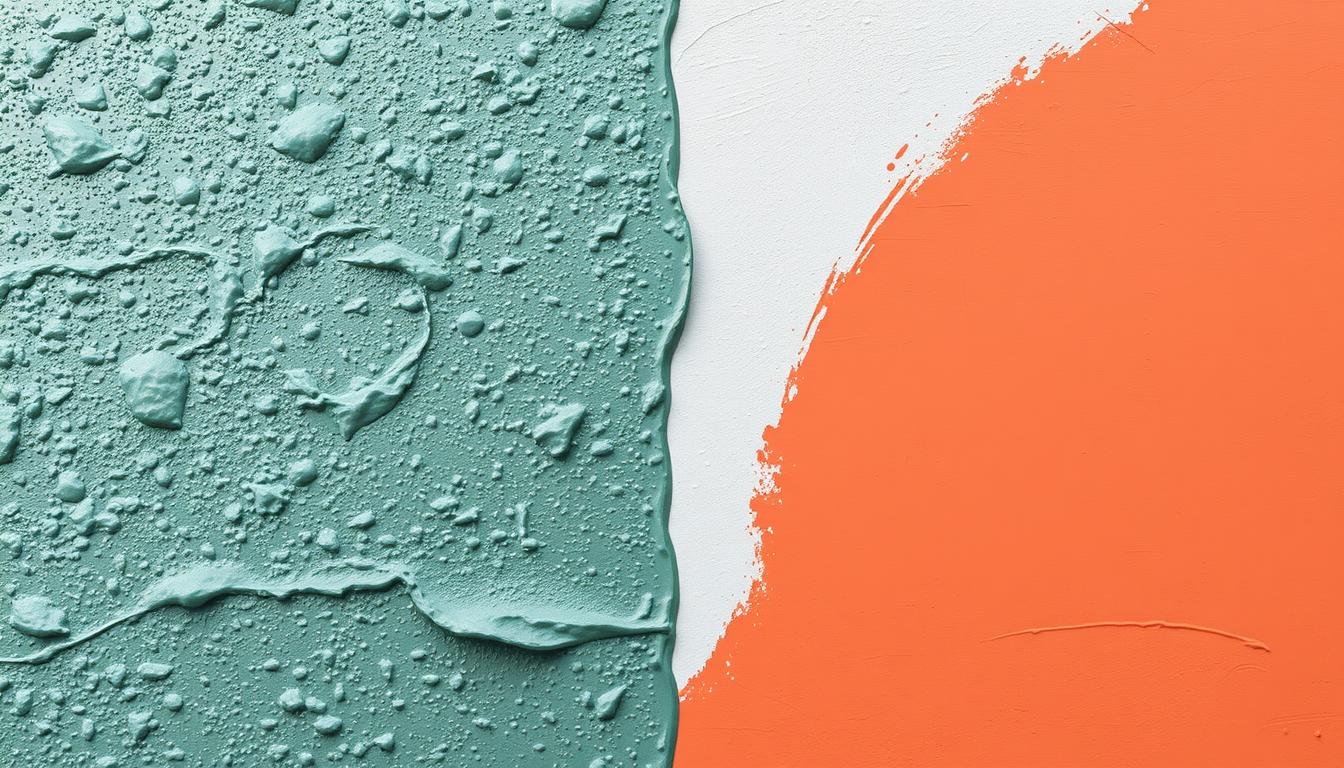
Choosing between elastomeric and traditional paint can affect your home’s exterior protection a lot. Both types have unique advantages for boosting your home’s appearance. But, to help you make the best choice for your home, you need to understand the differences between these two paint options.
Key Takeaways
- Elastomeric paint provides superior flexibility and durability compared to traditional paint.
- Traditional paint offers a wider range of color options and ease of application.
- Elastomeric paint is better suited for homes in harsh climates, while traditional paint is a classic choice for many homeowners.
- Considering factors like climate, maintenance requirements, and desired aesthetic can help you determine the right paint option for your home’s exterior.
- Consulting with a professional painter or home improvement expert can further assist in making an informed decision.
Why Paint Your Home's Exterior?
Exterior paint protects your home and boosts its curb appeal. It shields your house from sun damage, rain, and temperature changes. The right paint can also make your home look great and last longer.
For Protection
Exterior paint acts as a strong defense for your home’s siding and trim from harsh weather. It prevents moisture from seeping in, which can cause rot and mold. High-quality paint extends your home’s lifespan and preserves its value too.
For Aesthetics
Your home’s exterior paint is the first thing people notice. A fresh paint job can make it look more attractive and increase resale value. And when it comes to colors, you can choose classic or modern to transform your home’s look.
The right exterior paint protects your home and makes it look great. It’s a big decision that affects your home’s protection and curb appeal. So, choose wisely to safeguard your investment and enhance your home’s beauty.
| Benefits of Exterior Paint | |
| Impact on Home | |
|---|---|
| Protection from the elements | Preserves the structural integrity of the home |
| Enhances curb appeal | Increases the overall value of the property |
| Variety of color options | Allows homeowners to personalize the home’s appearance |
“Exterior paint is the first line of defense against the elements, protecting your home’s surfaces and preserving its value for years to come.”
What is Elastomeric Paint?
Elastomeric paint is a special exterior paint that’s really flexible and durable. It expands and contracts with the surface, so it’s ideal for homes in changing climates. This paint adapts to temperature shifts and structural movements without damage.
The elastomeric paint definition highlights its highly elastic nature. It moves with building materials, preventing cracks or peeling. This quality is very important especially if your home is affected by temperature changes or structural shifts.
Elastomeric paint has superior features. They provide excellent weatherproofing, better insulation, and a longer-lasting finish than regular paints. These paints create a water-resistant barrier, shielding surfaces from the elements.
- Elastomeric paints provide a longer-lasting finish compared to traditional exterior paints.
- These paints create a seamless, water-resistant barrier that helps prevent moisture intrusion, protecting the underlying surface from the elements and making the overall lifespan of the painted exterior longer.
- The elastic properties of elastomeric paint can make your home more energy-efficient by helping to regulate temperature changes inside. This means extra cost savings on heating and cooling expenses for you.
No wonder, elastomeric paints have become a top choice for durable exterior painting. They have cool benefits that appeal to both homeowners and contractors. Their long-lasting performance makes them a smart investment for many properties.
Traditional Paint: The Classic Choice
Traditional paint is a popular option for exterior painting. It has a wide array of paint color options and finishes. The paint application process is straightforward, making it user-friendly for professionals and DIY enthusiasts.
Many Color and Finish Options
Traditional paint boasts an expansive selection of colors. From bold hues to subtle tones, the palette is vast.
Various finishes like matte, satin, eggshell, and semi-gloss are available. These options allow homeowners to achieve their desired look and sheen.
Easy to Apply
Traditional paint application is generally simpler than specialized paints. It applies smoothly and evenly, creating a professional-looking finish.
This user-friendly nature appeals to both experienced painters and newcomers. It makes exterior painting projects more accessible to all skill levels.
“Traditional paint remains a popular choice for its wide range of color options and ease of application, making it a go-to solution for many homeowners.”
Elastomeric Paint vs. Traditional Paint: A Head-to-Head Comparison
Choosing between elastomeric and traditional paint for your home’s exterior can be tricky. Both have unique pros and cons. So, you need to fully understand these differences to help you decide.
Durability and Flexibility
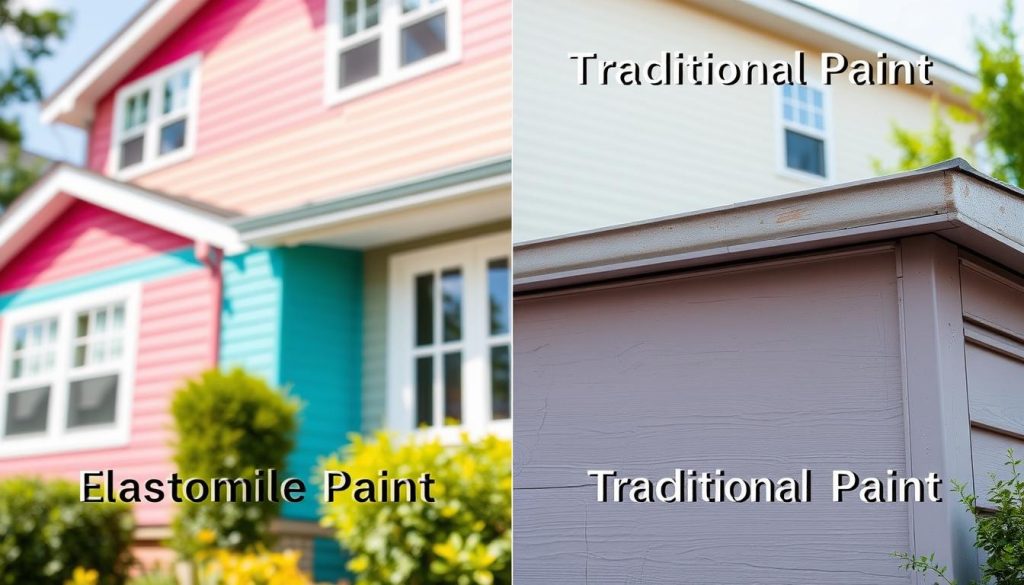
Elastomeric paint is exceptionally durable and flexible for exterior home painting. It forms a thick, rubbery layer that resists cracking and peeling. This paint withstands temperature changes, sun exposure, and minor structural shifts too.
Traditional paint, however, may crack and peel over time. It’s less able to handle environmental stresses and structural movements.
Protective Capabilities
Elastomeric paint creates a seamless barrier against water intrusion. This helps prevent damage to your home’s structure. It’s also highly resistant to mildew and mold growth.
Traditional paint offers less protection against moisture and mold. It’s more vulnerable to these issues, especially in humid or damp environments.
| Feature | ||
|---|---|---|
| Elastomeric Paint | ||
| Traditional Paint | ||
| Durability | Highly durable, withstands weathering | May crack, peel, or fade over time |
| Flexibility | Highly flexible, accommodates minor structural movements | Less flexible, can crack with movement |
| Moisture Resistance | Excellent barrier against water intrusion | More susceptible to water damage |
| Mildew and Mold Resistance | Highly resistant to mildew and mold growth | More prone to mildew and mold buildup |
Your choice between elastomeric and traditional paint depends on your specific needs. Think about your budget and local climate when deciding. The right choice will protect your home and boost its curb appeal.
The Pros and Cons of Elastomeric Paint
Elastomeric paint is popular for its durability and weatherproofing abilities. This specialized coating offers advantages for protecting and enhancing property exteriors. But, it’s important to think about the potential drawbacks before making a decision.
Advantages of Elastomeric Paint
Elastomeric paint resists cracking, peeling, and fading exceptionally well. It’s designed to withstand harsh weather, providing a long-lasting finish for your home’s exterior.
This coating is highly flexible, expanding and contracting with building movements. It effectively seals cracks and prevents moisture from seeping in, protecting your home.
Potential Drawbacks of Elastomeric Paint
Applying elastomeric paint can be more complex than traditional paints. It requires careful surface preparation and attention to detail, which can be time-consuming and costly.
The thicker consistency of elastomeric paint may limit color options. This could restrict your choices when it comes to your home’s aesthetic appeal.
Making the Choice
Choosing between elastomeric and traditional paint is about balancing long-term protection with cost and aesthetics. Elastomeric paint offers superior durability and weather resistance, perfect for harsh climates, but at a higher cost and with fewer color options. Traditional paint is budget-friendly and comes in various colors, but may require more frequent repainting due to its vulnerability to weather damage. Think about your home’s needs, climate, and budget to make the right choice for a beautiful and protected exterior.