
As someone with a Chinese cultural background navigating the American social scene, a simple question creates unexpected tension for me. Every time I’m out with someone, the moment the check arrives fills me with a quiet anxiety.
This isn’t about being frugal. For me, and many people from my culture, it’s about deeply held values. Hospitality and generosity are core social principles. Offering to pay is a sign of care and respect.
So, when the suggestion to split the bill comes up, it can feel confusing. From my perspective, it subtly signals a lack of enthusiasm or interest. It can even feel like a gentle rejection.
I know social norms have evolved. My goal here is to share my experience and bridge a cultural gap. I want to explore the awkwardness that can happen and find ways to connect better.
This guide will walk through cultural differences, share personal stories, and offer practical tips. We’ll look at how to talk about money without ruining a good vibe.
Key Takeaways
- For many with Chinese cultural backgrounds, paying for a meal is an act of hospitality, not just about money.
- The practice of “going Dutch” can be misinterpreted as disinterest or a lack of generosity.
- This tension arises from a clash between traditional values and modern American dating norms.
- Open communication about expectations is crucial to avoid misunderstandings.
- Navigating this moment gracefully requires awareness from both sides of the cultural divide.
- Personal reflection on these differences can lead to more meaningful connections.
Understanding the Complex Dynamics of Paying on Dates
Data reveals a surprising truth: money concerns aren’t just a minor detail, but a major force shaping our social lives from the very first outing. The act of paying for a date is loaded with meaning. It can signal interest, investment, or a belief about equality.

I found survey numbers incredibly telling. They show how economic reality and personal values collide at the table.
| Survey Finding | Data Point | What It Reveals |
|---|---|---|
| Rejecting an Invitation | 47% have said no due to finances | Real budget pressure affects social choices. |
| Favorite Budget Idea | 57% prefer cooking together | Creativity can ease financial strain. |
| Biggest Relationship Conflict | 35% fight over spending habits | Money habits set early precedents. |
| Taboo First-Date Topics | Finances rank with trauma & history | We avoid this vital conversation. |
This one question about the bill touches everything. It involves a person’s self-worth and their vision for a potential relationship.
The fact money is so taboo creates a strange paradox. We all think about it, but mentioning it feels awkward. Understanding this dynamic means looking beyond the simple math.
Dating Etiquette: Who Pays.
Growing up, I was taught a clear rule about social outings. The person who extends the invitation should be ready to cover the costs.
This idea was often presented in a gendered way. Many of us heard that a man should pay, particularly on a first date with women he’s interested in.
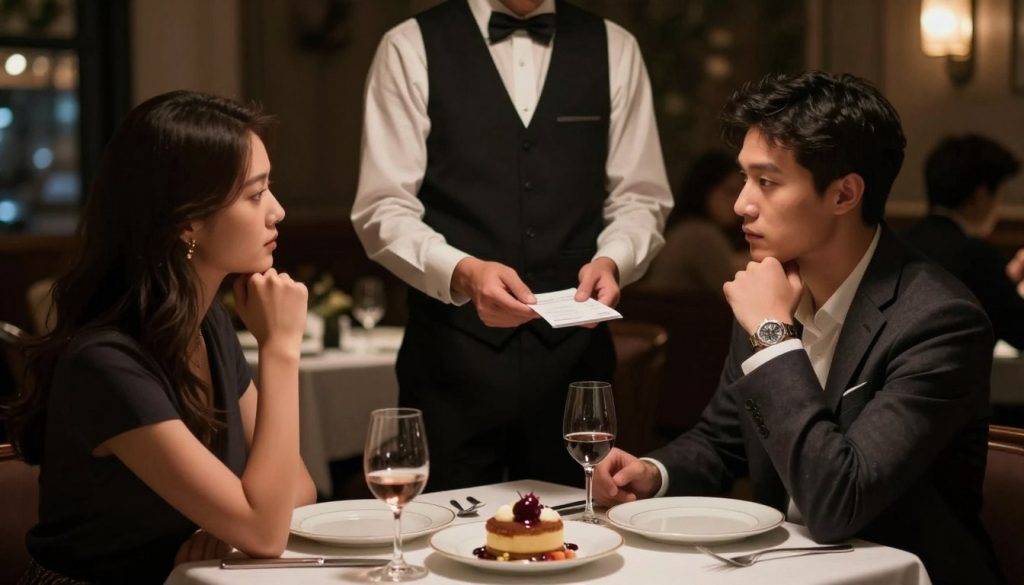
Classic etiquette supports the inviter-pays logic. Emily Post’s 18th edition advises:
“for a first date at least, the person who asks should pay unless both parties agree in advance to share expenses.”
This makes practical sense, no matter your gender.
Today, these old assumptions are being challenged. More women earn comparable incomes and value financial independence.
The topic becomes even more nuanced in LGBTQ+ relationships. Traditional gender-based rules simply don’t apply here.
Over 75% of LGBTQ+ respondents in one survey felt rules like men always paying were outdated.
The real question isn’t about finding one universal rule. It’s about understanding what our choices signal regarding respect and the kind of connection we want.
Exploring the Cultural Nuances for Chinese Expats
For many Chinese expats, the act of paying for a meal carries profound symbolic weight. It is a fundamental gesture of respect and care. This practice builds social bonds far beyond any romantic date.
I’ve seen it often. When we go out, there’s a silent expectation that one person will treat. What follows is a genuine, sometimes humorous, fight for the check. Everyone wants to show generosity.

Splitting the cost down the middle feels different. It can seem transactional. This clashes with the warmth central to our social relationships.
So, when someone suggests “going Dutch,” it sends a subtle message. It can feel like the outing wasn’t special. Worse, it might signal a lack of interest in a deeper connection.
This isn’t about the money. It’s about what the action represents. The way we handle the bill speaks volumes about care and investment.
For people dating someone from my background, please understand. This isn’t about expecting a free meal. It’s a deeply ingrained cultural script around generosity.
Navigating this difference requires an open chat. Talk about what payment means to each of you. Find a middle ground where no one feels rejected.
Personal Experiences and Anecdotes on Bill Etiquette
The most awkward moments in my social life often revolve around a simple piece of paper: the restaurant check. These stories have taught me more about people than hours of conversation.
Stories That Shaped My Perspective
On a first date, I reached for my wallet out of politeness. My date immediately said, “Great, we can split it.” I was left confused about their interest.
A friend shared a worse tale. Her date calculated the bill down to the exact cent for tax and tip. It felt incredibly transactional.
Another story from online resonates. One person was on a third date at a fancy restaurant. When the check came, her date mentioned he had other dates lined up for the week. She just stared at the bill until he paid the $500 tab himself.

Lessons Learned from Awkward Check Moments
I’ve learned a lot. The time the check sat untouched, killing our good vibe, showed me that hesitation creates tension.
Once, someone insisted on paying for an expensive dinner. I later learned they expected something in return. That taught me about uncomfortable strings.
But things aren’t all bad. I recall one meal where my date handled the payment smoothly. That quiet confidence made me want a second meeting.
The core lesson? Awkwardness usually comes from unspoken rules. Taking clear initiative works better than the silent wallet dance.
Navigating Financial Expectations on a First Date
Financial expectations on an initial outing can feel like a hidden test of compatibility. We often expect pay arrangements to be understood without words. This assumption creates real stress.
Inflation has changed the practicalities. A nice restaurant can easily cost over a hundred dollars. This isn’t a trivial cost for most people.
Singles now practice “infla-dating,” choosing cheaper options. An eharmony survey found a clear red flag: not being able to pay for a date. This signals potential financial instability.

“I don’t believe it needs to be discussed directly. Instead, it’s important for each person to be clear about the kind of relationship dynamic they want to create with a new love interest.”
The money thing is really about the dynamic you want. Choosing coffee over a fancy first date sets a different tone naturally.
Navigating this deal means being honest with yourself. Know what you can afford. Find what makes you feel comfortable and respected from the start.
Modern Shifts in Traditional Dating Roles
I’ve noticed a powerful trend in recent years that redefines generosity during shared meals. The old script where the man always pays is being rewritten. Many people now see splitting the cost as a sign of mutual respect.
Data confirms this shift. A Thriving Center of Psychology survey found 43% of female respondents see traditional rules as misogynistic. For modern women, a man automatically covering the bill can undermine their sense of independence.
“For me, the question of who pays has always been about mutual respect rather than tradition. I think equality in relationships also means equality in gestures—and that includes being willing to share or at least offer to share the bill.”
Alexander, 29
These women often tell me they feel more comfortable paying their own way on dates. Accepting payment can feel like it comes with unspoken obligations.
Many men are navigating confusing terrain over time. Some men appreciate when their date offers to split. Other men still feel paying is part of their role in courtship.
| Traditional Expectation | Modern Preference | Underlying Value |
|---|---|---|
| The man always pays for dates. | Splitting costs is common. | Financial independence & partnership. |
| Payment signals romantic interest. | Payment is a practical matter. | Agency and clear communication. |
| Gendered roles are fixed. | Roles are flexible and personal. | Gender equality in action. |

The dating landscape is evolving in real time. There’s no single rule anymore. The best way forward is for two people to talk about what feels right for their specific situation.
How to Bring Up the Bill Gracefully During a Date
The arrival of the check doesn’t have to signal the end of a good vibe if you know how to handle it. I’ve learned this moment is about confidence, not calculation.
One person shared a perspective I understand: “I never discuss payment before dates! I firmly believe this ruins the vibe. I always show up prepared to pick up the bill even if we end up splitting it.” This approach focuses on readiness over negotiation.

“Stay calm, smile, and simply reach for it. It’s far more awkward to freeze or debate. If the other insists, accept graciously, and perhaps say, ‘let me get the next one.'”
When to Initiate the Conversation
The best time is right when the server places the check on the table. Waiting creates a silent tension. A smooth, immediate action keeps the connection flowing.
I’ve found one way is to reach for it with a smile. If your date protests, you can easily say, “I’ve got this one,” or ask, “Shall we split it?” This addresses the questions without a heavy discussion.
Using Humor to Diffuse Tension
Light-hearted comments work wonders. Try something like, “Okay, rock-paper-scissors for the bill?” or “I promise I’m not judging you by your order.”
This approach makes everyone more comfortable. Being the person who confidently addresses the situation first shows you’re not afraid of small challenges.
Remember, there’s no single perfect way to handle every date. The key is staying calm and not making a big deal out of it. Your confident gesture can turn a potentially awkward moment into a display of social grace.
Practical Tips for a Smooth Payment Process
A seamless payment process can actually enhance the connection you’re building. With a bit of strategy, that moment can feel effortless.
These practical steps help avoid the silent wallet dance. They create clarity without killing the vibe.
Pre-Date Planning and Setting Expectations
I recommend choosing a venue that matches your budget. Suggesting coffee instead of dinner for first dates sets a casual tone.
This naturally lowers the financial stakes. According to an eharmony survey, 57% of people favor ‘cooking together’ as a budget-conscious idea. Hikes are also popular.
If you’re unsure, a quick text can help. Use casual language like, “Want to grab coffee and go Dutch?” This sets expectations early.

Handling the Check with Confidence
If you initiated the meet-up, be prepared to cover the bill. Having your card ready shows good form.
You can still offer to split it without seeming cheap. Fran, 32, shared her approach:
“If I initiate the date I have my card ready to grab the bill and pay. Otherwise I will ask ‘are you okay with splitting it?'”
Fumbling for your wallet creates tension. Smooth handling signals confidence.
For regular dates, get creative if paying for dates strains your budget. Free activities keep the focus on connection.
Always show appreciation, no matter who pays. A simple “thank you” goes a long way.
Avoiding Awkward Moments and Miscommunications Over Money
Awkwardness around money often stems from a simple act: the performative reach for a wallet. I’ve been in too many situations where both people try to read minds instead of being direct. This “fake reach” creates confusion, as one person secretly hopes the other will refuse.

The biggest source of tension is misaligned expectations. One assumes splitting the bill is obvious. The other expected to be treated. Neither communicated their assumption. This leads to an uncomfortable silence at the end of a nice evening.
As one person noted, “The world revolves around money and yet it’s excruciatingly uncomfortable to talk about.” We must get comfortable with brief, direct statements.
If you want to offer split, be genuine. You can say, “I’m happy to split if that works for you, or we can figure out another arrangement—no pressure.” This removes the guesswork.
| Common Awkward Moment | Root Cause | Clear Solution |
|---|---|---|
| The silent wallet dance | Unspoken rules and hesitation | Take clear, confident initiative when the check arrives. |
| The “are you sure?” follow-up | Performative gesture, not a real offer | Make a direct statement about payment preferences early. |
| Misaligned bill expectations | Lack of prior communication | Briefly discuss the plan before or at the start of the date. |
| Transactional fee calculation | Discomfort with the topic of money | Frame the conversation around mutual comfort, not just cost. |
Things go smoothly when someone takes charge. Avoid the silent standoff. A little directness prevents a lot of post-date confusion.
Balancing Traditional Gestures with Modern Equality in Dating
The heart of the matter isn’t about money, but what a simple gesture says about care and independence. I’ve thought a lot about honoring old-fashioned courtship while respecting modern equality.
Some women still appreciate when men take the lead. It creates a romantic dynamic. Relationship coach Rachel Rose champions this polarity.
“I believe men should court women in whatever way they can. That doesn’t mean dates have to be expensive; sometimes the simplest ones are the most meaningful. What matters is that the man takes initiative and creates an experience where his potential partner feels special and cared for.”
Rachel Rose, Relationship Coach
She also noted men don’t want to feel expected to pay early on. Many men enjoy treating women. They see it as a kind gesture, not an outdated rule.
The key is recognizing a man paying doesn’t mean the woman lacks agency. It can be a chosen dynamic within their relationship.
In same-gender partnerships, traditional scripts don’t apply. Roles are negotiated based on personality, not gender. Martine Rose highlights this well.
“For me, it’s not gendered—it’s about gesture. The person who suggests or invites can offer, and the other can reciprocate next time.”
Martine Rose
Women who value equality can still accept generous gestures. They can reciprocate by planning the next outing or contributing in other ways.
| Aspect | Traditional Focus | Modern Partnership | Core Value |
|---|---|---|---|
| Initiative | Man leads and plans. | Either partner can initiate. | Shared responsibility. |
| Payment Dynamic | Man pays as a gesture of care. | Costs are often shared. | Mutual respect. |
| Reciprocity | Woman shows gratitude. | Both partners reciprocate in various ways. | Balanced exchange. |
| Ultimate Goal | To signal romantic interest and provide. | To build an equal, loving relationship. | Connection and love. |
There’s no single right answer. Some couples prefer traditional arrangements. Others split everything. Both can come from a place of mutual respect.
Real-Life Lessons from Paying, Splitting, and Sharing the Bill
Listening to friends’ stories, I’ve realized that payment dynamics often set the tone for future encounters. Who pays first on a first date creates a subtle expectation. It often influences plans for a second date.
Hadley, who works in finance, shared her experience. She often makes more than the men she goes out with. She always reaches for her wallet. Yet, they insist on covering the meal. This shows financial capacity isn’t the only factor.
Neha uses the moment as a kind of test. She explained, “If they take the receipt quickly I usually still offer pay because it’s easier to tell then… It helps nip red flags in the bud.” For a second date, she noted they usually still pay. She might reciprocate later with a small gift.
Cassidy highlighted nuance in her experience. “I gave her cash for the tip. She paid for our uber to the next location, so I bought her a drink.” This natural back-and-forth builds a balanced rhythm over time.
| Lesson | Real-Life Example | Key Takeaway |
|---|---|---|
| First payment sets a precedent. | One person covers dinner, creating an unspoken expectation of reciprocity. | Discuss preferences early to align expectations for future dates. |
| Offering to split reveals character. | Neha uses the gesture to gauge intentions and avoid pettiness later. | The offer pay itself can be a valuable litmus test. |
| Reciprocity builds connection. | Cassidy’s story shows a fluid exchange of small contributions. | Balance doesn’t mean splitting every restaurant bill down the middle. |
| Thoughtfulness trumps cost. | A cheap meal handled with grace beats an expensive dinner with tension. | Communication around payment matters more than the amount. |
Real life has taught me there’s a lot of variation. Some alternate every time. Others split every one. What works is mutual comfort and clear intent, not a single rule.
Wrapping Up: Embracing Honest Communication in Dating
What I’ve gathered from countless meals and conversations is simple yet profound. At the end of the day, clear talk about expectations prevents most awkward situations.
As Alexander, 29, shared, his partner offering to contribute set a tone of mutual respect. That gesture showed maturity and built a healthier relationship.
For Chinese expats, “going Dutch” doesn’t have to feel like rejection. Understanding its roots in equality helps bridge the cultural gap.
The right way to handle a date bill emerges naturally through honest chats. Focus on the people, not the payment, and let connection guide your future dates.