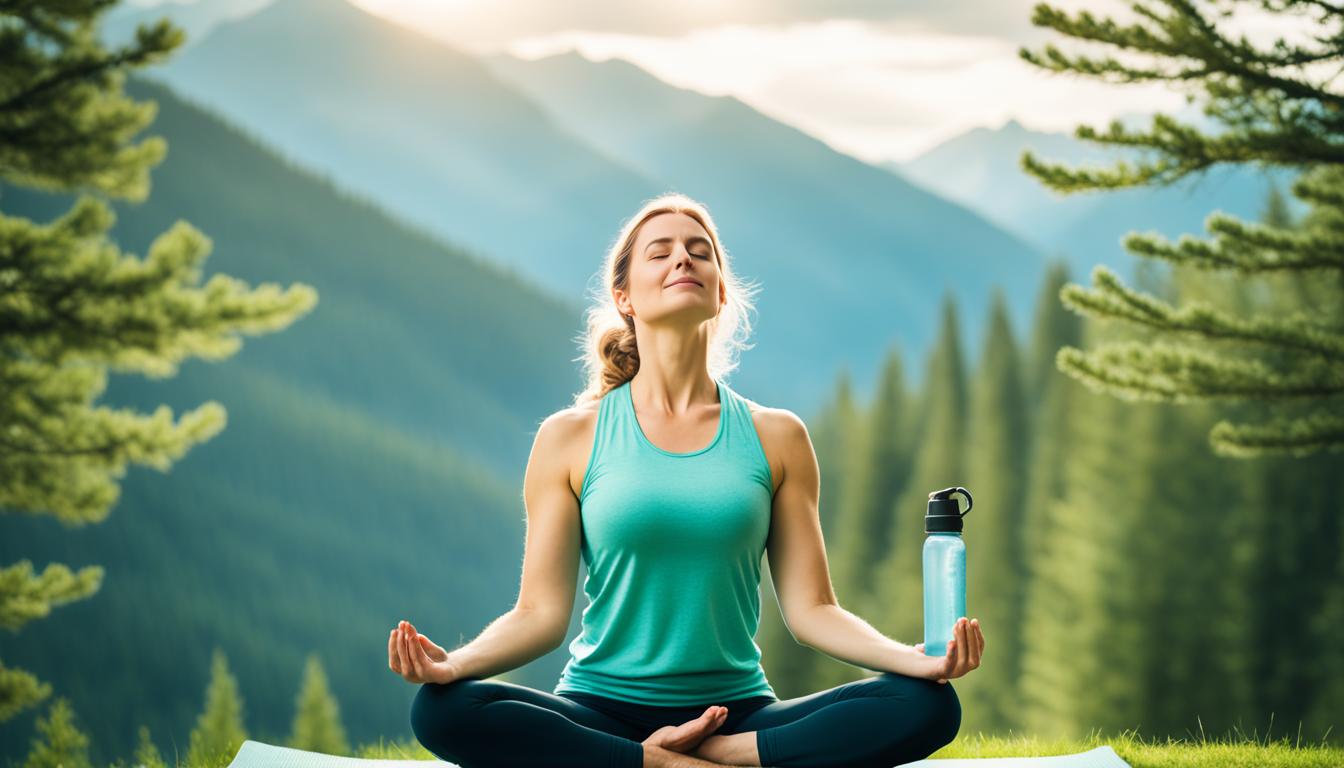
Adding mindfulness and mental wellness to your fitness plan is key for a complete approach. It doesn’t matter if you’re a pro athlete or just starting out. Meditation can greatly boost your physical performance. This guide will show you how meditation and fitness work together to improve focus, lower stress, and speed up recovery.
Studies in the “Journal of Health Psychology” prove that meditation helps your mental health and boosts your physical performance. Top fitness trainers say meditation is a great addition to your workout routine. People who have tried it share their stories of success and challenges, proving its real benefits.
Key Takeaways
- Meditation adds a mental wellness focus to your fitness plan.
- It helps improve focus and lowers stress, which is good for your workouts.
- Science backs up the good effects of meditation on mental health and fitness.
- Experts say meditation is a great addition to your exercise routine.
- People’s stories show how meditation has helped them in their fitness journey.
- Our beginner meditation guide makes it easy to start meditating for fitness.
- Regular meditation can make you recover faster after working out.
Understanding Meditation: What Beginners Need to Know
Starting to learn about meditation is both thrilling and enlightening. It’s a powerful way to improve well-being. Meditation uses different methods to help people become more aware and focused.
What is Meditation?
Meditation is an old practice aimed at keeping the mind in the present. It includes mindfulness, transcendental, and guided meditation, among others. Studies in “Mindfulness” show it connects the mind and body deeply.
The Benefits of Meditation for Fitness Enthusiasts
Adding meditation to your fitness routine has many perks. It boosts mental clarity, lowers stress, and improves focus, as found in “American Journal of Lifestyle Medicine.” These benefits mean better workouts, faster recovery, and improved performance.
Common Misconceptions About Meditation
Many myths surround meditation, like it takes a lot of time or is only for the religious. But experts, as seen in wellness magazines, say it’s flexible and fits any lifestyle. They clear up the idea of complex rituals, showing simple mindfulness is enough.
Preparing for Your First Meditation Session
Starting your first meditation session needs careful planning and a peaceful setting. We’ll look at how to make the perfect meditation setup and set achievable meditation goals for a rewarding experience.
Choosing the Right Environment
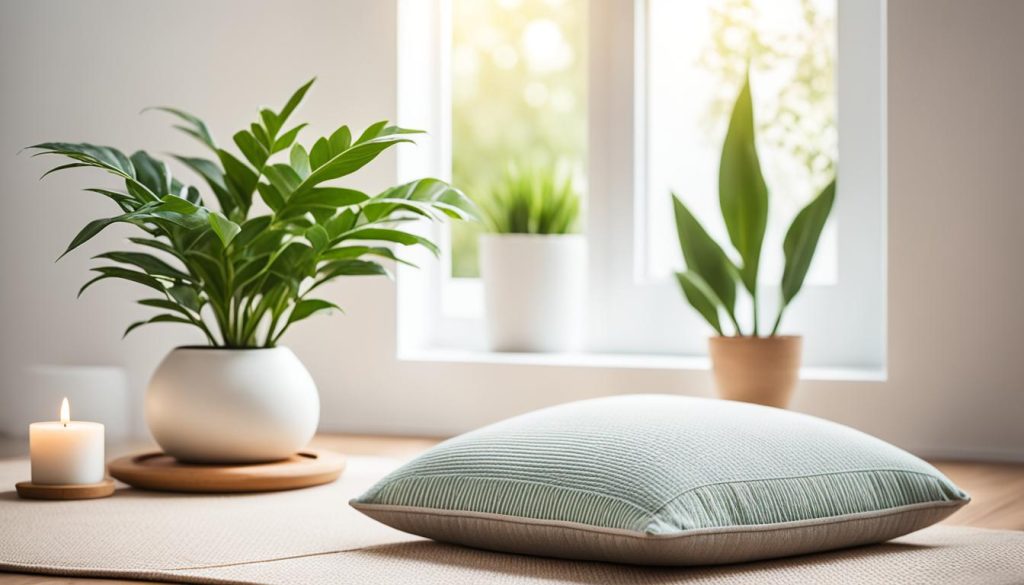
Finding a calm meditation space is key for a good session. Pick a quiet, tidy spot where you won’t be interrupted. Experts suggest adding aromatherapy or soft music to make it even better.
- Select a quiet spot.
- Ensure the area is clutter-free.
- Consider using aromatherapy or calming music.
Experts say a tidy space helps you get into meditation and stay focused. This is very helpful for beginners who are new to meditation.
Setting Your Intentions
It’s important to set clear meditation goals to make your meditation personal. Think about what you want to achieve, like reducing stress or improving your mood. Studies in “Behavioral Sciences” show that having clear goals helps you stick with new habits.
Some good ways to set your goals include:
- Think about your fitness and wellness goals.
- Decide what you want to get from each session.
- Change your mindfulness preparation based on what you need each day.
Studies show that starting meditation in your busy life starts with clear goals. Setting these goals will help guide your meditation, making each session more meaningful and part of your fitness plan.
Fitness Meditation Techniques for Beginners
Starting your meditation journey can feel overwhelming, but the right practices make it rewarding and beneficial. We’ll explore essential meditation techniques for fitness lovers.
Breathing Exercises
Breathing for meditation is key for beginners. Simple breathing exercises boost your breathing efficiency, vital for athletes. The 4-7-8 technique is a great start:
- Inhale through your nose for 4 seconds.
- Hold the breath for 7 seconds.
- Exhale slowly through your mouth for 8 seconds.
This method helps you stay calm and focused during workouts. It shows how meditation helps in fitness.
Guided Imagery
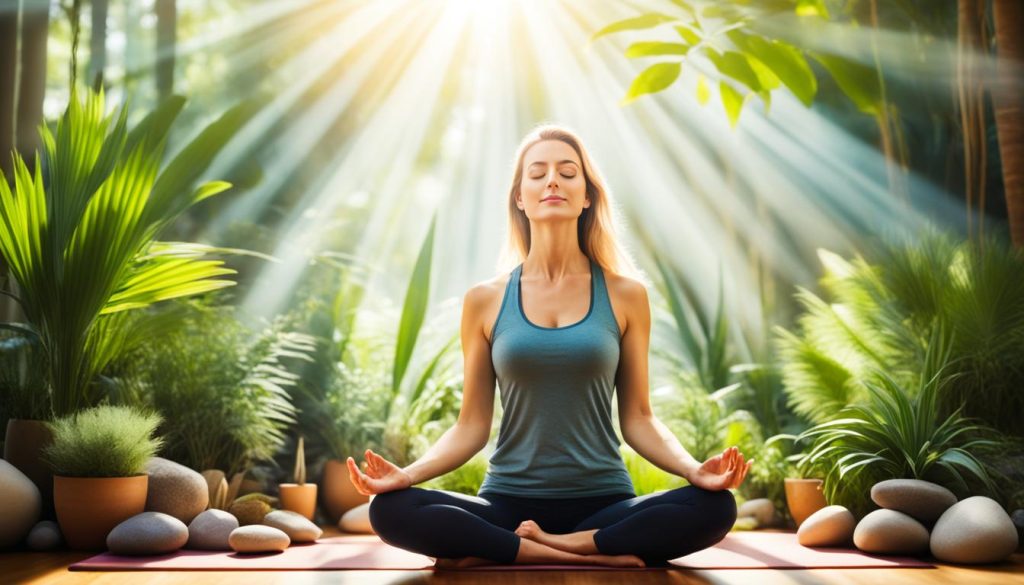
Guided meditation, especially through guided imagery, relaxes your mind and boosts athletic visualization. Close your eyes and picture a peaceful place or achieving your workout goal. Studies in “The Journal of Alternative and Complementary Medicine” show it improves performance by making you mentally ready and positive. This meditation gives you a mental boost in your fitness journey.
Body Scan Meditation
Body scan meditation makes you aware of your body, helping you spot areas needing recovery or focus. This involves mentally scanning from head to toe, noticing any feelings without judgment:
- Find a comfy spot and close your eyes.
- Start at your toes and slowly move up your body.
- Relax muscles in tense areas.
Doing this regularly can help prevent injuries by keeping you in touch with your body’s needs. Physical therapy experts recommend it for its benefits in avoiding injuries and aiding recovery.
| Meditation Technique | Benefits for Fitness Enthusiasts |
|---|---|
| Breathing Exercises | Improves respiratory efficiency and focus. |
| Guided Imagery | Enhances athletic visualization and mental preparedness. |
| Body Scan Meditation | Encourages body awareness and aids in injury prevention. |
Integrating Meditation into Your Fitness Routine
For fitness lovers, adding meditation to your daily workout can boost both your physical and mental health. Start with short meditation sessions before or after your workout. This helps calm your mind, focus better, and get ready for exercise. After your workout, meditation helps with recovery by making you relax and easing muscle tension.
When you meditate at the right time, it helps with your workout and keeps your mind clear. Studies show that meditating right after a tough workout helps athletes manage stress and recover faster. Morning meditation sets a positive mood for the day. Evening sessions help with sleep and muscle recovery.
Fitness experts like Joe Wicks mix meditation with exercise. How often and long you meditate should match your fitness goals. Start with 5-10 minutes a day and increase as you get more comfortable. If you’re into intense workouts, 15-20 minutes of meditation can be really helpful.
Influencers like Adriene Mishler show how meditation and exercise together create a balanced fitness plan. This makes it easier to stay motivated and reach your fitness goals.
Adding meditation to your daily routine improves your athletic performance and balances your body and mind. Whether you’re new to fitness or have been doing it for years, finding the right meditation schedule for you is key to enjoying its benefits.