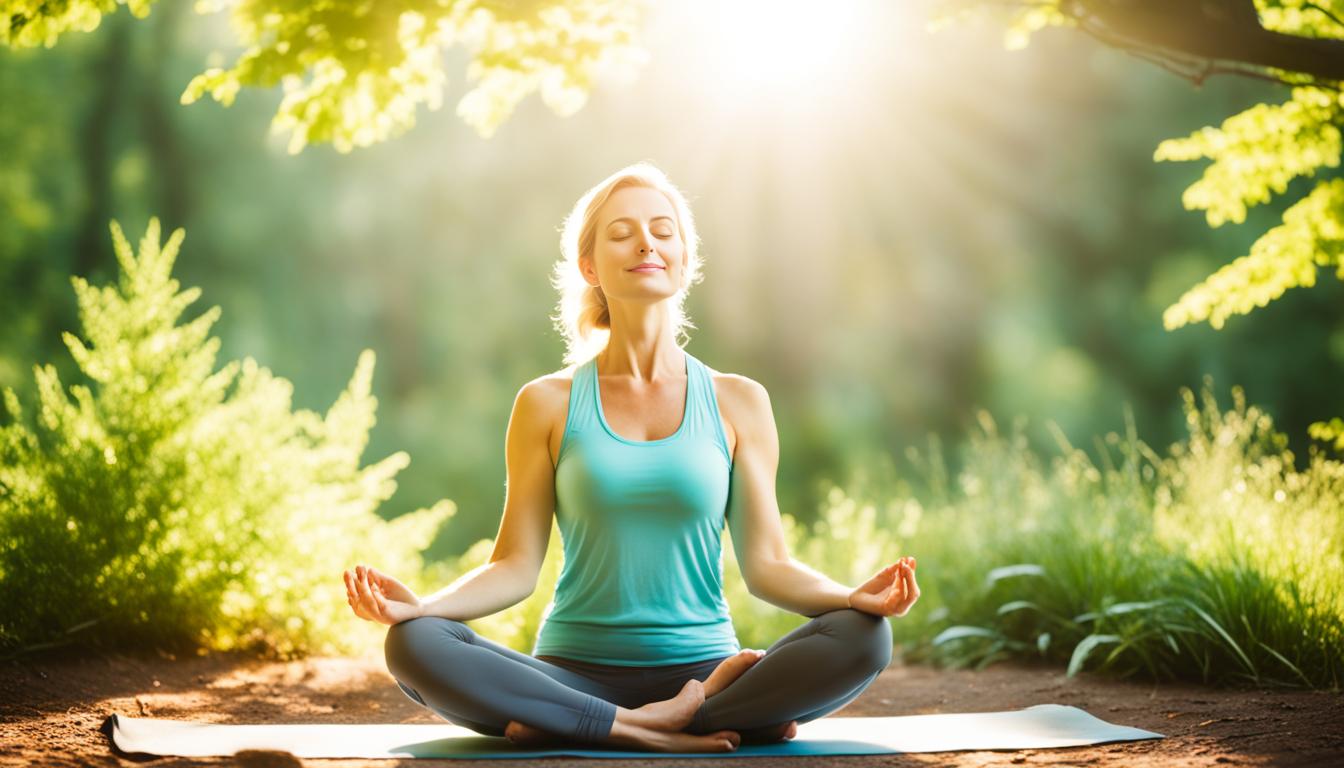
Meditation is gaining popularity among fitness enthusiasts. It helps enhance physical and mental well-being. This practice focuses the mind to achieve calmness and heightened awareness.
Mindfulness and meditation can reduce stress and improve mental focus. They also boost overall performance in your fitness routine.
This guide helps beginners start meditating and blend it with fitness goals. We’ll explore meditation’s benefits for fitness and guide you on preparing.
You’ll learn basic meditation techniques and tips for overcoming common challenges. This guide will lead you to a more mindful and balanced lifestyle.
Key Takeaways
- Meditation can enhance both physical and mental well-being for fitness enthusiasts
- Incorporating mindfulness into your fitness routine can reduce stress and improve focus
- This guide provides a step-by-step approach for beginners to start meditating
- Learn basic meditation techniques and how to integrate them with your fitness goals
- Discover tips for overcoming common challenges and maintaining a consistent practice
Understanding the Benefits of Meditation for Fitness
Meditation offers many benefits for mental and physical health. It can boost your overall well-being when added to your fitness routine. Let’s look at how meditation helps fitness enthusiasts.
Mental Health Benefits
Meditation promotes emotional well-being and reduces anxiety. It trains your mind to focus on the present moment. This practice helps you develop inner peace and emotional resilience.
Meditation improves sleep quality, crucial for mental and physical recovery. It quiets the mind and reduces stress levels. Better sleep leads to improved cognitive function and enhanced mood.
Physical Health Benefits
Meditation can lower blood pressure, reducing heart disease and stroke risk. It promotes relaxation and helps alleviate chronic pain like headaches and back pain.
Regular meditation practice boosts immune function. It helps the body fight infections more effectively. Meditation reduces inflammation and enhances the body’s natural healing processes.
“Meditation is a powerful tool for both the mind and body. By incorporating it into your fitness routine, you can experience a profound sense of well-being and unlock your full potential.”
Adding meditation to your fitness routine creates a balanced approach to wellness. It addresses both mental and physical health aspects. This combination helps you achieve greater harmony and optimize your well-being.
Preparing for Your Meditation Practice
Setting the stage for meditation is crucial. Create an enjoyable environment and mindset. This will help you reap the benefits of meditation as a fitness enthusiast.
Creating a Conducive Environment
Make a dedicated meditation space. It should be quiet, comfortable, and distraction-free. Use cushions or mats for better posture and comfort.
Add calming elements to create a peaceful atmosphere. Soft lighting, soothing scents, or gentle background music can help.

Choosing the Right Time and Place
Set a regular meditation schedule. Pick a time when you’re least likely to be interrupted. Early morning or evening often work well.
Choose a safe and peaceful location. Find a spot where you can fully relax and focus. It could be your bedroom, nature, or a dedicated room.
Setting Realistic Expectations
Approach meditation with a beginner’s mindset. Remember, it’s a skill that needs practice and patience. Distractions, restlessness, or discomfort are normal when starting out.
Be kind to yourself. Progress may be slow, but celebrate small victories. You’re taking steps to improve your mental and physical well-being.
The most important thing is to commit to regular practice and be patient with yourself as you develop your meditation skills.
Prepare well for your meditation journey. Wear comfy clothes that allow easy breathing. Approach each session with an open and curious mindset.
Basic Meditation Techniques for Beginners
Exploring different meditation techniques can help you find the best fit for your needs. Three key methods can support your fitness goals and well-being. Let’s look at mindfulness, guided, and breath-focused meditation.
Mindfulness Meditation
Mindfulness meditation focuses on the present moment without judgment. It helps you observe thoughts and feelings with curiosity. Find a comfy seat, close your eyes, and focus on your breath.
Notice each inhale and exhale. Let thoughts come and go without getting attached. Regular practice can boost awareness, cut stress, and improve emotional control.
Guided Meditation
Guided meditation is great for beginners. It offers structure and support throughout the practice. A teacher or recording leads you through a visualization or relaxation exercise.
This method helps those who struggle to focus or quiet their minds. It often includes deep breathing and body scans. Following guidance can bring calm, reduce worry, and boost positive thinking.

Breath-Focused Meditation
Breath-focused meditation involves concentrating on the feeling of breathing. This simple technique anchors your attention to the present moment. It helps create a sense of calm.
Sit comfortably and close your eyes. Take a few deep breaths, noticing the air moving through your nose. Let your breath return to normal. Gently refocus if your mind wanders.
Adding these techniques to your fitness routine can boost physical and mental health. Try meditation apps for guided practices and progress tracking. Start with short sessions and slowly increase the time as you get comfortable.
The greatest meditation is a mind that lets go.
| Meditation Technique | Key Features | Benefits |
|---|---|---|
| Mindfulness Meditation | Present moment awareness, non-judgmental observation | Reduces stress, improves emotional regulation |
| Guided Meditation | Visualization, relaxation exercises, structured guidance | Enhances focus, reduces anxiety, promotes positive visualization |
| Breath-Focused Meditation | Concentration on breath sensation, anchoring attention | Cultivates calmness, improves present moment awareness |
Incorporating Meditation into Your Fitness Routine
Mixing meditation with fitness can boost your mind-body link and overall performance. Pre-workout meditation sharpens focus and preps you mentally. It helps you approach exercise with a clear mind, fully present in the moment.
Post-workout meditation aids physical and mental recovery. It reduces stress and promotes relaxation after intense training. Calming your mind and focusing on breathing can release tension and fatigue.
Yoga and tai chi blend physical movement with meditation. These ancient practices combine breath work, stretches, and flowing movements. They improve flexibility, balance, and strength while promoting mental clarity.
The mind-body connection is a powerful tool in enhancing overall fitness and well-being. By incorporating meditation into your fitness routine, you can tap into this connection and experience the transformative benefits it brings.
You can still meditate with a busy schedule. Try brief sessions during rest periods or cool-downs. Close your eyes and focus on your breath between sets or after workouts.
Consistency is key. Over time, short meditation breaks can greatly improve your fitness journey.
| Meditation Technique | Benefits | When to Practice |
|---|---|---|
| Pre-workout Meditation | Enhances focus and mental preparation | 5-10 minutes before exercise |
| Post-workout Relaxation | Promotes physical and mental recovery | 5-10 minutes after exercise |
| Yoga or Tai Chi | Improves flexibility, balance, and mind-body awareness | 30-60 minute sessions, 2-3 times per week |
Approach meditation with an open mind and willingness to explore. Try different techniques to find what works for you. The mind-body connection you build will enhance your fitness experience and well-being.
Overcoming Common Challenges in Meditation
Starting a meditation practice can be challenging. Mind wandering, physical discomfort, and staying motivated are common obstacles. With the right strategies, you can overcome these hurdles and build a consistent practice.
Dealing with Distractions
Distractions are a frequent challenge in meditation. When your mind wanders, gently acknowledge the thoughts without judgment. Then, redirect your focus back to your breath or chosen mantra.
Remember that it’s natural for the mind to drift. With practice, you’ll improve your ability to maintain focus during meditation sessions.
Managing Restlessness and Discomfort
Physical discomfort can arise during meditation, especially when sitting for long periods. Find a comfortable position before starting your practice. If discomfort persists, mindfully adjust your posture or take a brief stretch break.
Your body will adapt to the practice over time. Soon, you’ll find it easier to sit comfortably for longer durations.
Staying Motivated and Consistent
Maintaining motivation is key to reaping meditation’s benefits. Set a regular meditation schedule and stick to it. Find a meditation buddy or join a supportive community to stay inspired.
Celebrate your progress, no matter how small. Remember, every meditation session helps deepen your self-awareness and inner peace.