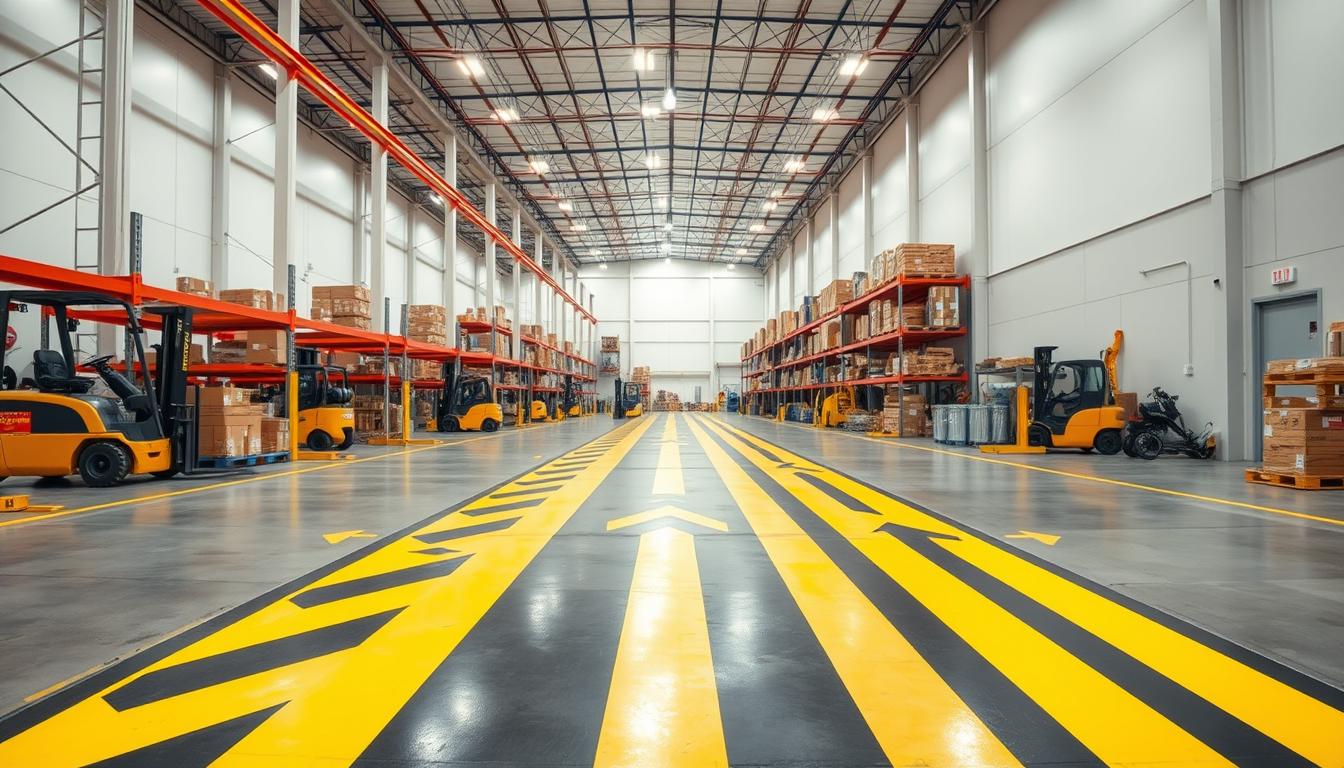
“An ounce of prevention is worth a pound of cure,” Benjamin Franklin once said. This wisdom rings especially true in today’s busy warehouse environments.
Every year, over 95,000 warehouse workers suffer injuries on the job across the United States. Many of these accidents happen because of poor visibility and unclear pathways. Workers get hurt when they can’t see where to walk safely or where equipment should go.
Floor markings offer a simple yet powerful solution to this problem. When you use proper visual cues, you create clear boundaries that guide both people and machinery. This approach transforms chaotic spaces into organized, safer work environments.
Smart warehouse managers know that paint striping prevents accidents through strategic planning. The right marking system serves as one of the most effective accident prevention strategies available today.
Let’s explore five proven methods that make your warehouse safer. These techniques protect your team while boosting productivity and reducing costly insurance claims.
Key Takeaways
- Over 95,000 warehouse workers get injured annually in the United States
- Floor markings create clear visual boundaries for safer navigation
- Strategic striping systems guide both workers and equipment effectively
- Proper markings reduce insurance claims and boost workplace productivity
- Five proven methods can transform warehouse safety through visual organization
Why Warehouse Safety Starts with Proper Floor Markings
Warehouse accidents don’t happen by chance—they occur when visual guidance fails, making proper floor markings the cornerstone of prevention. Floor markings create an immediate safety language that every worker understands, regardless of their experience level or native language. This universal communication system forms the foundation upon which all other safety protocols build their effectiveness.
The psychology behind visual safety cues reveals why road markings safety principles work so effectively in warehouse environments. Human brains process visual information 60,000 times faster than text, making painted lines and symbols the most efficient way to communicate safety requirements. Workers instinctively respond to clear visual boundaries, reducing the cognitive load required to make safe decisions throughout their shifts.
Proper floor markings eliminate the confusion that often leads to workplace accidents. When pathways, hazard zones, and equipment areas are clearly defined, workers can navigate confidently without second-guessing their movements. This clarity becomes especially critical during busy periods when attention may be divided among multiple tasks.
Visual organization directly impacts safety behavior development. Consistent floor markings train workers to maintain awareness of their surroundings and follow established safety patterns. Over time, these visual cues become automatic triggers for safe practices, creating a self-reinforcing cycle of accident prevention.
The regulatory framework supporting warehouse floor markings demonstrates their fundamental importance. OSHA requirements specifically address the need for clear visual communication in industrial settings, recognizing that proper markings serve as the first line of defense against workplace injuries. Compliance with these standards isn’t just about avoiding penalties—it’s about creating an environment where safety becomes second nature.
| Safety Benefit | Impact Level | Implementation Cost | Maintenance Frequency |
|---|---|---|---|
| Accident Reduction | High | Low | Annual |
| Worker Confidence | High | Low | Bi-annual |
| Regulatory Compliance | Critical | Moderate | As needed |
| Operational Efficiency | Medium | Low | Annual |
Building a culture of safety awareness starts with these visual foundations. When management invests in comprehensive floor marking systems, it sends a clear message about safety priorities. Workers respond positively to environments where safety considerations are visible and well-planned, leading to increased engagement with all safety protocols.
The connection between proper floor markings and comprehensive warehouse safety extends beyond immediate accident prevention. These visual systems create predictable traffic patterns, reduce equipment damage, and improve overall operational efficiency. When safety becomes integrated into the physical layout through strategic markings, it transforms from an additional consideration into an inherent part of daily operations.
How Paint Striping Prevents Accidents: 5 Proven Methods
Warehouse managers can leverage five proven paint striping strategies to significantly improve safety outcomes. These methods work together to create a comprehensive visual guidance system. Each approach targets specific accident risks while contributing to overall workplace safety.
The effectiveness of these methods stems from their ability to provide clear visual cues that guide behavior and decision-making. Workers can instantly recognize safe zones, traffic patterns, and potential hazards. This immediate recognition reduces reaction time and prevents dangerous situations from developing.
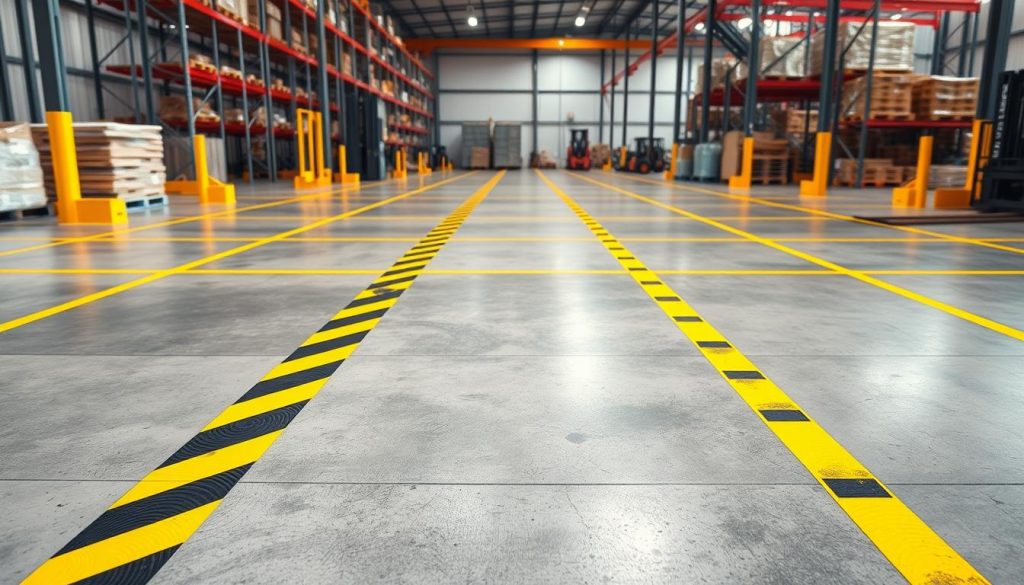
1. Defining Clear Traffic Lanes and Pedestrian Walkways
Separating vehicle traffic from pedestrian areas represents the most fundamental way paint striping prevents accidents. This method creates distinct pathways that eliminate confusion about where people and equipment should operate.
How It Prevents Accidents
Clear lane definition prevents the most common warehouse accidents: collisions between forklifts and workers. Visual boundaries create predictable traffic patterns that both operators and pedestrians can follow. The human brain processes visual information faster than verbal instructions or written signs.
When workers see bright yellow or white lines marking their walkways, they instinctively stay within these boundaries. Equipment operators can focus on their designated lanes without constantly scanning for pedestrians. This separation reduces cognitive load and allows both groups to work more efficiently.
Real-World Examples
Amazon distribution centers use contrasting color schemes to separate pedestrian walkways from forklift traffic lanes. Their facilities feature bright yellow pedestrian paths alongside white equipment lanes. This system has become an industry standard due to its effectiveness.
Manufacturing facilities often implement zebra-striped crosswalks at intersection points. These high-visibility markings alert equipment operators to potential pedestrian crossing areas. The striped pattern creates a universal signal that demands attention and caution.
Safety Impact
Companies implementing clear traffic lane systems report 40-60% reductions in pedestrian-vehicle incidents. The National Institute for Occupational Safety and Health found that facilities with properly marked walkways experience significantly fewer workers’ compensation claims. Insurance companies often provide premium discounts for warehouses with comprehensive floor marking systems.
2. Marking Hazardous Areas and Obstructions
Identifying dangerous zones through paint striping prevents accidents by making invisible hazards visible. This method transforms potential accident sites into clearly marked areas that workers can easily avoid.
How It Prevents Accidents
Hazardous area marking works by creating visual warnings that trigger automatic safety responses. Red striping around machinery, chemical storage areas, and electrical panels alerts workers to exercise extra caution. The color psychology of red naturally signals danger and promotes careful behavior.
This approach prevents accidents by establishing clear boundaries around equipment with moving parts. Workers can maintain safe distances without constantly measuring or guessing appropriate clearances. The visual cues become second nature, reducing the mental effort required for safety compliance.
Real-World Examples
Chemical processing facilities use red diagonal striping to mark areas containing hazardous materials. These zones often include additional symbols or text to specify the type of danger. The combination of color and pattern creates unmistakable warnings that prevent accidental exposure.
Automotive manufacturing plants mark robot operation zones with bright red boundaries. Workers can see exactly where automated equipment operates and avoid entering these areas during production cycles. This system prevents serious injuries from contact with industrial robots.
Safety Impact
Proper hazardous area marking reduces chemical exposure incidents by up to 70% according to Occupational Safety and Health Administration data. Facilities with comprehensive hazard marking report fewer equipment-related injuries and lower insurance premiums. The visual warning system proves especially effective for new employees who may not yet understand all workplace dangers.
3. Designating Storage Zones and Material Handling Areas
Organized storage through paint striping prevents accidents by eliminating clutter and creating predictable material placement. This method ensures that inventory, equipment, and supplies have designated locations that don’t interfere with traffic flow.
How It Prevents Accidents
Storage zone designation prevents accidents by eliminating obstacles from walkways and traffic lanes. When materials have clearly marked locations, workers don’t leave items in random places where they create trip hazards. The visual organization system makes it immediately obvious when something is out of place.
This approach also prevents overloading by clearly defining space limits for different types of materials. Weight restrictions and stacking guidelines become visual rather than theoretical. Workers can see exactly how much space is available and avoid creating unstable piles.
Real-World Examples
Retail distribution centers use color-coded storage zones to separate different product categories. Electronics might be stored in blue-marked areas while clothing occupies green zones. This system prevents incompatible materials from being stored together and reduces handling errors.
Construction supply warehouses mark load limits directly on the floor using painted numbers and symbols. These markings show exactly how much weight each area can safely support. Forklift operators can make informed decisions about material placement without consulting separate documentation.
Safety Impact
Organized storage systems reduce material handling accidents by 35-50% according to industry studies. Facilities with designated storage zones experience fewer back injuries from lifting improperly placed items. The clear organization also speeds up inventory processes and reduces the time workers spend in potentially dangerous areas.
4. Guiding Equipment and Vehicle Movement
Directional guidance through paint striping prevents accidents by creating predictable traffic patterns for all types of warehouse equipment. This method eliminates confusion about right-of-way and reduces the likelihood of collisions.
How It Prevents Accidents
Equipment guidance systems prevent accidents by establishing traffic flow patterns that eliminate head-on collisions and intersection conflicts. Arrows, lane dividers, and directional markings create a road system within the warehouse. This organization reduces the cognitive load on equipment operators who can focus on their immediate tasks rather than navigation decisions.
The system also prevents accidents by clearly marking turning radiuses and clearance requirements for different types of equipment. Operators can see exactly how much space they need for safe maneuvering. This visual information prevents collisions with racks, walls, and other equipment.
Real-World Examples
UPS sorting facilities use directional arrows and numbered lanes to guide package delivery trucks through loading areas. Each lane is clearly marked with its designated route and time restrictions. This system prevents traffic jams and reduces the time vehicles spend in pedestrian areas.
Cold storage warehouses implement specialized markings that remain visible in low-light conditions. Reflective paint and high-contrast colors ensure that equipment operators can follow traffic patterns even in challenging environments. These facilities often use glow-in-the-dark elements for emergency situations.
Safety Impact
Facilities with comprehensive equipment guidance systems report 45% fewer equipment-related accidents. The predictable traffic patterns reduce stress on operators and improve overall efficiency. Insurance companies recognize these systems as significant risk reduction measures and often provide substantial premium discounts.
5. Enhancing Emergency Preparedness and Evacuation Routes
Emergency route marking through paint striping prevents accidents by ensuring rapid and safe evacuation during crisis situations. This method creates clear pathways that remain visible even in poor lighting conditions.
How It Prevents Accidents
Emergency route marking prevents accidents during evacuations by providing unambiguous directional guidance when normal lighting may be compromised. Glow-in-the-dark paint and high-contrast colors ensure visibility during power outages or smoke conditions. The markings eliminate confusion about which direction leads to safety.
This system also prevents accidents by clearly marking evacuation assembly points and emergency equipment locations. Workers can quickly locate fire extinguishers, first aid stations, and emergency exits without searching. The visual system works even when verbal communication is difficult or impossible.
Real-World Examples
Pharmaceutical manufacturing facilities use photoluminescent paint for emergency evacuation routes that charge from normal lighting and glow for hours during power outages. These markings include arrows pointing toward exits and symbols indicating emergency equipment locations. The system meets strict regulatory requirements for emergency preparedness.
Food processing plants implement emergency route markings that remain visible even when floors are wet or covered with product spills. Special anti-slip additives in the paint provide additional traction during emergency evacuations. The markings are designed to withstand frequent cleaning with industrial sanitizers.
Safety Impact
Proper emergency route marking reduces evacuation time by up to 60% according to fire safety studies. Facilities with comprehensive emergency marking systems experience fewer injuries during drills and actual emergencies. Regulatory agencies often cite these systems as examples of best practices in emergency preparedness.
| Paint Striping Method | Primary Safety Benefit | Accident Reduction Rate | Implementation Cost | Maintenance Frequency |
|---|---|---|---|---|
| Traffic Lanes & Walkways | Prevents pedestrian-vehicle collisions | 40-60% | Low | Annual |
| Hazardous Area Marking | Reduces chemical and equipment exposure | Up to 70% | Medium | Semi-annual |
| Storage Zone Designation | Eliminates clutter and overloading | 35-50% | Low | Annual |
| Equipment Movement Guidance | Prevents equipment collisions | 45% | Medium | Annual |
| Emergency Route Marking | Ensures safe evacuation | 60% faster evacuation | High | Bi-annual |
These five methods demonstrate how paint striping prevents accidents through systematic visual organization. Each approach addresses specific safety challenges while contributing to overall warehouse safety culture. The combination of all five methods creates a comprehensive safety system that protects workers and reduces operational risks.
The effectiveness of these methods depends on proper implementation and regular maintenance. High-quality materials and professional installation ensure that markings remain visible and effective over time. Regular inspection and touch-up maintenance preserve the safety benefits and demonstrate ongoing commitment to worker protection.
Essential Factors for Effective Warehouse Striping
The effectiveness of your warehouse striping project hinges on three critical implementation factors. These elements work together to create a comprehensive safety system that protects workers and reduces accidents. Understanding each factor helps ensure your investment delivers lasting results.
Choosing the Right Paint and Materials
Material selection forms the foundation of any successful striping project. Standard acrylic paints work well for basic applications but may not withstand heavy traffic or harsh conditions. Epoxy coatings offer superior durability and resist chemical spills, making them ideal for industrial environments.
Reflective striping materials provide enhanced visibility in low-light conditions and areas with limited lighting. These specialized materials contain glass beads or retroreflective elements that bounce light back to the source. This makes them particularly valuable for night shifts or dimly lit warehouse sections.
Consider your facility’s specific needs when selecting materials. High-traffic areas require more durable options, while emergency routes benefit from highly visible colors and reflective properties. Factor in your budget, expected lifespan, and maintenance requirements when making decisions.
Proper Planning and Layout Design
Effective striping starts with comprehensive facility assessment and strategic planning. Walk through your warehouse during different shifts to understand traffic patterns and identify potential conflict points. Document current operations and consider future growth when designing your layout.
Measure your space accurately and create detailed floor plans before starting any work. Mark existing obstacles, equipment locations, and structural elements that affect traffic flow. This planning phase prevents costly mistakes and ensures optimal placement of safety markings.
Design your striping system to accommodate both current needs and anticipated changes. Leave room for operational adjustments while maintaining clear sight lines and adequate spacing. Professional layout design considers ergonomics, efficiency, and safety in equal measure.
Regular Maintenance and Compliance
Striping effectiveness diminishes over time without proper maintenance. Establish regular inspection schedules to identify worn areas, fading colors, and damaged sections. Prompt touch-ups maintain visibility and prevent safety hazards from developing.
Stay current with OSHA requirements and industry standards that govern warehouse markings. Compliance isn’t just about avoiding penalties—it ensures your striping system meets proven safety benchmarks. Regular updates keep your facility aligned with evolving regulations.
Create maintenance logs to track when areas need attention and schedule preventive care. This proactive approach extends the life of your striping system and maintains consistent safety standards. Document all maintenance activities for compliance records and future planning purposes.
Best Practices for Striping Implementation
The key to effective warehouse striping lies in following proven best practices from installation through maintenance. Proper implementation ensures your safety markings remain visible and effective for years to come. Success depends on making smart decisions about professional installation and establishing reliable maintenance routines.
Many warehouse managers underestimate the complexity of professional striping projects. The process involves more than simply applying paint to floors. Strategic planning, quality materials, and skilled execution all contribute to long-term success.
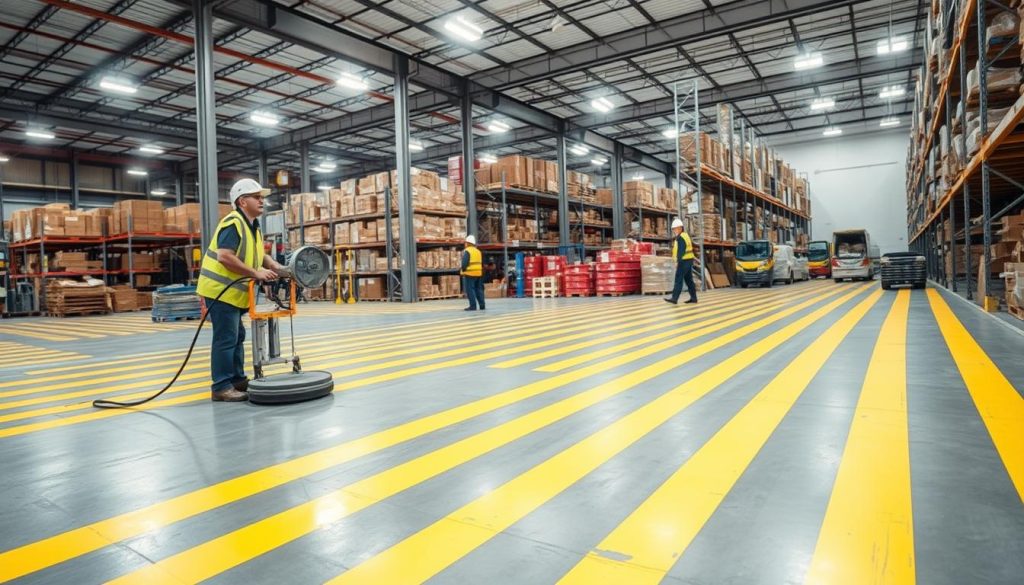
Working with Professional Installers
Choosing qualified professional installers makes a significant difference in your warehouse striping results. Experienced contractors understand the unique challenges of warehouse environments and know which materials work best for different applications.
When evaluating potential installers, look for companies with specific warehouse experience. Ask about their safety training and knowledge of OSHA requirements. The right team will conduct a thorough site assessment before recommending striping solutions.
“A professional installer should always provide a detailed project timeline and explain how they’ll minimize disruption to your operations during installation.”
Quality installers will also handle facility preparation properly. This includes cleaning surfaces, addressing any floor repairs, and coordinating with your team on timing. They should provide clear documentation of their work and offer warranties on their installation.
During the installation process, expect regular communication about progress and any unexpected issues. Professional teams work efficiently while maintaining high safety standards throughout the project.
Ongoing Maintenance Schedules
Developing effective striping maintenance procedures keeps your safety markings visible and compliant over time. Regular maintenance prevents costly full replacements and maintains consistent safety standards.
Create a monthly inspection schedule to check all striping areas. Look for signs of wear, fading, or damage that could compromise visibility. High-traffic areas typically need more frequent attention than storage zones.
Your maintenance schedules should include specific cleaning protocols for different types of markings. Standard floor striping needs different care than specialized safety markings. Document any issues you find during inspections.
Plan touch-up work based on your inspection findings. Minor repairs completed promptly prevent larger problems from developing. Keep matching paint colors in stock for quick fixes.
Consider seasonal maintenance schedules that account for your warehouse’s busiest periods. Schedule major maintenance work during slower times to minimize operational disruption. Consistent maintenance schedules help budget for striping costs throughout the year.
Training your maintenance team on proper striping maintenance procedures ensures consistent care. Provide clear guidelines on when to handle repairs internally versus calling professional services. This balanced approach maximizes both safety and cost-effectiveness.
Conclusion
Paint striping stands as one of the most effective accident prevention strategies available to warehouse managers. The five methods we’ve explored create a comprehensive safety framework that protects workers while boosting operational efficiency.
Clear traffic lanes separate pedestrians from equipment. Hazard markings alert workers to dangerous areas. Designated storage zones prevent material handling accidents. Equipment guidance systems reduce collision risks. Emergency evacuation routes save lives during critical situations.
Smart facility managers recognize that proper striping delivers measurable returns. Reduced workplace injuries lower insurance premiums. Improved traffic flow increases productivity. Clear organization systems minimize downtime. These accident prevention strategies pay for themselves through operational improvements.
Start by walking your warehouse floor today. Identify areas where confusion creates risk. Document high-traffic zones that need better definition. Note storage areas lacking clear boundaries.
Partner with experienced striping professionals who understand OSHA requirements. Develop a maintenance schedule that keeps markings visible and effective. Your workers deserve a safe environment that lets them focus on their jobs without worrying about preventable accidents.
Every day you delay implementation is another day your team faces unnecessary risks. Begin planning your warehouse striping project now.