
Imagine a delicious dish placed right in the middle of the table. This simple act can spark laughter and start deep conversations. It turns a meal into something much more than just eating.
This style of eating, where everyone reaches for the same plates, creates an immediate feeling of togetherness. On a dinner date, it breaks down formal barriers. You are not just two people with separate orders.
Many traditions around the globe have perfected this communal approach over generations. In places like China, dining is fundamentally designed for connection, not for quiet, solitary plates. It’s a framework built for social interaction.
Passing a plate shows vulnerability and openness. These are key ingredients for any meaningful bond. Research even shows a direct link between how couples share meals and their perceived intimacy.
In our fast-paced world, sitting around a shared table offers a rare chance to slow down. It allows you to be truly present with the person across from you. This timeless practice remains a powerful way to build a genuine connection.
Exploring the Cultural Roots of Communal Dining
The round table, laden with shared dishes, tells a story older than any written history. Across generations, this practice has been the heartbeat of many cultures. Every gathering revolves around a table filled with items meant for everyone.
The Historical Significance of Family-Style Meals
This dining style is an integral part of family life. It represents far more than a practical way to enjoy the food. For thousands of years, it has strengthened social bonds.
The iconic image is a shared surface slowly filling with various dishes. No one asks what someone ordered because the meal belongs to all. This framework encourages interaction from the very first bite.
Traditions and Rituals That Enhance Connection
Meaningful gestures transform ordinary meals. Rotating a lazy Susan ensures everyone can reach each dish. Serving elders shows respect.
Pouring tea for others before yourself demonstrates selflessness. Waiting until everyone is served creates a sense of equality. These cultural rituals make dining together an act of care.
Such practices are passed down through families year after year. They help people stay connected to their heritage. The food becomes a common focus, creating space for appreciation of the time spent together.
Sharing Food China Dating: A Gateway to Deeper Connection
The moment you suggest splitting entrees, you’re inviting more than just a taste of the menu. This choice creates a collaborative dynamic from the start.

Research from Columbia University provides fascinating insight. Paul Rozin and his team found that sharing food is a measurable indicator of intimacy.
Letting someone eat from your plate shows a deep level of comfort. It signals trust that goes beyond a typical friendship.
How Shared Dishes Spark Conversation and Intimacy
Ordering for the center of the table naturally sparks dialogue. You discuss preferences and make recommendations together.
Sampling new flavors at the same time creates instant, shared reactions. This process builds a unique bond between people.
Rozin’s data is compelling. Sharing an item you’ve already touched can boost perceived romantic connection from 74% to 90%.
“The act of food-sharing is a big indicator for the level of intimacy within romantic relationships.”
Paul Rozin, Columbia University
This simple act removes a lot of first-date pressure. It gives both individuals a joint focus beyond conversation.
The Subtle Art of Nonverbal Communication at the Table
Nonverbal cues speak volumes during a shared meal. Reaching to serve your date shows attentiveness.
Offering the best piece conveys thoughtfulness. Synchronized movements while eating together foster a sense of unity.
These silent gestures build a foundation of care. They set a tone of partnership early in a relationship.
Discovering flavors together forges shared memories. These experiences strengthen the bond between two people over time.
Building Relationships One Shared Dish at a Time
Consider the last time you offered a bite from your plate to someone else. It was a gesture loaded with meaning. This simple act builds connections in a powerful way.

Think about the different bonds in your life. Each one can be strengthened at the table.
- Romantic partners find deeper intimacy.
- Close friends create lasting memories.
- Professional contacts build mutual respect.
Every shared meal adds another layer to these connections.
Food as a Symbol of Trust and Thoughtfulness
Selecting dishes for another person shows you care. You consider their tastes and needs. This makes them feel truly seen.
In many relationships, a shared plate is the first “shared” item. It happens before moving in together. This small step is a big foundation.
A lot of trust is needed to eat from the same plate. This trust then spreads to other parts of your bond. It breaks down walls between people.
The symbolic meaning is profound. Offering nourishment taps into a deep human instinct. It says, “I want to provide for you.”
Over time, these shared meals create a unique history. They become your traditions. This gives the relationship its own special structure.
The Role of Dining Experiences in Fostering Community and Intimacy
Our earliest memories of nourishment shape how we connect over meals as adults. This foundation turns every shared table into a space for building bonds.
Dining together plays a crucial part in our relationships. It turns routine moments into opportunities for genuine connection.
Transforming Routine Meals into Meaningful Connections
A simple lunch break becomes special when dishes are meant for everyone. Instead of eating alone, colleagues talk and friends reconnect.
The table acts like a pause button in a busy day. This practice makes ordinary time feel more valuable.
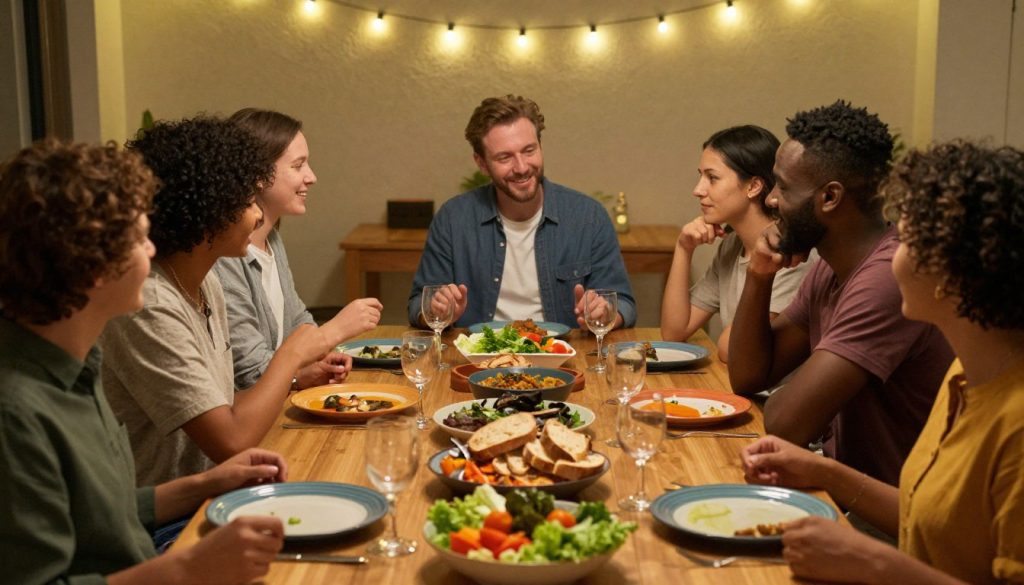
From Casual Dinners to Celebratory Feasts
Special occasions are often marked with feasts where each dish has meaning. A whole fish can symbolize abundance for the coming year.
Long noodles represent a wish for a long life. Sweet desserts hope for a good future. The meal itself becomes part of the celebration.
Insights from Cultural Practices in Chinese Dining
Intentional design, like round tables, ensures equal access for every person. Customs that prioritize others foster a strong sense of community.
Research shows women and men may view these acts differently. Women often see feeding as care-taking, while men may link it more to romance.
This difference stems from childhood. The bond formed when a parent feeds a child is one of our first forms of trust.
Recreating that care dynamic as adults is a powerful way to build quick closeness. It explains why a shared meal can deepen a relationship so fast.
Wrapping Up the Journey: Embracing the Power of Shared Meals
Gathering around a common platter transforms a simple meal into a shared journey. This practice builds strong bonds with friends and partners throughout life.
For your next outing, pick a spot with shareable plates. Be fully present by putting devices away. Try new flavors together as a team.
The time you invest in these moments pays off. It creates lasting memories and deeper connections between people.
See every meal as a chance to strengthen your relationships. Embrace this timeless tradition to add more meaning to your days. Start with one shared dish and see the difference it makes.