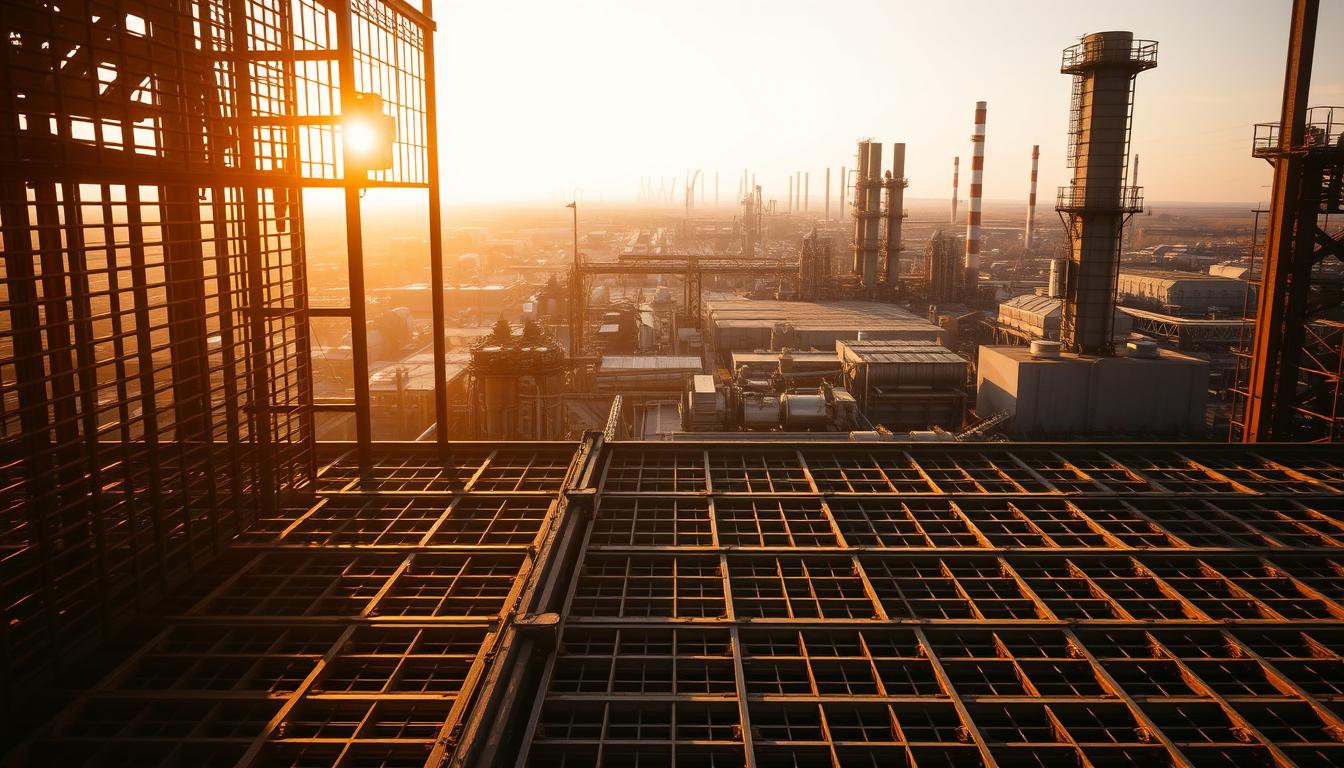
“Safety isn’t expensive, it’s priceless,” said Jerry Smith, a renowned industrial safety expert. This wisdom rings especially true when discussing industrial flooring solutions that protect workers while maintaining operational efficiency.
Bar grating represents one of the most versatile and reliable flooring systems in modern industry. These sturdy metal grids consist of parallel bearing bars connected by cross bars, creating a durable platform that combines strength with functionality.
What makes these structures so valuable? Their open design allows excellent drainage and ventilation while providing slip-resistant surfaces. The galvanized steel construction resists corrosion and handles heavy loads with ease.
Industrial facilities across America increasingly rely on these solutions to meet safety standards and operational demands. The growing need for cost-effective, long-lasting infrastructure drives this trend.
Understanding the diverse applications for bar grating helps facility managers make informed decisions. From manufacturing plants to water treatment facilities, these metal grids serve critical roles in maintaining safe, efficient operations.
Key Takeaways
- Bar grating combines safety, durability, and cost-effectiveness in industrial settings
- Open design provides superior drainage, ventilation, and slip resistance
- Galvanized steel construction offers excellent corrosion resistance and load capacity
- Growing demand for reliable industrial flooring solutions drives adoption
- Versatile applications span multiple industries and operational needs
Understanding Bar Grating Fundamentals
Understanding the fundamentals of bar grating is essential for making informed decisions about industrial flooring applications. This versatile flooring solution has revolutionized how facilities approach safety and functionality. Modern industries depend on reliable systems that deliver both performance and cost-effectiveness.
What is Bar Grating?
Bar grating consists of parallel bearing bars connected by perpendicular cross bars to form an open-grid structure. This design creates a strong, lightweight platform that allows air, light, and liquids to pass through freely. The open construction makes it ideal for applications where drainage and ventilation are critical.
These safety gratings serve multiple purposes in industrial environments. They provide secure walking surfaces while maintaining excellent visibility and airflow. The grid pattern also prevents debris accumulation and reduces maintenance requirements significantly.
Key Specifications and Characteristics
Bar spacing typically ranges from 15/16 inch to 1-3/16 inch center-to-center. Load capacity varies based on bar size, spacing, and span requirements. Surface treatments include galvanized, painted, or mill finish options for different environmental conditions.
The bearing bar depth determines the grating’s structural strength and load-bearing capacity. Standard depths range from 1 inch to 2 inches for most industrial flooring applications. Cross bar spacing affects the grating’s rigidity and pedestrian comfort.
Material Types and Construction
Three primary construction methods dominate the market: welded, pressure-locked, and riveted systems. Welded gratings offer superior strength through fusion welding at each intersection. Pressure-locked systems use mechanical interlocking for quick assembly and disassembly.
| Material Type | Corrosion Resistance | Strength Rating | Cost Factor |
|---|---|---|---|
| Carbon Steel | Moderate (with coating) | High | Low |
| Stainless Steel | Excellent | High | High |
| Aluminum | Good | Medium | Medium |
| Galvanized Steel | Very Good | High | Medium |
Material selection depends on environmental conditions, load requirements, and budget constraints. Each option provides unique advantages for specific safety gratings applications in industrial settings.
Industrial Walkways and Platform Applications
Workers in industrial settings depend on reliable walkway systems, and bar grating delivers unmatched performance in these demanding environments. Manufacturing plants, chemical facilities, and processing centers choose bar grating for elevated platforms because it meets strict safety standards while providing practical benefits that traditional solid flooring cannot match.
Application Overview and Benefits
Bar grating serves as the foundation for countless industrial walkway systems across America. These walkway covers create safe passages over machinery, between production lines, and around hazardous areas. The open-grid design allows workers to move confidently while maintaining full visibility of operations below.
Industrial facilities benefit from reduced construction costs and faster installation times. Bar grating platforms require fewer support structures compared to solid decking, which translates to significant savings in both materials and labor.
Enhanced Safety Features
Safety remains the top priority in industrial walkway design. Bar grating addresses multiple safety concerns through its engineered structure and surface characteristics.
Anti-slip Surface Properties
The raised bearing bars create natural anti-slip surfaces that maintain traction even in wet or oily conditions. Workers can walk confidently across these platforms without fear of slipping, even when wearing safety boots or carrying equipment. The textured surface provides grip that actually improves with use, unlike smooth surfaces that become more dangerous over time.
Load Distribution Capabilities
Bar grating distributes weight evenly across multiple bearing bars, preventing dangerous stress concentrations. This design allows multiple workers and heavy equipment to share platform space safely. The load-bearing capacity often exceeds requirements by substantial margins, providing an extra safety buffer.
Ventilation and Light Transmission
The open design creates natural airflow that helps regulate temperature and removes harmful vapors. Light passes through the grating, reducing the need for additional lighting systems below walkways. This feature proves especially valuable in multi-level facilities where natural light and ventilation are essential.
Durability and Maintenance Advantages
Industrial walkways face constant use and harsh conditions. Bar grating withstands heavy foot traffic, chemical exposure, and temperature variations without degrading. Maintenance requirements remain minimal because debris falls through the open grid instead of accumulating on the surface. Regular cleaning involves simple hosing or sweeping, making these platforms cost-effective over their entire service life.
Mezzanine Floor Systems
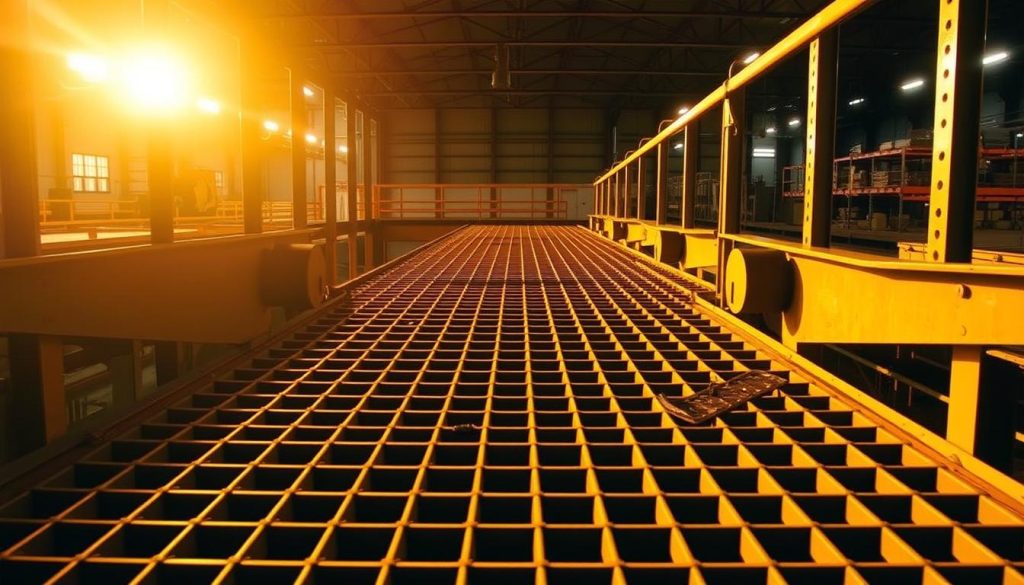
Load-bearing gratings have revolutionized mezzanine floor systems in industrial environments through their exceptional structural properties. These elevated platforms maximize vertical space utilization while maintaining optimal functionality below. Industrial facilities across manufacturing, warehousing, and processing sectors rely on these systems for additional storage, office space, and operational areas.
Structural Application Description
Mezzanine floors using bar grating create intermediate levels within existing structures without permanent construction modifications. The open grid design allows for seamless integration of utilities, lighting, and ventilation systems. Load-bearing gratings support heavy equipment, inventory storage, and high-traffic pedestrian areas while maintaining structural integrity.
These systems span large distances with minimal support columns. The result is maximum usable space both above and below the mezzanine level.
Superior Strength-to-Weight Performance
The exceptional strength-to-weight ratio of load-bearing gratings enables longer spans with fewer structural supports. This characteristic reduces material costs and installation complexity. Steel bar grating typically weighs 60% less than solid steel plate while maintaining comparable load capacity.
Industrial mezzanines handle loads ranging from 50 to 300 pounds per square foot. The distributed load design prevents stress concentration points that could compromise structural safety.
Light and Air Circulation Benefits
Open grating design maintains natural light transmission to lower levels, reducing artificial lighting requirements. Air circulation flows freely through the structure, eliminating stagnant zones and improving overall facility ventilation. This natural airflow reduces HVAC costs and creates more comfortable working conditions.
The transparency effect prevents the enclosed feeling associated with solid mezzanine floors. Workers maintain visual connection between levels, enhancing safety and communication.
Cost-Effectiveness and Installation Efficiency
Installation time for grating mezzanines averages 40% faster than solid flooring alternatives. The lightweight nature reduces crane requirements and labor costs. Reduced structural support needs lower foundation and framework expenses significantly.
Maintenance costs remain minimal due to the self-draining design and corrosion-resistant materials. Long-term operational savings often exceed initial investment within three years.
Design Versatility and Customization
Custom configurations accommodate unique facility requirements and equipment layouts. Standard panel sizes integrate easily with existing structures while allowing future modifications. Load-bearing gratings adapt to irregular shapes, curved sections, and multi-level installations.
| Grating Type | Load Capacity (PSF) | Span Length (ft) | Weight (lbs/sq ft) |
|---|---|---|---|
| Standard Bar Grating | 50-125 | 4-8 | 3-6 |
| Heavy Duty Grating | 150-250 | 6-12 | 6-10 |
| Industrial Grade | 250-300 | 8-15 | 8-12 |
Modular design principles allow for easy expansion or reconfiguration as operational needs change. This flexibility provides long-term value and adaptability for growing industrial operations.
Trench Covers and Drainage Applications for Bar Grating
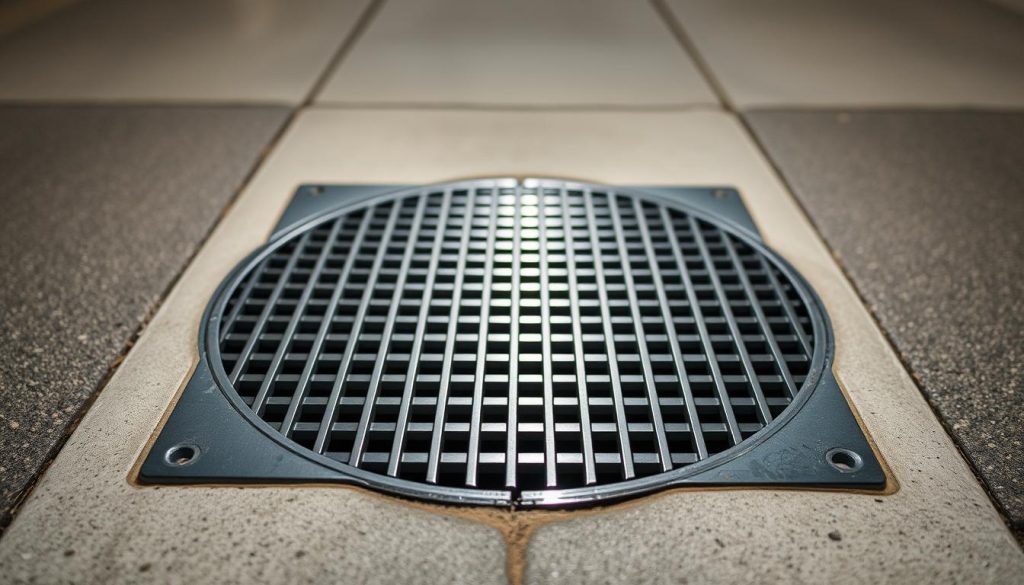
Trench covers made from bar grating provide optimal drainage solutions while maintaining safety standards. Industrial facilities rely on these versatile systems to manage water flow, protect personnel, and maintain operational efficiency. The open-grid design creates perfect harmony between functionality and accessibility.
Drainage System Integration
Bar grating integrates seamlessly with existing drainage infrastructure. The open design allows water to flow freely through the grid pattern. This prevents pooling and reduces maintenance requirements significantly.
Installation teams can customize grating panels to fit any trench dimension. The modular design accommodates various pipe configurations and access points. Flexibility becomes a key advantage during system upgrades or modifications.
Safety and Pedestrian Access
These trench covers create safe walking surfaces over drainage channels. The non-slip surface texture prevents accidents in wet conditions. Workers can move confidently across covered trenches without safety concerns.
Vehicle traffic benefits from the stable platform these covers provide. Forklifts and heavy equipment can cross safely without damaging the drainage system below. The grating distributes weight evenly across the entire surface area.
Effective Debris Control
The grid pattern acts as a natural filter system. Large debris gets captured while smaller particles pass through freely. This prevents downstream clogging and reduces system maintenance costs.
Cleaning becomes straightforward with removable panels. Maintenance crews can access trapped debris quickly and efficiently. Regular cleaning schedules keep drainage solutions operating at peak performance.
Heavy Load-Bearing Performance
Industrial-grade bar grating handles substantial weight loads. These covers support concentrated forces from machinery and equipment. The steel construction maintains structural integrity under extreme conditions.
| Load Capacity | Application Type | Grating Thickness | Span Distance |
|---|---|---|---|
| Light Duty (125 PSF) | Pedestrian Areas | 1 inch | 2-3 feet |
| Medium Duty (250 PSF) | Light Vehicle Traffic | 1.25 inches | 3-4 feet |
| Heavy Duty (500+ PSF) | Industrial Equipment | 1.5+ inches | 4-6 feet |
| Extra Heavy Duty (1000+ PSF) | Concentrated Loads | 2+ inches | 6+ feet |
Corrosion resistance ensures long-term performance in wet environments. Galvanized coatings protect against rust and deterioration. This durability makes trench covers a cost-effective investment for industrial facilities.
Stair Treads and Security Barrier Solutions
Safety gratings transform industrial workspaces by providing superior stair tread performance and effective security barrier protection. These versatile applications address critical safety concerns while maintaining operational efficiency in demanding environments.
Bar grating excels in high-traffic areas where traditional materials fail to deliver consistent performance. The open design promotes air circulation and prevents moisture buildup that creates hazardous conditions.
Industrial Stair Tread Applications
Industrial facilities require dependable stair systems that withstand constant use and harsh conditions. Bar grating delivers exceptional performance through specialized design features that prioritize worker safety.
Superior Slip Resistance
Serrated surfaces and diamond patterns create outstanding grip even in wet or oily conditions. The raised edges bite into shoe soles, preventing dangerous slips that cause workplace injuries.
This slip resistance remains effective throughout the product’s lifespan. Unlike painted surfaces that wear smooth, the mechanical grip pattern maintains its effectiveness indefinitely.
Long-term Durability
Heavy foot traffic and equipment movement demand materials that resist wear and deformation. Steel and aluminum bar grating maintains structural integrity under extreme loads.
The open design distributes weight evenly across bearing bars. This prevents stress concentration that causes premature failure in solid materials.
Workers need clear sight lines to navigate stairs safely, especially in low-light conditions. The open structure allows excellent visibility of each step edge and potential hazards below.
Water and debris drain through the openings instantly. This prevents ice formation in cold environments and eliminates slip hazards from standing liquids.
Easy Fabrication and Installation
Custom sizing accommodates any stair configuration without complex modifications. Standard cutting tools shape bar grating to precise dimensions quickly and economically.
Simple bolt-on installation reduces labor costs and downtime. Replacement treads install in minutes without disrupting facility operations.
Security Fencing and Machine Guarding
Industrial security requires barriers that protect while maintaining operational visibility and airflow. Safety gratings deliver comprehensive protection without compromising essential functions.
Robust Protective Barriers
Heavy-duty construction creates impenetrable barriers around sensitive equipment and restricted areas. The rigid structure resists cutting, climbing, and impact damage.
Welded connections ensure long-term stability under extreme conditions. The integrated design eliminates weak points that compromise security effectiveness.
Maintained Visibility and Airflow
Security personnel require clear sight lines for effective monitoring and surveillance. The open design provides unobstructed views while maintaining barrier integrity.
Equipment cooling demands adequate airflow to prevent overheating and system failures. Bar grating allows natural ventilation while blocking unauthorized access.
Deterrent Properties and Customization
The industrial appearance creates a psychological deterrent that discourages unauthorized entry attempts. The robust construction signals serious security measures.
Height, spacing, and finish options accommodate specific security requirements and aesthetic preferences. Custom configurations address unique facility challenges effectively.
Making the Right Choice for Your Industrial Needs
Bar grating stands out as one of the most versatile solutions in modern industrial environments. The five primary applications for bar grating we’ve explored demonstrate its remarkable adaptability across different operational requirements.
From industrial walkways that prioritize worker safety to mezzanine floor systems that maximize space efficiency, bar grating delivers consistent performance. Drainage applications showcase its practical benefits in managing water flow and debris control. Stair treads provide essential slip resistance, while security barriers offer reliable protection for equipment and personnel.
The common thread connecting all these applications for bar grating is their shared advantages. Superior strength-to-weight ratios reduce structural load while maintaining durability. Open design patterns promote air circulation and natural lighting. Anti-slip surfaces enhance workplace safety across all installations.
Cost-effectiveness emerges as another key benefit. Bar grating requires minimal maintenance compared to solid alternatives. Its longevity translates to reduced replacement costs over time. Installation efficiency keeps project timelines on track.
Selecting the right bar grating specification depends on your specific operational demands. Load requirements, environmental conditions, and safety standards all influence the optimal choice. Working with experienced grating specialists ensures you receive the most suitable solution for your industrial application.
Bar grating represents a smart investment in both immediate safety improvements and long-term operational efficiency for any industrial facility.