What if thankfulness as a senior isn’t soft at all—what if it’s the sharpest tool you have to fight decline?
I live by the Senior & Savage rule. Gratitude isn’t passive. It’s fuel. It’s a tactical weapon I use to go on offense with my mind, body, and spirit, even when my joints complain and my calendar moves faster than I do.
This gratitude mindset helps me stay focused, intentional, and in charge of my thoughts. That matters more now, because aging with purpose doesn’t happen by accident. It’s built, one choice at a time.
During the pandemic, my priorities didn’t change as much as they got clearer. Family. Friends. Faith. Health. I watched neighbors show up, I respected essential workers, and I leaned hard on science-led public service that kept people safer. That real-world pressure tested my emotional strength—and it also refined it.
These days, my simplest measure of opportunity is “another sunrise,” a line I first saw from T Theresa Hamari: “I am grateful for every sunrise, everyday!” I feel that in my bones. It reminds me that resilience in later life isn’t just about bouncing back. It’s about showing up again.
In the pages ahead, I’ll share what thankfulness looks like in my daily life in the United States—community ties, local businesses adapting, and technology that keeps me close to people when I can’t be there in person. For me, this is holistic transformation mind body spirit, not a slogan, but a way to keep moving forward.
Key Takeaways
- Thankfulness as a senior can be active fuel, not a quiet mood.
- Senior & Savage living treats gratitude mindset as a tool for staying in charge of my thoughts.
- Aging with purpose gets clearer when pressure strips away distractions.
- “Another sunrise” is a simple way to track life, hope, and opportunity.
- Resilience in later life grows through repetition, not perfection.
- Emotional strength can deepen when community, service, and science work together.
Why thankfulness is a Senior & Savage tactical weapon against decline
I see thankfulness as a tool, not just a feeling. It helps me fight decline by giving me a goal for the day. I focus on what I can improve, learn, and complete. It also boosts my mental health as I grow older.
In Senior & Savage training, I aim to stay capable, not young. It requires a strong mindset, focus, and the habit of being grateful and gritty. This is key when the week gets tough.
How I use gratitude to go on offense with my mind, body, and spirit
My approach to gratitude is straightforward. I don’t ignore the tough times. Instead, I use it to guide my focus, calm my nerves, and keep moving forward with purpose. When worry creeps in, I shift from complaining to taking action.
As a senior, I want to be proactive. I take responsibility for my efforts while letting go of what I can’t control. I’ve learned that being accountable is important, but trying to control everything can backfire. So, I focus on how I respond instead.
“What we pay attention to becomes our life” and why my focus matters now
Darren Reinke shared a moment of refocusing using the Calm app and meditation guide Jeff Warren. The line that sticks with me is: “What we pay attention to becomes our life.” It’s a reminder and a promise.
Now, my focus and attention are valuable assets, not just extras. I use them to prioritize sleep, movement, hydration, and the people I care about. This mindset keeps my mental fitness sharp, even when my schedule is packed and my patience is wearing thin.
Grateful for the struggle: sweat, rebuild seasons, and earned resilience
I’ve been through tough times where progress seemed slow and quiet. These periods teach me to be grateful and gritty. Showing up is the only thing I can control. Sweat tells me I’m working hard, and consistency is my measure of success.
I also reflect on what others face. Michael Cardone reminded me to be thankful for just being alive. Dennis Smith shared gratitude for essential services like the Health Department, nurses, doctors, and hospitals. I don’t take these things for granted.
| Moment | Old reflex | Senior & Savage response | What it strengthens |
|---|---|---|---|
| Wake up stiff or sore | Skip the day and spiral | Use tactical gratitude, then do a short walk and mobility | Combat decline with safer movement patterns |
| Bad news or uncertainty | Try to control every outcome | Own my next step, release the rest, breathe and reset | Resilience mindset under pressure |
| Training feels slow | Quit because it’s not “working” | Track small wins and stay consistent with Senior & Savage training | Discipline and confidence through repetition |
| Distracted mind | Multitask and lose the day | Return to one task, one breath, one rep | Focus and attention that lasts |
Thankfulness as a senior: what I practice daily and why it works
I see daily gratitude as a workout. It’s simple, yet effective. Darren Reinke reminds me that being optimistic isn’t always easy. I build it up, day by day, just like I did with my strength in the gym.
Gratitude is real for seniors. It’s not just words. It’s a tool I use on tough days, when I’m tired and my mind wanders.
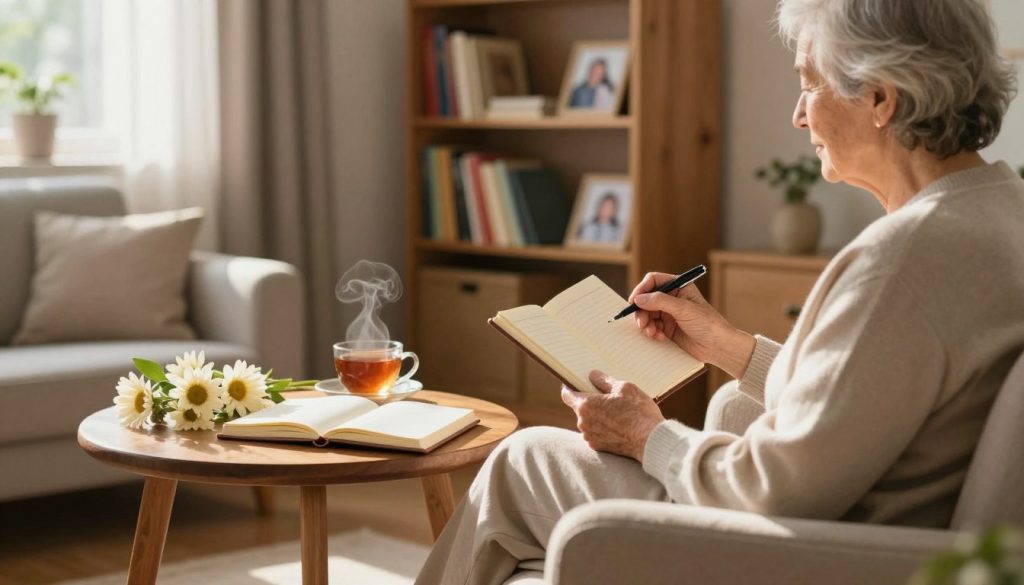
Gratitude brings me back to the present instead of past disappointments and future fears
My mind can easily wander to the past or future. Gratitude helps me stay in the present. It’s where I can take action.
Right now, I’m breathing, I’m safe, and I have a next step. Sometimes, it’s as simple as being thankful for enough energy to cook. This small thing can change my day.
How consistent gratitude helps shift my default thinking from negative to fulfilling
Practicing gratitude helps me see the good in life. Over time, it changes how I focus. This builds positive habits that last, even when life gets busy.
It also helps with anxiety and depression. I’m not ignoring my struggles. I’m choosing to focus on small wins, one at a time.
Jacki Clarke taught me to be grateful for work. It gives us purpose, structure, and pride. This mindset helps me stay resilient, not helpless.
| Moment | Old default thought | Gratitude rep I use | What changes in my day |
|---|---|---|---|
| Low energy in the late afternoon | I’m slowing down for good | I’m thankful I can cook a simple meal and clean up after | I move with patience and finish one task with care |
| Worry about money or usefulness | I don’t have much to offer anymore | I’m grateful I can work and contribute | I show up with pride and stay engaged |
| Feeling isolated during distancing | I’m cut off from people who get me | I’m grateful I can share music online, like Debbie Carlson | I reach out, connect, and feel less alone |
Why gratitude is free, unlimited, and powerful in my later years
Gratitude is free and endless. I can share it freely without losing any. This makes it powerful, even in my later years.
I don’t use it to avoid hard times. I use it to stay strong through them. Daily gratitude keeps me fueled, quietly and steadily.
What I’m thankful for now: health, time, and another sunrise
I don’t chase big goals like I used to. I focus on what’s real and lasting. Time is what we truly have. We measure life by how many sunrises we’ve seen—if I’m reading this, I’ve seen at least one more sunrise.
This mindset keeps me grounded and focused. It makes me appreciate my health more. I know how quickly a day can change.
“Another sunrise” as my simplest measurement of life and opportunity
“I am grateful for every sunrise, everyday!”
Theresa Hamari’s words resonate with me. They’re simple yet profound. For me, another sunrise isn’t just about surviving. It’s a fresh start, a chance to move, learn, and show up.
Some mornings I feel strong, others slow. But that sunrise in the window reminds me I have a say in today.
How the pandemic clarified my priorities
The pandemic made my priorities clear. When life narrowed, the essentials stood out: family, faith, friends, and health. This list is straightforward but solid.
Dennis Smith is grateful his family stayed virus-free. He credits the Health Department, nurses, doctors, and the hospital for their hard work.
Kim Parker is thankful for her health during the pandemic. Her gratitude is simple and true.
Not taking good health for granted anymore
I no longer take good health for granted. Many of us have learned to appreciate it more. This change affects how I listen to my body and pace my days.
Bobby Glenn Brown expresses gratitude for his body, voice, mind, and health. His words carry discipline and patience.
Judy Morgan feels both gratitude for her health and a longing for loved ones. I share her mix of feelings—gratitude and a desire for connection.
By saying it out loud, I make it real: I’m thankful for my health, I’m mindful of my time, and I cherish each morning. This is how gratitude after COVID shapes my daily life.
Being grateful for people I’ve lost and the life lessons they left me
Some days, I feel both grief and gratitude at the same time. I miss someone but stay steady. This senior reflection has taught me that loss can make me sharper, not smaller.
John Kivela, Billy Blohm, Tom Hyslop, Carl Holm, and my sister Gloria are more than memories. Seeing their names makes me appreciate today more. It stops me from waiting for a future that might never come.
How remembering friends and family who are gone deepens my appreciation for today
Remembering loved ones makes time feel real. It shows me that every choice I make matters, even the small ones. This is a key lesson I’ve learned.
Thinking of John, Billy, Tom, Carl, and Gloria doesn’t make me chase perfection. Instead, it encourages me to live on purpose. The Senior & Savage way is simple: grief makes me stronger, not weaker.
Some days, I say a quiet thank you before I move. Other days, I reach out to someone I’ve been meaning to call. This turns remembering loved ones into action, keeping my appreciation for today alive.
The “little things” that add up to a life well lived
Gratitude for little things might seem small, but it builds a strong life. Debbie Carlson showed me that walks together and shared meals are precious. These moments don’t look heroic, but they hold people close.
Beth Thiele mentioned indoor plumbing and heating, and I see their comfort now. When I pause, I feel the comfort in my home. This kind of gratitude can change my mood quickly.
Jennifer Stanaway talked about messages from friends when we can’t meet. A short text can be a lifeline on a tough day. It’s a reminder that appreciation for today often comes in simple words.
| Little thing | What I notice in my body | What it teaches me | How I respond the same day |
|---|---|---|---|
| Walks together and shared meals | My shoulders drop, my breathing slows | Connection is a daily practice, not a yearly event | I invite someone to walk or I cook a simple meal and sit down to eat |
| Indoor plumbing and heating | I feel safe, warm, and less on edge | Comfort is easy to overlook until it’s gone | I take care of my space and stop complaining about minor inconveniences |
| Messages from friends when we can’t meet | I feel seen, my mind gets quieter | Support can travel through a few honest lines | I send a thoughtful reply and check on one more person |
This is senior reflection with an edge: I let grief and gratitude share the same room. I keep the names close, carry the lessons forward, and stay alert to the small mercies that keep adding up.
Community gratitude: how I stay connected, supported, and strong in the United States
When life gets loud, I lean on community gratitude. It keeps me steady and helps me get out of my own head. I’ve seen American community support show up in quiet ways that hit hard.
It’s not about being perfect or problem-free. It’s about staying connected when things are messy. That’s how I keep my footing here in the United States.
What I’ve learned from close-knit communities that keep showing up for each other
A close-knit community doesn’t block hardship, but it makes it easier to carry. I’ve watched neighbors look out for each other’s kids, share rides, and bring meals without making it a big deal. This kind of steady care changes the tone of a hard week.
Tiina Morin said a close-knit community didn’t shield people from COVID, but it made the weight more bearable. She also noticed kids becoming stronger, wiser, and more disciplined. I take that as a reminder: pressure can build character when people don’t face it alone.
Mark Canale talked about people going out of their way to offer food, shelter, clothing, transportation, and prayers, even for strangers. Mary Tavernini described a community that keeps taking care of its own, “everywhere.” I carry those examples with me when I choose how to show up.
Why I’m thankful for essential workers, healthcare teams, and science-led public service
I practice essential workers appreciation because I saw who kept moving when the rest of us slowed down. Chris Brooks voiced it plainly: he’s thankful for essential workers and the medical community. I feel that too, because those shifts and long days weren’t abstract to me—they were real people doing real work.
My healthcare gratitude runs deep. Adam Carpenter compared healthcare workers to combat veterans, because they risked their own health to help others. Dennis Smith called out the Health Department, nurses, doctors, and hospital systems for staying strong when it counted.
I also value science-led public service. Andrew Lorinser spoke about leaders and officials who follow science and evidence to protect citizens and the environment, even when trust is low and politics are hot. That kind of calm, fact-based service helps me keep my own thinking clean and focused.
How local businesses and teams “pivot” and adapt—and how that inspires my own grit
Small business resilience is one of the clearest forms of local courage I’ve seen. Nancy O’Hare-Zika credited the Yellow Dog Creative team for the ability to pivot and keep rolling through 2020. That willingness to adjust on the fly is a lesson I can use in my own training and my own routines.
Sonia and Mike Stucko shared gratitude for their staff at Stucko’s Pub and how they adapted. Jeremy Symons thanked employees who serve the community, plus customers who kept the business going for 11 years. Scott Zerbel even named Vango’s Pizza, and I get it—sometimes one steady place can make a town feel like home.
When I see that level of American community support, it pushes me to act the same way. I stay gritty, I stay generous, and I keep my standards up. That’s Senior & Savage living, backed by community gratitude.
Technology and connection: staying close when we can’t be together
When miles stack up, I rely on technology for seniors. It’s not fancy, but it’s essential. It keeps me connected when life gets tough or travel isn’t safe.
Erin Verigin’s family is spread across three countries. When a parent in assisted living couldn’t have visitors, screens became their rooms. They saw each other’s faces, shared jokes, and laughed together.
Ann Hilton Fisher’s story stuck with me. Her 95-year-old mother, Miriam Hilton, lived in assisted living that closed to visitors in March. Outdoor visits helped, but masks and hearing loss made talking hard.
Then, staff made a big difference. They set up Zoom calls and FaceTime. Monday was a Zoom with old friends. Wednesday was a Zoom with Ann and her siblings, from California to Turkey.
Saturday was the highlight: Miriam’s siblings and nieces and nephews joined. Miriam felt more connected than ever. Ann saw her mom’s smile clearly on screen.
Stephanie Jones feels the same joy. She talks about her son serving in Okinawa. FaceTime lets her see his expression and hear his voice.
Shelby Kivela is grateful for tech. It keeps her close to family and friends across the country. It’s about quick check-ins, shared photos, and knowing everyone is okay.
| Moment I’m trying to protect | Tool I reach for | How it helps me staying connected | What it supports in my Senior & Savage mindset |
|---|---|---|---|
| Weekly family rhythm across time zones | Zoom calls | Planned time, familiar faces, fewer missed weeks | Consistency, purpose, and emotional resilience |
| One-on-one reassurance when someone is far away | FaceTime family | Eye contact, tone of voice, quick “I’m okay” proof | Calm focus and better recovery from stress |
| Care setting communication when visits are limited | Assisted living connection | Staff support, scheduled sessions, clearer conversations | Gratitude that strengthens my spirit in the fight |
I don’t see these tools as trends. They’re like training aids. Technology for seniors helps me fight isolation. It keeps my purpose clear, even when distance makes life feel small.
Leading myself like a Savage: values, learning, and intentional focus
Thankfulness works best when it has a job. For me, that job is self-leadership. It helps me make choices when life gets loud.
This is where values-based living keeps me steady. It turns gratitude and purpose into a daily practice.
Darren Reinke says values are like an operating system for leadership. I apply this to myself. When my values are clear, my day gets simpler.
I decide what better looks like and act on it. This makes my day more focused.
How I ground my gratitude in values so it produces results
Gratitude triggers action for me. If I’m thankful for my body, I train and recover well. If I’m thankful for my people, I show up on time and listen.
Values-based living turns appreciation into action. It sharpens my focus. I’m protecting what matters.
| Value I lead with | How gratitude shows up | What I do next |
|---|---|---|
| Health | I notice what needs care | I lift, walk, hydrate, and schedule recovery like training |
| Family and friends | I appreciate time instead of assuming I have it | I call, visit, and stay present without multitasking |
| Faith | I reflect on guidance and mercy, not just outcomes | I pray, reset my attitude, and choose patience in traffic and stress |
| Service | I respect the help I’ve received over the years | I volunteer, tip well, and encourage people doing hard jobs |
Creating a personal culture of learning to adapt to what I can’t control
A lot is out of my hands—weather, markets, other people, even some parts of aging. But I can control how I respond. That’s where lifelong learning helps.
Reinke shared how he interviewed Amy Crum for The Savage Manager. They talked about building a learning culture. I do the same at home: read, ask better questions, review mistakes, and adjust.
This is adaptability in aging, the real kind. It’s not pretending nothing changes. It’s staying curious enough to keep improving.
- I track what helps my sleep, joints, and energy, then repeat what works.
- I learn one new skill at a time, so it sticks.
- I treat setbacks as feedback, not as a verdict on who I am.
Staying intentional: gratitude as leadership of my own thoughts and actions
Jeff Warren says what I pay attention to becomes my life. If I focus on worry, I feel smaller. If I focus on gratitude, I stand taller.
Intentional focus is key to me now. When I’m thankful, I’m focused and in charge. This supports my health and well-being, even on tough days.
Steve Gatena says gratitude is a leadership imperative. I practice it daily. Gratitude and purpose aren’t just for big moments. I practice them in the small ones, keeping my direction clear.
My gratitude workout: simple routines that build emotional resilience
My gratitude workout isn’t about forcing a smile. It’s about training my attention, like I do with my legs and lungs. Keeping it simple helps me stay steady, even on tough days.
My “gratitude muscle” and how repetition changes my mindset over time
I see my gratitude muscle like any other. It grows with practice. Each time, I shift from past disappointments and future worries to the present. This shift builds a mindset that feels real, not just hoped for.
Practicing gratitude changes my default thoughts. Over time, I move from focusing on what’s missing to what’s working. These small routines add up, making my days feel more complete.
Using gratitude to strengthen inner peace while I rebuild outward power
I’m working on two goals: building outward power and inner peace. Gratitude helps me stay strong without losing my calm. It keeps my edge without taking away my serenity.
When I need a break, I use the Calm app. A short breathing session and a sentence of thanks get me back on track. It’s simple and effective.
How thankfulness supports my health and well-being by keeping me focused and in charge of my thoughts
Thankfulness keeps me focused and in control. This is key for managing stress, getting better sleep, and being a good family member. It also helps me stay grounded when anxiety tries to overwhelm me.
For motivation, I look to real people. Kenneth McNally says, “With sacrifice, come gifts. Helping others is what I’m thankful for.” Peggy Frazier reminds me, “There is no power for change greater than discovering what you really care about!” Tony Norem’s gratitude after a close call also inspires me, focusing on friends and family who helped him.
| Set | What I do | Why it helps my focus and mood |
|---|---|---|
| Morning reps | I write three specific things I value today, then I read them once out loud. | Builds a healthy aging mindset and trains my gratitude muscle toward what’s present. |
| Text-a-friend | I send one short message of thanks to a friend or family member. | Turns inner practice into connection and supports senior mental health through belonging. |
| Service as gratitude | I do one helpful act without announcing it, even if it’s small. | Creates momentum and makes gratitude feel real, not abstract. |
| Attention training | I use Calm app breathing for a few minutes, then name one thing I can control next. | Strengthens inner peace and makes emotional resilience routines easier to repeat. |
| Evening reflection | I review one hard moment and one lesson I can carry forward. | Reinforces a disciplined gratitude practice and reduces rumination at night. |
Conclusion
For me, being thankful as a senior is not just a feeling. It’s a plan. It keeps me strong against getting older and keeps my mind, body, and spirit united. When I focus on gratitude, I don’t just go with the flow. I set a goal.
I’ve learned a simple truth: if I’m alive, I’ve been given another sunrise. I get to decide what I see and what I feed my mind. Jeff Warren once said, “What we pay attention to becomes our life.” This keeps me grounded.
Gratitude helps me stay in the moment. It changes how I think and never runs out. Susan Goodkind Wideman calls it free and unlimited, and I’ve found that to be true, even on tough days. This shows that being grateful is a discipline, not just a feeling.
The pandemic made me value family, friends, faith, and health even more. It showed me that none of these things are guaranteed. It taught me that being part of a community and staying connected is key to strength. So, I’m choosing to live intentionally. I’m doing daily gratitude exercises, focusing on my values, learning, and staying connected until being thankful becomes a natural part of my life.