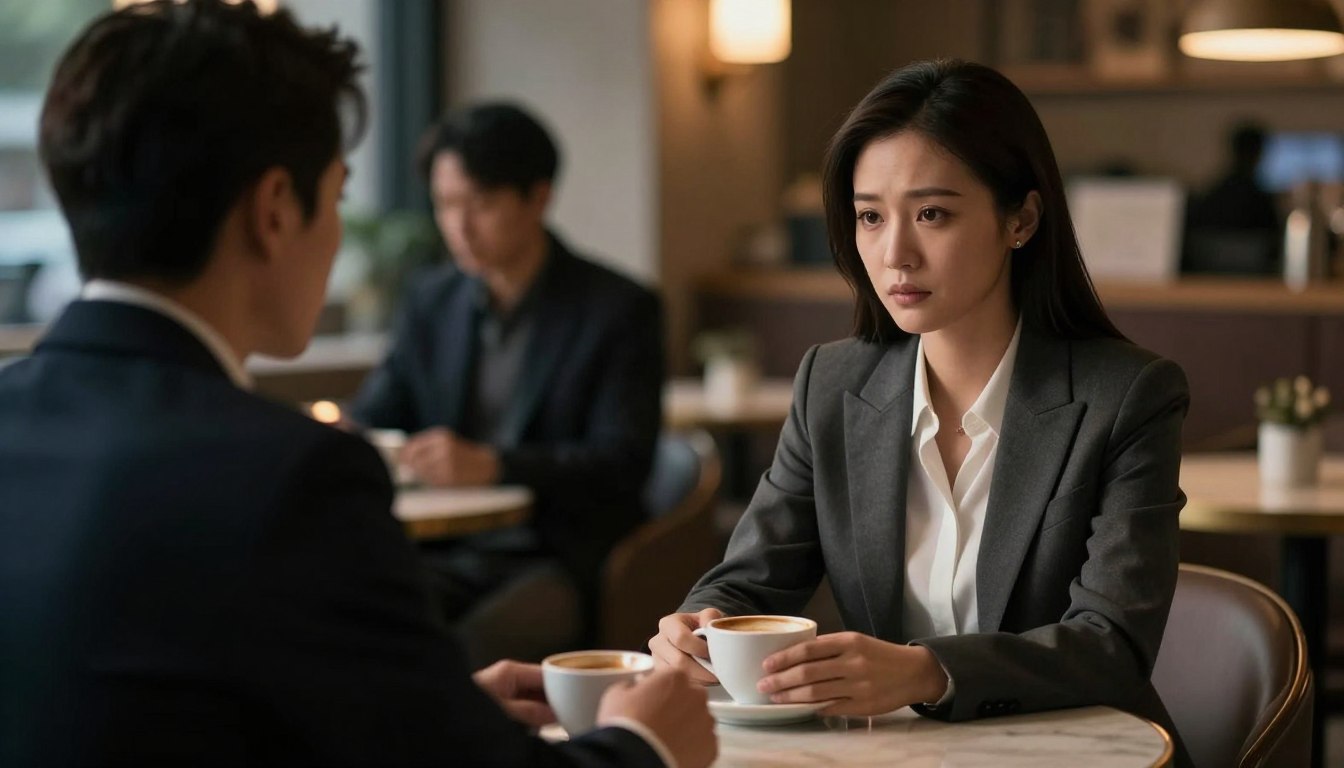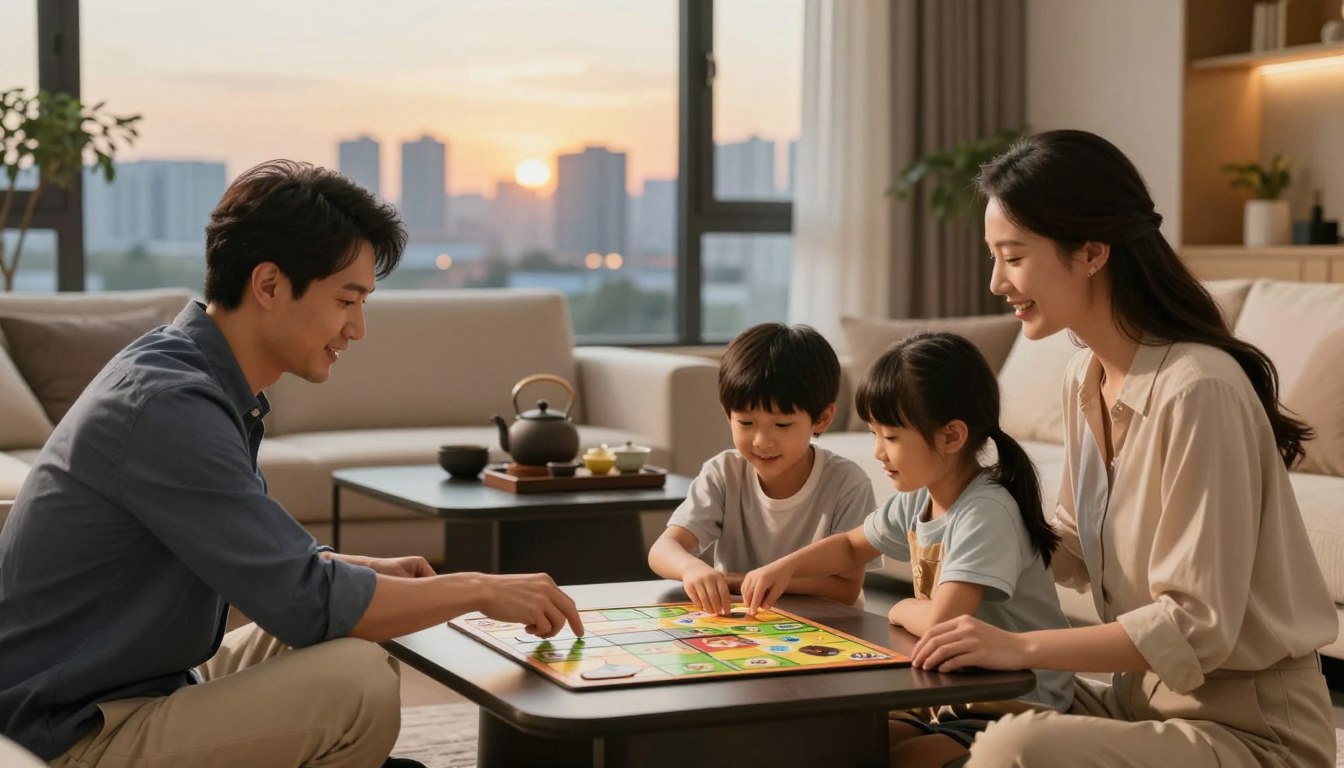
If you think Chinese family life is all about strict hierarchy and silent obedience, think again. By 2026, the dynamics have undergone a seismic shift. The old model, where younger people had little say in major decisions, is crumbling.
The traditional path of automatic respect is being replaced. A new framework, which I call Collaborative Filiality, is taking root. Here, respect is something you negotiate and build together, not something you simply grant.
This transformation touches millions of young Chinese people. It’s happening within China and across diaspora communities. I’ve seen this new, more open dialogue firsthand, especially among families here in the United States.
In this article, we’ll explore the practical tools for this new era. We’ll cover the dating resume revolution, smart WeChat strategies for family integration, Spring Festival survival tactics, and the M&A approach to marriage.
This is a dramatic departure from centuries of tradition. Yet, it’s a pragmatic response. Economic pressures, demographic shifts, and new social values have made the old ways unsustainable for today’s young adults.
Understanding Collaborative Filiality 共创式孝道: Definition and Context
In 2026, the ancient virtue of 孝 (xiào) is undergoing a profound transformation. I define this new approach as a negotiated framework of 孝道 where respect flows both ways. This is Collaborative Filiality.
It’s a fundamental shift from the old model. Traditional 孝道 often meant one-way devotion. A daughter-in-law might cook special meals until 11 PM every Saturday.
She could accompany her mother-in-law to church, despite her own Buddhist faith. Ensuring hot porridge was ready the moment elderly parents returned from a trip was a standard duty. All this happened without discussion.
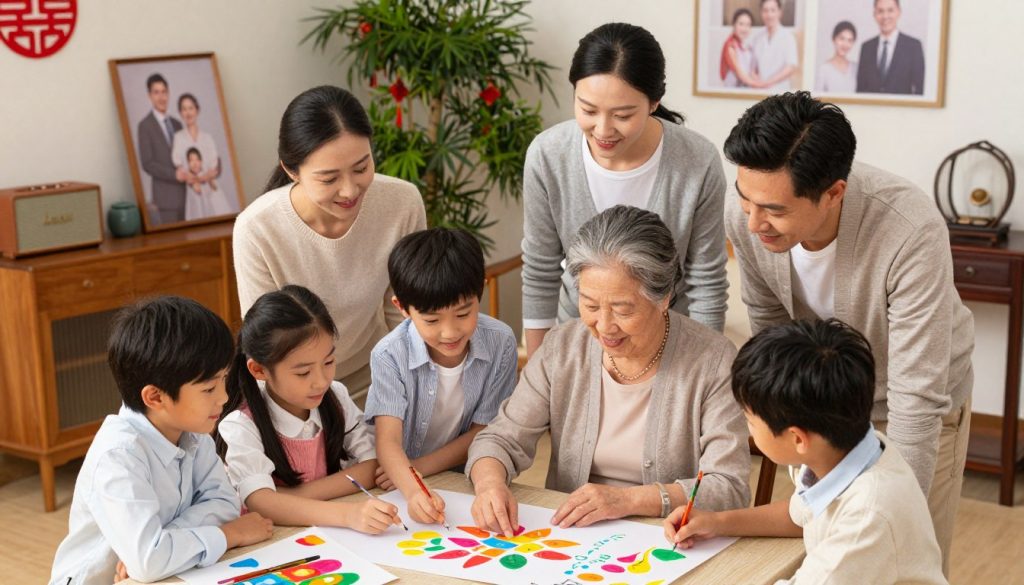
Today’s young 人 (people) reject that exhausting script. They are not abandoning 孝. Instead, they are modernizing it through “negotiated respect.”
This means having open talks about boundaries and care schedules. Young adults discuss financial help and living arrangements before making promises. They create mutual understandings that protect everyone.
The goal is to honor parents without wrecking one’s own stability, health, or marriage. This is the core of modern Collaborative Filiality.
Gen Z/Alpha: From Blind Obedience to Negotiated Respect.
A quiet revolution is unfolding as young people redefine what it means to be a good son or daughter. I’ve observed that Gen Z and Alpha individuals refuse to follow the traditional path (道) of accepting every parental demand without question.
They treat family obligations as negotiable terms that must work for all parties involved. This is a fundamental break from centuries of expectation.
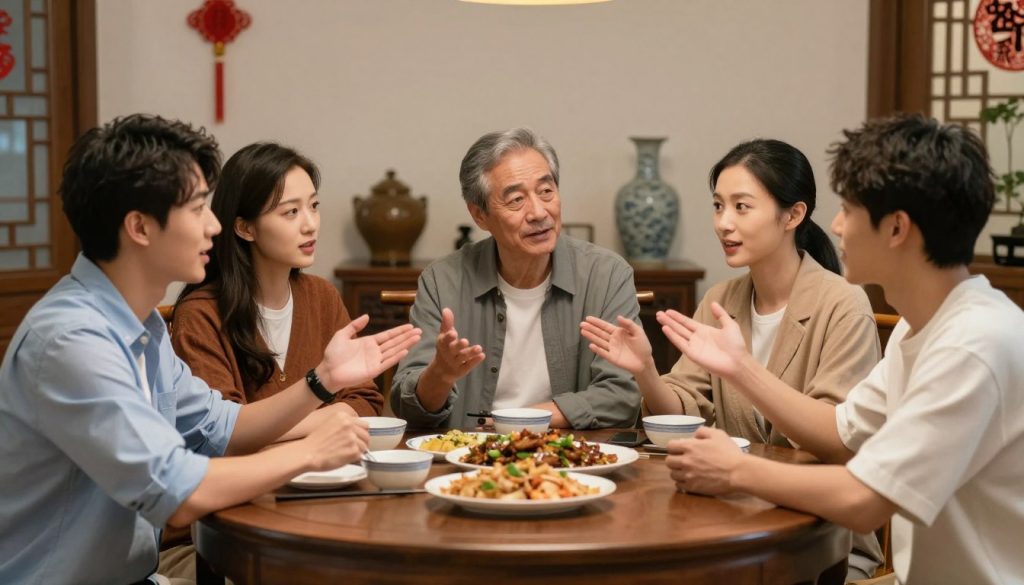
These young people (人) often leverage their economic power to insist on mutual respect. Many are the sole breadwinners for aging parents. This financial reality gives them a new voice in family discussions.
What does negotiated respect look like in practice? It means establishing clear boundaries upfront. A young adult might agree to visit parents twice monthly instead of weekly.
They might contribute a fixed amount to household expenses rather than offering unlimited funds. Some choose to live near in-laws instead of with them.
These individuals (人) frame their approach as sustainable 孝道. They argue they can better support aging parents over the long term. Burning out in their twenties trying to meet impossible expectations helps no one.
True filial piety (孝) requires personal stability first. While older generations may view this as disrespectful, young people (人) see it as the only viable path forward.
Skyrocketing housing costs and stagnant wages make the old model unsustainable. Many will support four elderly parents plus grandparents simultaneously. This new practice of 孝 is about creating relationships that last.
The Rise of the "Dating Resume" 2.0.
Imagine going on a first date and immediately discussing your debt-to-asset ratio and genetic health screenings. This is the new normal for many young people in 2026. Romance has taken a backseat to strategic resource pooling.
The Dating Resume 2.0 is a brutal reflection of economic pressure. It treats courtship like a business merger. Potential partners exchange detailed financial disclosures early on.

Evaluating Debt-to-Asset Ratio, Elder Care Capacity, and Genetic Compatibility.
On that first 日, people now share credit scores and property ownership. They discuss expected inheritance and long-term earning potential. Nothing is left to chance.
The “Elder Care Capacity” assessment is critical. Each 人 must declare how many aging relatives they support. Willingness to live near in-laws is a key metric.
Genetic compatibility is non-negotiable. Couples exchange full health screenings before meeting parents. They check for hereditary conditions and fertility indicators.
The Shift from University Prestige to Practical Metrics.
The old filter of elite university names is gone. A Tsinghua graduate with massive debt is now a risky match. Pragmatism has completely replaced status.
A 人 from a modest school with savings is highly desirable. They have minimal family obligations. When the 時 comes to evaluate a partner, practical stability wins.
This hyper-pragmatic approach ensures families can weather future storms. It’s a cold but necessary calculation for modern life.
Embracing Hyper-Pragmatism in Modern Dating.
The first question on a date in 2026 is more likely to be about your credit score than your favorite movie. Romance-first dating is a fading memory. Young people now state their terms bluntly on profiles.
I’ve seen bios that read, “Seeking partner with debt-free status and maximum two elderly dependents.” There’s no room for pretense. The goal is to filter for practical stability from the start.

This has spawned a new industry: financial compatibility consultants. These experts help individuals assess a match’s family obligations and assets. They do this before investing serious time and emotion.
First and second dates are now negotiation sessions. Couples discuss wedding budgets, housing plans, and retirement savings openly. These topics were once considered taboo or premature.
Why this shift? Young adults point to high divorce rates. They argue romantic feelings can fade. Financial incompatibility often destroys marriages.
It seems more respectful to assess practical fit upfront. While it looks transactional, participants feel relief. They avoid painful discoveries years later.
| Aspect | Traditional Dating | 2026 Dating |
|---|---|---|
| First Date Talk | Hobbies, Dreams | Credit Score, Elder Care Plans |
| Partner Screening | Chemistry, Attraction | Financial Disclosures, Genetic Health |
| Long-term Focus | Romantic Love | Shared Financial Stability |
| Family Discussion | Later, After Commitment | Immediate, For Compatibility |
This hyper-pragmatic approach is a direct response to modern pressures. It’s about building a partnership that can last.
Curated Disclosure and the WeChat Soft Launch Strategy.
Gone are the days of springing a new partner on your entire family at a chaotic holiday dinner. Today, smart young people use a strategy I call curated disclosure. It’s a phased approach to avoid gossip shock.

Optimizing WeChat Moments for Gradual Family Introductions.
The WeChat Soft Launch is a strategic, phased 段. You carefully control which relatives see information about your partner. This prevents the chaos of a surprise announcement.
Start with Phase 1. Post a couple photo visible only to close friends and progressive cousins. You’re testing the family network’s reaction. Critical aunts or traditional grandparents won’t see it yet.
Phase 2 expands visibility to more moderate family 人. They can adjust to the relationship’s existence privately. This avoids a scene at the next big dinner where everyone learns at once.
Finally, Phase 3 involves strategic “accidental” visibility for parents. A post appears in their feed but seems casual. It gives them time to process before the inevitable questions.
Curate your post content carefully. Show your partner in financially responsible or family-oriented settings. Avoid any potential red flags. Time each phase weeks apart. This lets information spread organically while you control the narrative.
Avoiding the Gossip Shock: Social Media Tactics for Family Integration.
Picture this: your entire extended family finds out about your new partner through a forwarded screenshot in the family group chat. This is gossip shock. It happens when relatives (人) learn about your relationship from third-party chatter, not from you.
They feel disrespected. Immediate opposition forms, regardless of your partner’s good qualities. The worst-case scenario is showing up at Spring Festival with an unannounced fiancé.

To prevent this, I recommend a staged disclosure approach (段). It’s a phased rollout of information to control the narrative. Here’s how it works:
- Phase 1: Share a couple photo on WeChat Moments, visible only to close friends and progressive cousins. You’re testing the waters.
- Phase 2: Expand visibility to more moderate family members. Let them adjust privately, avoiding a public scene.
- Phase 3: Create “accidental” visibility for parents. A casual post gives them time to process before the official questions begin.
Use clever tactics within this framework. Post ambiguous content like “enjoying the weekend” with a carefully cropped photo. It signals a relationship to observant relatives while maintaining plausible deniability.
If conservative family members (人) ask directly before you’re ready, you can deflect. Enlist allies like progressive siblings. They can casually mention your partner in family chats, warming up the network.
If gossip spreads early, shift to direct communication. Acknowledge the surprise senior members feel. Reframe your secrecy as respecting their need for time, not expecting disapproval. This controlled strategy saves face for everyone.
The 2026 Spring Festival Survival Guide for Modern Families.
Preparing for the 2026 Spring Festival means having ready answers to deflect well-meaning but intrusive questions from relatives. This holiday (日) is about family harmony, not debate.
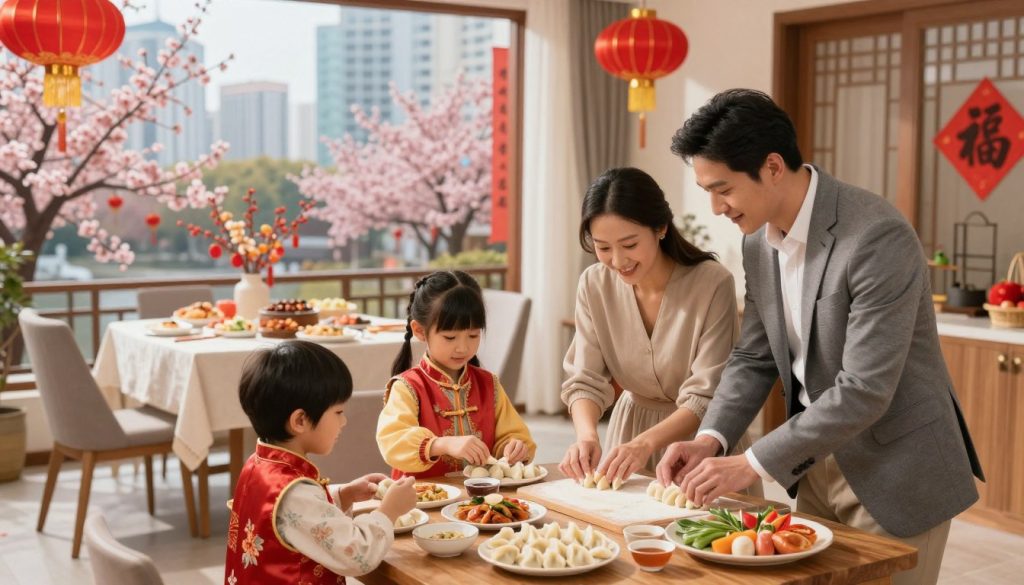
I’ve seen many young people dread the interrogation about marriage and kids. The key is to reframe your choices as responsible, not rebellious.
Crafting Scripts to Deflect Three-Child Policy Pressure.
Have these scripts ready. They turn pressure into a conversation about shared values.
The “Financial Responsibility” script emphasizes saving for a child’s future first. The “Elder Care Priority” script focuses on caring for your parents (人). The “Housing Market Reality” script highlights economic barriers.
| Script Name | Key Phrase | Primary Rationale |
|---|---|---|
| Financial Responsibility | “We are building savings to provide the best start.” | Shows foresight and prevents future family strain. |
| Elder Care Priority | “Our focus is securing retirement for four parents (號).” | Honors immediate filial duties. |
| Housing Market Reality | “We need a suitable home for our current family (人).” | Grounds the discussion in practical economics. |
Leveraging DINK and Delayed Parenthood as Financial Strategies.
Frame being DINK (Double Income, No Kids) as temporary “delayed parenthood.” This is crucial for peace.
Use phrases like “not yet” and “when the time is right.” It acknowledges family hopes without making a permanent declaration.
On this special day (日), maintaining harmony matters more than winning an argument. This approach keeps doors open for everyone.
The M&A Mindset: Viewing Marriage as a Family Merger & Acquisition.
By 2026, marriage has shed its fairy-tale veneer. It emerges instead as a strategic alliance between two family enterprises. The goal is to optimize combined resources and create synergies.

Integrating Family Assets through Negotiated Relationships.
A rigorous due diligence phase now precedes engagements. Families investigate each other’s property holdings, debt levels, and existing support commitments. They treat potential inheritance complications as liabilities that could affect the merged entity.
Young people explicitly negotiate integration terms before saying “yes.” They discuss property ownership, elder care divisions, and decision-making authority. These talks often involve family representatives from both sides.
This approach revives a core practice in traditional Chinese matchmaking, where families negotiated alliances. Today, it’s updated with prenuptial agreements and formal care-sharing arrangements. These modern instruments protect both parties.
Critics call this unromantic. Practitioners argue it’s more honest. Clarity about the business aspects protects the emotional relationship. It prevents resentment from unmet expectations or feeling exploited by a partner’s family obligations.
Cultural Shifts and Evolving Family Dynamics in 2026.
The collision between age-old values and modern constraints is creating entirely new family dynamics. I see this as a fundamental rewrite of the social contract.
Traditional Confucian ideals clash with today’s economic reality. Single-income households and multi-generational living are now unsustainable for most young 人.
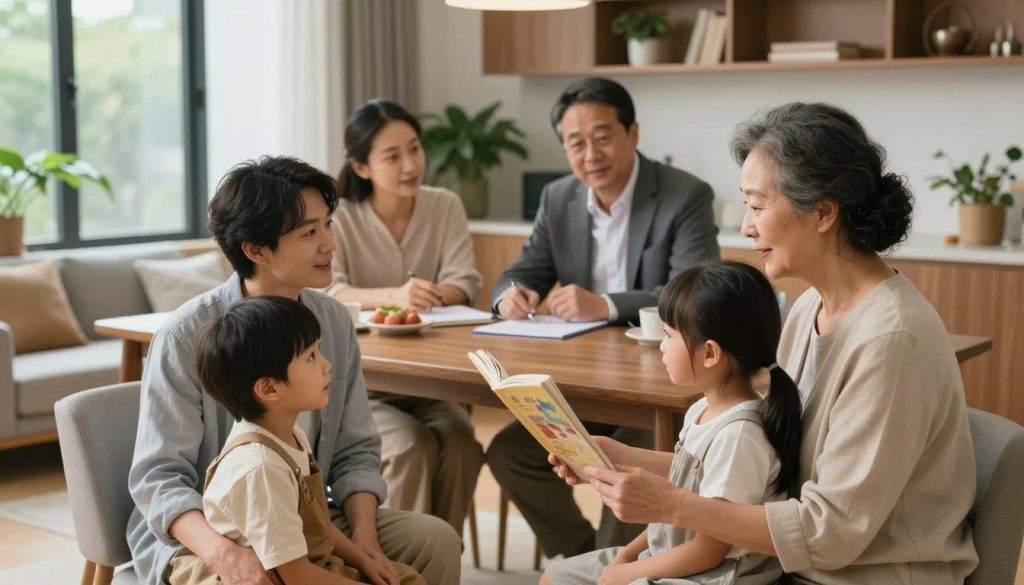
Demographic pressure is immense. Many sole children support four aging parents plus grandparents. This burden is unprecedented in scale.
Urbanization and sky-high housing costs force practical solutions. Daily cohabitation is often impossible. New models focus on financial support and scheduled visits.
Higher education and global social media expose young 人 to new ideas. They now balance filial duty with personal wellbeing and autonomy.
Government policy shifts create whiplash. Moving from one-child to three-child rules leaves many cynical. Personal economic calculations now trump state incentives.
| Driving Force | Traditional Expectation | 2026 Reality | New Practice |
|---|---|---|---|
| Economic | Multi-generational home | Unaffordable housing | Financial support from a distance |
| Demographic | Multiple siblings share care | One child supports multiple elders | Negotiated care schedules |
| Social | Automatic obedience | Exposure to global individualism | Discussed boundaries |
| Policy | Follow state directives | Unworkable incentives | Personal cost-benefit analysis |
Contemporary Parenting and Filial Expectations in American Society.
In the United States, the classic immigrant bargain, sacrifice for the next generation, is being renegotiated by the very children it was meant to benefit. I see second-generation Chinese American 人 navigating a unique tension. Relatives back in China often don’t grasp the local economic context.
Supporting elderly parents while paying a mortgage and raising kids is tough. There’s no extended family network to share the load. This forces a hybrid model.
Young adults honor duty through financial support and regular calls. Yet they maintain the geographic independence American culture normalizes. This creates friction with immigrant parents who expected traditional co-residence.
Their approach to parenting and 教 is different too. They often reject the extreme sacrifice they saw their own parents make. Instead, they seek a balance between supporting aging parents and building their own family’s security.
The American emphasis on individual autonomy constantly clashes with traditional expectations. Chinese American 人 must constantly justify their choices. Relatives overseas may view these nuclear family structures as selfish.
Some families are pioneering new models. They formalize financial support with clear agreements. They set boundaries when grandparents help with childcare. They treat elder care as a shared sibling responsibility with explicit cost-splitting. This is a practical blueprint for modern filial duty.
International Perspectives on Family Mergers and Aging Innovations.
Other nations facing similar demographic pressures are pioneering creative approaches to elder care. Their experiments offer valuable lessons for societies rooted in Confucian values.
Insights from Global Aging Initiatives and Creative Elder Policies.
Japan presents a stark preview. By 2025, 40% of its population will be over 65. This is forcing society to rethink how it supports its elderly 人.
Innovations include multi-generational co-housing and robotic care assistants. There’s also a growing expectation that people will work into their seventies.
Taiwan, an aging society since 1993, has developed a notable 號. It focuses on creative aging through arts and culture.
The Baring Foundation documented 80 such projects worldwide. Ireland’s Bealtaine Festival and the Netherlands’ Music Generations program are standout examples.
These initiatives bring elderly and young 人 together through music and art. Studies show participants enjoy better mental health and need fewer doctor visits.
| Society | Key Challenge | Innovative Response |
|---|---|---|
| Japan | Extremely high elderly population ratio | Technology-assisted care, later retirement age |
| Taiwan | Long history as an aging society | Community-based creative and artistic programs |
This represents a form of social 教, showing that valuing elders’ independence benefits everyone. It distributes care beyond the immediate family.
Revolutionary Approaches: Gen Z/Alpha's Take on Filiality
What if honoring your parents didn’t mean sacrificing your own mental health and financial future? I see Gen Z and Alpha answering this with smart, sustainable systems for 孝 (xiào).
They are moving from guilt-driven duty to strategically planned support. This generation has crafted a new playbook.
One key innovation is the “scheduled quality time” model. Instead of constant, distracted availability, a young 人 (person) might commit one full Sunday each month.
They give their parents undivided attention doing activities the elders enjoy. This creates meaningful connection without burnout.
Another approach is resource pooling. Siblings collectively hire professional care assistance for aging parents.
They view this as more respectful than relying solely on stressed, amateur help. It ensures expert care while protecting adult children’s wellbeing.
Financial transparency is also crucial. Families now openly discuss retirement savings and healthcare costs.
They create formal agreements about who contributes what and when. This treats elder care as a clear family project, not a vague obligation.
Gen Z frames these changes as an evolved form of 孝. They argue that sustainable support honors the spirit of devotion better than unsustainable tradition.
It’s about 教 (teaching) a new value: prioritizing a parent’s dignity and independence, ensuring care lasts a lifetime.
Lessons from History: Insights from Early Chinese Civil Laws and Family Dynamics.
Historical evidence shows that pragmatic family agreements have deep roots in China’s legal past. I find the 202-186 BC Zhangjiashan legal texts fascinating. These excavated documents (號) reveal sophisticated civil laws governing households.
They included statutes on inheritance, property rights, and domestic disputes. This proves families have always needed formal conflict resolution. Moral exhortations about filial devotion (孝) were not enough.
Concepts like “mingfen” (title and portion) formalized property shares. This provided a clear framework for inheritance. It’s a historical precedent for today’s young people (人) who seek negotiated agreements.
The “Statutes on Establishing Heirs” from the Han period (日) show succession involved practical legal arrangements. This balanced ritual obligations with real-world protections. The extreme sacrifice model often called traditional Chinese filial piety (孝道) is a selective reading.
Early society understood that moral ideals alone couldn’t solve complex family disputes. Today’s desire for clear support obligations aligns with this legal tradition. Modern pragmatism isn’t a break from 孝 but a return to its balanced roots.
Expert Opinions: Roundup of Scholarly Perspectives on Collaborative Filiality.
Academic research provides a crucial lens for understanding today’s evolving family expectations. Sociologists note that the practice of 孝 is adapting to new economic realities.
Studies document a heavy psychological toll. Young 人 caught between impossible parental demands and their own families show elevated anxiety and depression rates.
Scholars debate whether this is cultural decline or adaptive evolution. Some argue rigid models of 孝 harm both generations by creating unsustainable care.
Globalization and education have fundamentally altered the material conditions for duty. Direct comparisons to past eras are now misleading.
| Expert Field | Key Insight | Recommended Action |
|---|---|---|
| Sociologist | Economic shifts require new care models. | Support negotiated family agreements. |
| Family Therapist | Unspoken expectations cause marital conflict. | Promote open intergenerational dialogue. |
| Cultural Scholar | Tradition must balance with modern wellbeing. | Develop public education on sustainable filiality. |
Experts suggest policy reforms like legal protections for elder rights. This honors the spirit of 孝 in an aging society.
Practical Tips for Navigating Modern Family Expectations.
You don’t have to choose between honoring your parents and building your own life. Theory is useless without real-world strategies. I’ll share actionable advice for young adults trying to balance both.
Balancing Financial Responsibility with Emotional Intelligence.
Start difficult talks early. Discuss elder care and support before a parent retires or gets sick. This is the best 時 (time). Emotions are lower and options are open.
Use “both/and” language. Say, “I want to support you and build my family’s security.” This avoids framing your needs against theirs.
Find a family ally. Identify a progressive aunt or uncle. This 人 (person) can help explain your choices to more traditional relatives. Parents often listen better to their peers.
Always follow through on your promises. If you agree to call every Sunday, do it. Consistent action builds trust. It shows your new approach is about care, not selfishness.
Conclusion
The journey through modern Chinese family dynamics reveals a profound adaptation, not abandonment, of core values. Collaborative Filiality represents a necessary evolution. It adapts respect and care for elders to today’s economic and social realities.
These changes create real tension. Older generations grieve shifting traditions. Young 人 feel guilt even when making rational choices. Yet, this painful transition may forge more honest relationships.
It replaces impossible obligations with genuine connection within realistic boundaries. This isn’t Western individualism replacing collectivism. It’s about adapting collectivist values to new conditions.
I feel cautious optimism. As these practices normalize, generational conflict may ease. Future elders, today’s pragmatic young adults, will likely understand their children’s need for balance.