Language never stands still, and Mandarin is a fantastic example. Right now, netizens are crafting clever new expressions that perfectly capture the modern romance scene. These aren’t just word, they’re keys to understanding a vibrant culture.
If you’re stepping into this world, knowing the latest terms is crucial. It’s the difference between a smooth conversation and a confusing mix-up. I’ve watched this language evolve in real-time on popular apps.
This guide is your backstage pass. I’ll walk you through the essential phrases for 2026. You’ll learn to navigate everything from playful texts to serious talks. My goal is to help you communicate with confidence and genuine cultural smarts.
For each term, I provide the pinyin pronunciation, a clear definition, and real-life examples. You’ll grasp not just the literal meaning, but the feeling and context behind it. Let’s get you sounding authentic, not like a textbook.
Introduction to Chinese Dating Slang 2026.
Modern relationships are increasingly discussed through a lens of clever, culturally-specific shorthand. This isn’t just about new words. It’s about how a generation talks about love online.
What is Chinese Dating Slang 2026?
These expressions represent how young speakers communicate about romance today. They serve as cultural artifacts that reveal deep insights into views on love and connection in a digital world.
The internet has fundamentally shaped this language. Netizens create these phrases to express complex feelings efficiently within social media and dating apps.

Why These Terms Matter in Today's Dating Scene.
Using the right term at the right time signals you understand the culture. It shows high emotional intelligence rather than just memorizing vocabulary.
The context is everything. Native speakers can immediately tell if you genuinely grasp the meaning or are just trying to impress.
Mastering these expressions helps you connect on a deeper level. They reflect the blend of traditional values with modern digital habits that define contemporary romance.
Understanding the Glossary Format.
To master modern lingo, you need more than just definitions, you need context. That’s why I built this entire guide using a clear, consistent structure. It turns complex expressions into easy-to-digest lessons.
This way of learning helps you grasp both the meaning and the mood behind every phrase. You’ll see exactly how people use these terms in real life.
Term, Pinyin, Definition, and Example Sentence Explained.
Each entry follows the same powerful pattern. First, you get the word itself. Next, the pinyin shows you how to say it correctly.
Then, a simple definition cuts to the core. Finally, a practical example sentence puts it all into action. This multi-step approach is how you learn to sound natural.
Pay close attention to those example sentences. They reveal the tone and situation where native speakers actually use these slang words. You can’t get that from a dictionary.
Meme-Style Visuals for Maximum Shareability.
The visual suggestions for each term are strategic. They’re designed to help you remember better and to create content you can share.
In today’s world, learning language is tied to social media. A clever meme can explain a phrase faster than a paragraph. It also shows you understand the culture.
Think of this guide as your personal reference. You can return to it anytime you spot these expressions online. The format makes finding and understanding any slang quick and simple.
Lianai Nao and Taofang: Navigating Love and Ghosting.
From all-consuming infatuation to a clean break, this slang covers the extremes. Understanding these two expressions is a major part of modern romance.
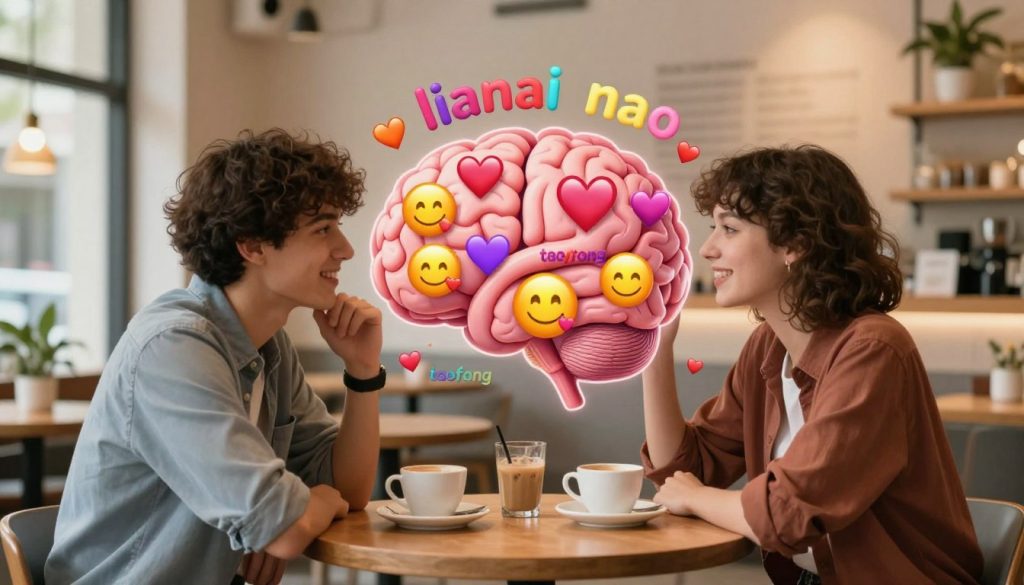
Lianai Nao (恋爱脑) - The "Love Brain" Warning.
Lianai Nao literally means “Love Brain.” It describes that dangerous state where logic completely fails.
People use this phrase as a friendly warning. They’re telling you to snap out of an illogical crush.
“别恋爱脑了,他都一周没回你消息了!”
(Bié liàn’ài nǎo le, tā dōu yī zhōu méi huí nǐ xiāoxī le!)
This example translates to: “Stop being so love-brained, he hasn’t replied for a week!” The context shows it’s about protecting a friend’s time and emotional energy.
Taofang (退房) - Mastering the Art of Checking Out.
On the other end is Taofang. This word means “to check out,” like from a hotel.
In dating, it’s a metaphor for ending a casual situationship. It frames the exit as neutral and polite, not cruel.
An example sentence helps: “我觉得我们不太合适,我想退房了.” It means, “I don’t think we’re compatible, I want to check out.”
This way of speaking acknowledges the temporary nature of some connections. It provides a clean vocabulary for emotional withdrawal.
Together, these terms give people the language for the full relationship lifecycle.
Xing-Jia-Bi and the Cost-Performance of Dating.
In a world where efficiency is prized, even matters of the heart get a cost-benefit analysis. One of the most pragmatic slang terms today is Xing-Jia-Bi. It comes from the business world but now shapes romantic conversations.
Xing-Jia-Bi (性价比) - Evaluating Dating Efforts.
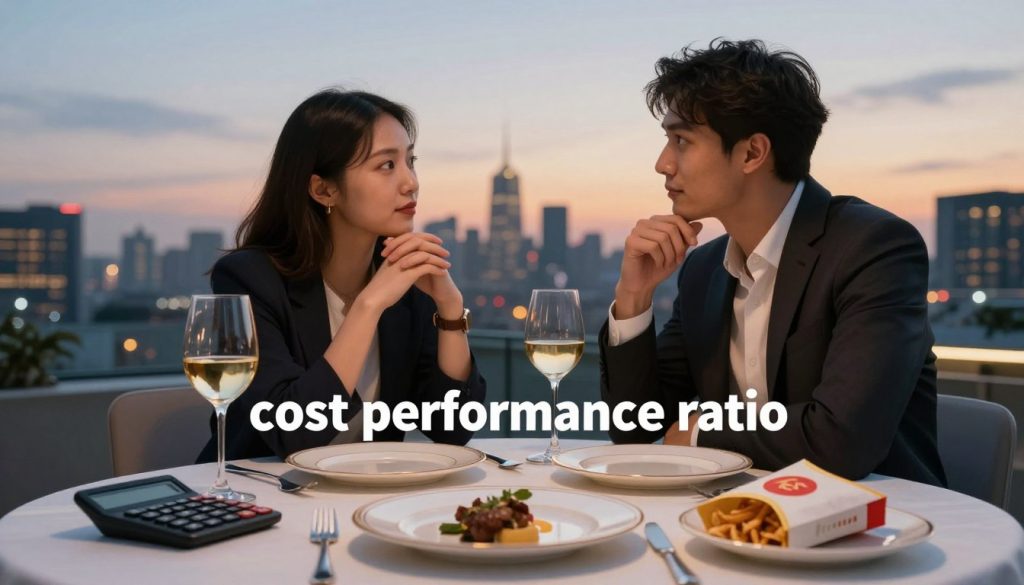
This phrase literally means “cost-performance ratio.” Young people use it to judge if romantic effort is worth the return. It’s about emotional, time, and financial investment.
Here’s a common example:
“他要求太多但付出太少,性价比真的很低。”
(Tā yāoqiú tài duō dàn fùchū tài shǎo, xìng-jià-bǐ zhēn de hěn dī.)
This translates to: “He demands too much but gives too little, the cost-performance ratio is really low.” The context is a polite assessment of imbalance.
Applying Cost-Performance Ratio to Modern Romance.
This way of thinking might seem unromantic. Yet, it’s a smart strategy in a busy world. With limited time and high competition, people want relationships that make logical sense.
Understanding this slang word reveals a deeper cultural shift. It’s not about being cold. It’s about being realistic with emotional resources. This practical meaning helps avoid mismatched effort.
Beyond the Basics: More Chinese Dating Slang Terms.
The romance lexicon doesn’t stop with a few phrases; it maps the entire journey from singlehood to commitment. Let’s explore five more essential expressions that cover every phase.
Kongchuang - Understanding the "Window Period".
Kongchuang (空窗) literally means “empty window.” It describes that vulnerable time between relationships when someone is single and open.
This term is a signal. It tells you the perfect moment to make a move might be now.
“他刚分手,现在正在空窗期。”
(Tā gāng fēnshǒu, xiànzài zhèngzài kōngchuāng qī.)
This example means, “He just broke up, he’s currently in his window period.”

Crushing, Moxi, and Shang-An Demystified.
The English word “Crushing” is used directly. It captures that specific feeling of having a crush.
Moxi (模糊) means “vague.” In romance, it points to frustrating, ambiguous flirting with no clear intent.
Finally, Shang-An (上岸) means “to go ashore.” It’s the happy ending—finding “the one” and settling into a stable relationship.
| Term | Pinyin | Meaning | Example Sentence |
|---|---|---|---|
| Kongchuang | Kōngchuāng | Window period between relationships | 他正在空窗期,可以试试约他。(He’s in his window period, you could try asking him out.) |
| Crushing | (Loanword) | Having a crush on someone | 我最近一直在crushing on my new neighbor。(I’ve been crushing on my new neighbor lately.) |
| Moxi | Móhú | Vague, ambiguous flirting | 他们的关系很模糊,没人懂。(Their situation is very vague, no one understands.) |
| Shang-An | Shàng’àn | To “land” a committed partner | 恭喜你上岸了!(Congratulations on landing/finding the one!) |
| Gao Leng | Gāolěng | Aloof, cool demeanor (often attractive) | 他那种高冷的气质很特别。(His kind of aloof aura is very special.) |
Learning these slang words gives you the complete toolkit. You’ll understand conversations and express your own experiences in a way native speakers instantly get. It’s the best way to learn the real language of the heart.
Diving Deeper: Dian-Zan-Bang and the Digital Dating Era
Online platforms don’t just host our conversations; they actively shape the language we use within them. This digital reality has created a whole new set of expressions.
Understanding this context is key to grasping modern romance culture.
Dian-Zan-Bang - The "Like-Button Friendship" Explained.
The slang word Dian-Zan-Bang (点赞榜) captures a very modern connection. It means “like-button friendship.”
This term describes those contacts where your entire relationship is liking each other’s posts. There’s no real chat.
“我们只是点赞之交,从来没聊过天。”
(Wǒmen zhǐshì diǎnzàn zhī jiāo, cónglái méi liáo guò tiān.)
This example translates to “We’re just like-button friends, we’ve never actually chatted.” It highlights the strange paradox of digital closeness.

How Digital Context Shapes These Terms on WeChat and Tantan.
On WeChat, your “Moments” feed is a curated performance. How someone interacts with it sends clear signals.
Consistent likes might show interest, while silence can mean disinterest. Chinese netizens have developed precise language for these behaviors.
Apps like Tantan have their own ecosystem. The phrase shuā píng (刷屏), meaning to flood the screen, is often used when a new couple posts non-stop.
| Platform | Digital Behavior | Common Slang | Core Meaning |
|---|---|---|---|
| WeChat / General | Liking posts without deeper contact | Dian-Zan-Bang (点赞榜) | Superficial “like-button” friendship |
| Social Media | Overposting about a relationship | Shuā Píng (刷屏) | To flood feeds/go viral |
| Tantan / Dating Apps | Matching but not messaging | Moxi (模糊) | Vague, ambiguous intent |
| Online Culture | Finding a stable partner | Shang-An (上岸) | To “go ashore”/settle down |
These expressions evolve as the internet does. They give speakers the way to describe nuances that didn’t exist before screens.
Chinese Dating Slang 2026 in Digital Culture.
Navigating the world of modern affection means speaking the language of the internet generation. This culture thrives on quick, clever expressions born from screens.
To use them well, you need more than definitions. You must grasp the social rules behind each word.
Social Media and the Evolution of Online Dating Lingo
Platforms like WeChat are labs for new slang. The need to manage a persona, or rénshè, drives this evolution.
Terms about image and status become part of romantic talk. This shows how digital lifestyle shapes connection.

For example, Chinese netizens might use a gaming term like pò fáng le to say they’re emotionally overwhelmed. This crossover is common.
High EQ vs. Try-Hard: The Cultural Nuance Behind the Terms.
Using this slang naturally shows high EQ—shàng fēn. It signals you get the culture. Forcing it makes you seem like a “try-hard.”
Native speakers spot the difference instantly. The key is to listen first. Hear how terms are often used in real chats.
This is the best way to learn. It turns memorization into genuine understanding. You’ll join conversations instead of just studying them.
Bonus Terms: Shang-Fen and Efficient Intimacy.
The final layer of understanding involves two powerful concepts that shape modern interactions. They go beyond single words to describe entire strategies for connection.
Shang-Fen - Signaling High Emotional Intelligence.
Shang-Fen (上分) means “gaining points.” It refers to actions that show high emotional intelligence. In romance, this includes using the right slang at the right time and reading social cues well.
“他的回复很上分,既幽默又不失礼貌”
(Tā de huífù hěn shàng fēn, jì yōumò yòu bù shī lǐmào) – “His reply was very high EQ, both humorous and polite.”

This example shows how the phrase is used to praise someone’s social skill. It’s the opposite of sounding like a textbook.
Efficient Intimacy - Building Modern Connection Strategies.
“Efficient Intimacy” is a dating philosophy. It’s about building real connections quickly without wasting time.
This lifestyle responds to intense competition and burnout, known as nèijuǎn. Many young students and professionals feel pressure. Some choose to tǎng píng, or “lie flat,” and opt out.
Precise slang supports this way of thinking. It lets people communicate complex feelings fast. If someone calls you “yyds” (eternal god/goat), that’s the ultimate Shang-Fen compliment.
Conclusion
Your journey into modern romance is now equipped with the essential tools for authentic communication. Mastering these terms builds the foundation for Efficient Intimacy, helping you succeed in today’s romantic culture.
Unlike textbook language, these are living phrases used by native speakers every day. They reflect how people actually connect now.
The cultural fluency you gain goes beyond romantic success. It shows deep respect for the culture and its nuances.
Remember, this language evolves constantly. Stay engaged with social media and real conversations. Use this guide as your foundation, but keep learning.
Now, go build meaningful connections with confidence and high emotional intelligence.