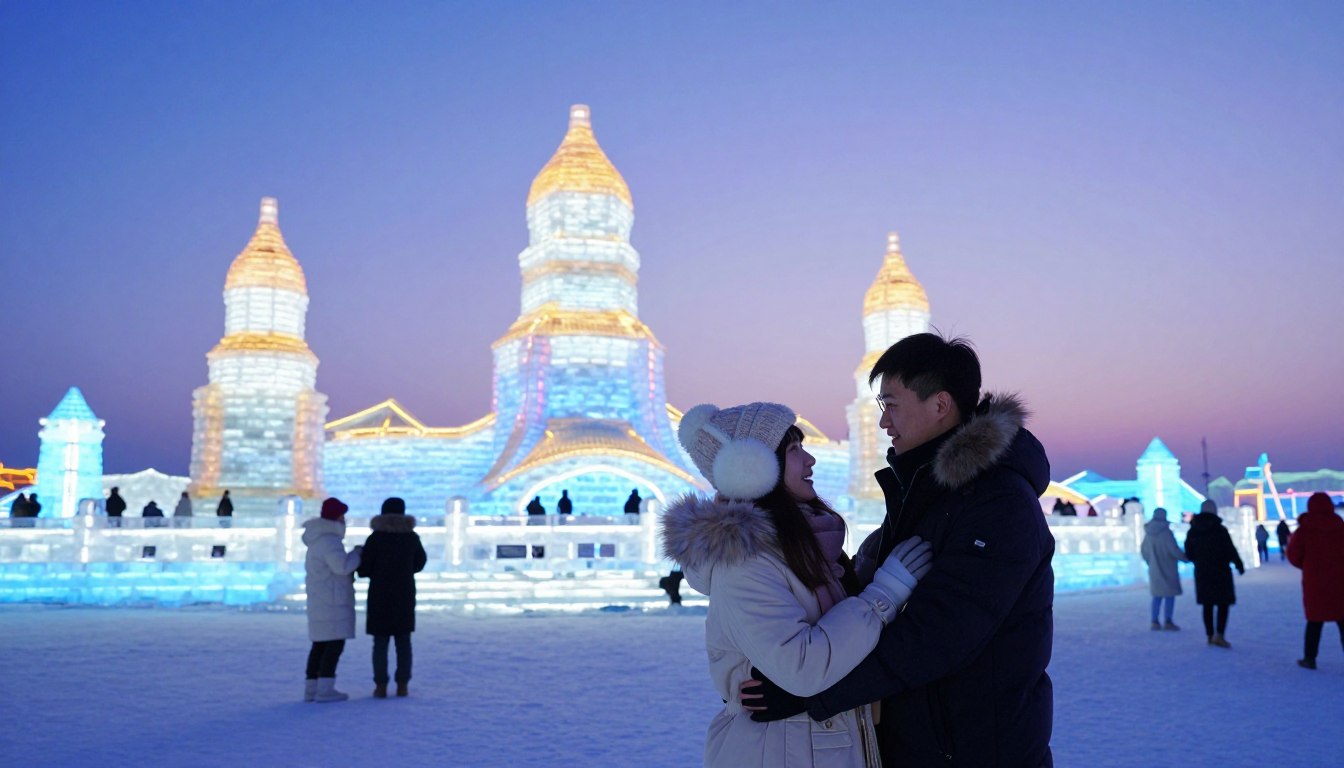
I’ve noticed a fascinating trend where couples are choosing the world’s coldest destinations to test their bonds. It’s more than a vacation; it’s a deliberate plunge into discomfort to see how a partnership holds up.
Places like Harbin, with its minus 20-degree Celsius air, have become a proving ground. The extreme cold transforms from a barrier into the main attraction for these adventurous duos.
The numbers back this shift. The China Tourism Academy expects 360 million ice-and-snow leisure trips this season. Revenue could hit 450 billion yuan.
This isn’t a short-lived fad. The scale of the national ice-and-snow economy has quadrupled since 2015. It shows a deep, sustained interest in winter travel.
The trend even draws visitors from warm Southeast Asian nations. They join domestic travelers, all seeking a unique blend of challenge and charm.
Ultimately, this “relationship test” concept is powerful. Couples discover how they make decisions under pressure and support each other in totally unfamiliar situations. It’s a path to deeper connection.
Key Takeaways
- Extreme cold-weather destinations are being used by couples as intentional relationship stress tests.
- Harbin’s harsh winter has become a major draw, turning a climatic challenge into a popular attraction.
- Industry data forecasts massive growth, with hundreds of millions of trips and billions in revenue expected this winter season.
- The ice-and-snow economy in China has seen a fourfold increase in the last decade, signaling a lasting trend.
- This phenomenon attracts not only local travelers but also international visitors from typically warm climates.
- The core idea goes beyond adventure; it’s about observing partnership dynamics during shared discomfort.
- Travel to these locations has evolved from simple sightseeing to a comprehensive experience for personal discovery.
A Journey into the Harbin Ice Festival Couple Survival Guide
Surviving the sub-zero spectacle of Harbin’s Ice Festival requires a unique set of couple-centric strategies. It’s a team effort where preparation defines the experience.
Essential Tips for Navigating the Ice Festival
Your first mission is mastering the art of layering. Thermal base layers, a warm mid-layer, and a windproof shell are non-negotiable. Establish a “comfort checkpoint” system with your partner every 30 minutes. This prevents silent suffering and tension.
Plan your outdoor time in short, warm-up-friendly blocks. This keeps energy high and spirits higher.
“Eating that ice cream bar on Central Street in minus 20 degrees was hilarious,” shared Thai tourist Nattapong Somchai. “We laughed so hard together. It turned a silly tourist moment into our favorite memory.”
This bonding over the cold is a universal draw. New flight routes from Southeast Asian cities make this unique winter culture more accessible than ever.
Personal Experiences in Surviving Winter Extremes
The biggest tip? Align your priorities before you go. One person might want to see every frozen sculpture. The other may prefer cozy cafe breaks. Mismatched goals cause the most friction.
| Time Slot | Activity | Pro-Tip for Couples |
|---|---|---|
| 10:00 AM | Explore Central Street architecture | Share hand warmers while taking photos. |
| 11:00 AM | Warm-up break in a heated cafe | Use this time for your “comfort checkpoint.” |
| 12:00 PM | Visit main ice sculpture area | Embrace the absurdity and laugh together. |
| 1:00 PM | Indoor lunch & cultural experience | Discuss what you’ve enjoyed most so far. |
For many visitors from warm climates, simply seeing snow is magical. The real attraction, though, becomes proving you can handle the challenge as a duo. The survival story you create is the best souvenir.
Embracing Romantic Winter Getaways in Northern China
Imagine sharing a hot pot meal inside a glowing snow house as a gentle flurry falls outside—this is the unique romance of a Northern China winter. Beyond the major festivals, this region overflows with intimate escapes. Couples find a perfect mix of breathtaking scenery and cozy connection here.
Exploring Scenic Snowy Landscapes
The scenic resources are stunning. Think of Snow Town’s fairy-tale forests, blanketed in perfect powder. Or the professional slopes of Yabuli, offering shared adventure. Local guides note visitor itineraries now stretch to these pristine areas.
These snowy vistas create a private world for two. The silence of a frozen lake or a walk through a pine forest dusted with white feels incredibly romantic. It’s a powerful backdrop for connection.
Finding Cozy Spots for Couples
The magic often happens in the contrast between cold outside and warmth within. Toushan village offers that unforgettable snow house hot pot experience. In Harbin, Zhaolin Park provides a free, romantic evening stroll among glowing ice lanterns.
For deeper cultural immersion, small folk-tradition villages across the northeast offer heated kang beds and quiet mornings. Skipping tour buses for neighborhood walks reveals cozy family-run eateries. This “living like a local” trend builds authentic memories.
These getaways prove romance isn’t about luxury. It’s about sharing unique moments in beautiful, challenging settings. The experience itself becomes your most valuable souvenir.
Preparing for the Chill: Packing List for a Harbin Winter Trip
Packing for a Harbin winter isn’t just about clothes; it’s a strategic mission for comfort and safety. Getting it right means you focus on the adventure, not the ache. I base my list on years of watching what makes or breaks a trip.
Must-Have Clothing and Accessories
Your foundation is non-negotiable: thermal underwear rated for at least minus 30°C. Regular layers fail. The layering system is key—moisture-wicking base, insulating mid-layer, and a windproof shell.
Invest in quality insulated boots with thick treads. Cheap footwear leads to cold, wet feet and slips on ice. For your face, a balaclava and ski goggles are essential against frostbite and glare.
Pack multiple glove types. Have thin ones for phone use and thick pairs for long outdoor sessions. This attention to detail separates miserable tourists from happy explorers.
Travel Gear and Safety Essentials
I consider hand and foot warmers relationship-savers. Pack plenty. Extreme cold and dry air also demand lip balm with SPF and heavy moisturizer to keep skin comfortable.
Your daypack should hold a thermos, snacks, a portable charger, and a basic first-aid kit. Phones need protection—use a waterproof case to guard against condensation damage from moving between temperatures.
Look to major ski destinations for inspiration. Resorts in places like Chongli offer all-inclusive packages with quality rental gear and professional coaching. These services show how the right resources elevate the entire experience.
Why Travel is the Ultimate Relationship Test
At its core, a challenging trip strips away the comfortable routines that often mask a couple’s true dynamic. You’re left with just each other and the situation. This is especially true in winter.
The cold creates what I call forced collaboration scenarios. You must constantly decide when to go inside or what to do next. Physical discomfort shortens patience, revealing how you both cope under real pressure.
Overcoming Unexpected Challenges Together
Unexpected events are the real test. A canceled tour or a language barrier shows your problem-solving style. Do you work as a team, or does blame start?
Great service can minimize logistical stress. A family from Malaysia loved their all-inclusive ski package. “You don’t have to worry about anything,” they noted. Their 12-year-old daughter said, “Skiing is so much fun. I’m happy every day I’m here.”
Even with support, the test is in your reactions. Getting lost in a snow-covered park reveals your partnership’s resilience in real time.
How Winter Adventures Strengthen Bonds
Shared adversity builds a powerful “us against the elements” story. Surviving freezing temperatures together forges a unique connection. You build a shared identity.
Moments of care become magnified. Sharing the last hand warmer or suggesting a warm-up break shows attentiveness. These small acts build trust and warmth.
The goal isn’t to avoid conflict. It’s about how you repair and move forward. Couples who laugh later about getting caught in a blizzard show a strength that lasts long after the trip.
Chinese Interests On Ice And Snow Tourism
What began as niche winter sightseeing has matured into a trillion-yuan industry, fueled by innovative experiences. The scale of this cold-weather economy exceeded 1 trillion yuan in 2025. That’s a nearly fourfold increase from just 270 billion yuan a decade earlier.
Analyzing Market Trends and Visitor Growth
I see the data from the China Tourism Academy as proof of a fundamental shift. They forecast 360 million leisure trips this winter season alone. Related revenue is tipped to hit 450 billion yuan.
This isn’t a temporary spike. The sector’s average annual growth rate exceeded 21 percent from 2016 to 2024. This consistent, compound expansion signals genuine market demand and successful industry development.
The Role of Innovative Winter Experiences
The growth is driven by a move beyond simple sightseeing. Visitors now seek immersive products like ice sculpting workshops and themed photography tours. These experiences drive engagement and spending far beyond basic admission fees.
Consumption patterns show high willingness to pay for quality. People book multi-day packages with instruction and cultural activities. This market sophistication turns seasonal trips into a cornerstone for regional economic development.
Insights from International Ski Resorts and Winter Sports Arenas
The real blueprint for a world-class winter destination isn’t found in brochures, but in the operational models of leading ski resorts. Places like Chongli and Altay provide a masterclass in strategic development.
Lessons Learned from Chongli and Altay
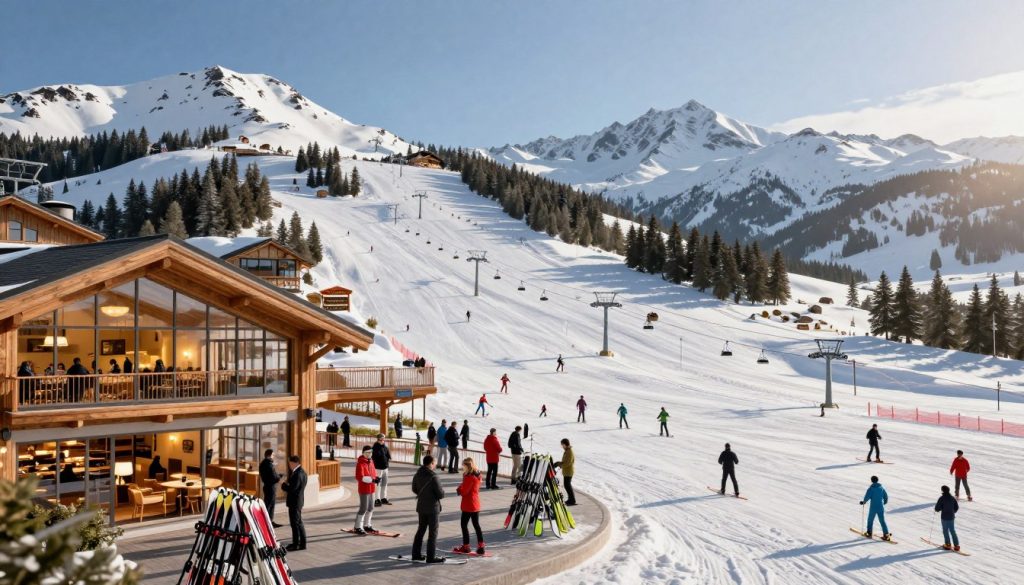
Chongli’s cluster of nine major ski resorts creates an unmatched scale. With 219 slopes spanning 178 kilometers, it offers immense variety. Hosting 25 major snow sports events in one season, including an FIS World Cup final, forces world-class facility standards.
This strategy also generates priceless global attention. Altay’s growth story is equally compelling. It saw over 16 million visits last season, a 26 percent year-on-year increase.
Ski trips there surged 21 percent, exceeding 1.4 million. This growth is fueled by professional infrastructure and international coaching talent from Austria, Canada, and France.
An Austrian instructor at a major resort there praised the “professional slope layout” and “excellent snow quality.” This expert recognition is a crucial milestone. The key lesson is building complete ecosystems, not just slopes, for lasting success.
Cultural Immersion: From Ice Sculptures to Traditional Experiences
I’ve watched a fascinating evolution where destinations are weaving ancient customs directly into the fabric of cold-weather adventures. The focus is shifting from just viewing frozen art to experiencing living heritage.
This creates deeper emotional connections for visitors. It turns a trip into a meaningful story.
Engaging with Local Heritage and Art
Chagan Lake’s winter fishing ritual is a perfect example. This practice dates back over a thousand years.
It’s now a national intangible cultural heritage. The festival’s opening day drew 81,000 visitors.
It generated over 70 million yuan in revenue. A “lucky fish” auction for 1.7 million yuan, with proceeds donated to ecology, shows how heritage can drive value responsibly.
In Yanbian, the ski season launch features ethnic song-and-dance flash mobs. Visitors can try paper-cutting, ironwork, and taste ginseng chicken soup.
This multi-sensory approach makes the culture feel alive and accessible.
Events and Festivals That Highlight Authentic Culture
The Dragon Fish Tribe night tour at Chagan Lake combines morin khuur performances with molten-iron fireworks. It’s a culturally-rooted spectacle, not generic entertainment.
Chongli has launched more than 30 new business forms. These cater to diverse visitor segments seeking different levels of heritage engagement.
Destinations like Diqing integrate Tibetan folk customs with photography. This upgrades winter tourism from simple sightseeing to an immersive experience.
| Destination | Cultural Highlight | Visitor Engagement |
|---|---|---|
| Chagan Lake | Millennium-old winter fishing ritual | Auction participation, night tour shows |
| Yanbian | Korean ethnic performances & crafts | Hands-on craft workshops, culinary tasting |
| Chongli | Diverse new business forms | Tailored activities for different interests |
| Diqing | Tibetan folk customs integration | Photography tours, intangible heritage experiences |
The model is clear. Success comes from integrating heritage into every touchpoint, not adding superficial villages. This builds authentic appeal and sustains the local resources.
Economic and Business Growth in China's Winter Tourism Sector
What truly fascinates me is how cold-weather travel has sparked a billion-yuan transformation, revitalizing local economies from the ground up. This isn’t just a seasonal boom; it’s a fundamental restructuring of regional business models.
How Investment Is Transforming Regional Destinations
The scale of this sector exceeded 1 trillion yuan in 2025. That’s a fourfold jump from 2015. A sustained 21 percent average annual growth rate shows incredible investor confidence.
Strategic investment reshapes entire areas. Chongli now positions the ice and snow sector as its leading industry. This triggered comprehensive infrastructure, including high-speed rail.
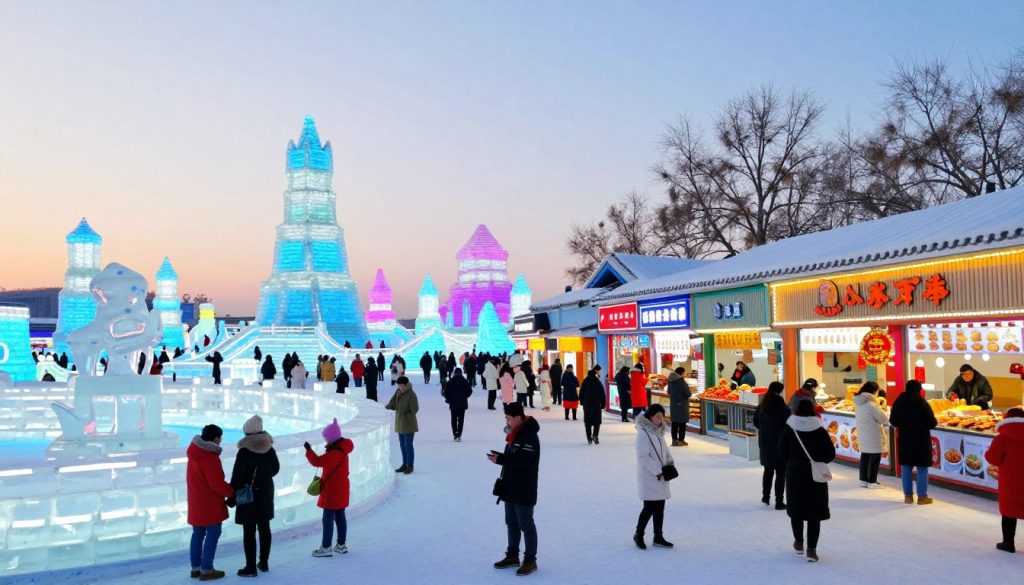
Rural revitalization stories are powerful. Toushan village transformed from an obscure hamlet into a popular destination. This proves inclusive growth can reach remote areas.
Micro-economic impacts are everywhere. A restaurant owner near Chagan Lake sells over 50 set meals daily at 398 yuan each. That’s roughly 20,000 yuan in daily revenue for one small business.
Consumption patterns have high multiplier effects. Visitors spend on lodging, dining, and cultural experiences. Extended stays create more value than day trips.
The transformation builds year-round employment. It supports equipment manufacturing and professional training. This diversifies regional economies for lasting prosperity.
Future Trends in Winter Tourism: Bridging East and West
Looking ahead, I see winter travel evolving into a bridge between cultures, not just a seasonal getaway. The sector is moving beyond simple sightseeing to create meaningful exchanges.
Innovative Tourism Products and Cultural Exchanges
I’m impressed by resorts integrating Traditional Chinese Medicine wellness centers. A Canadian ski instructor noted how this therapy relieves fatigue, offering a unique charm.
Visa-free policies now make spontaneous trips easy for visitors from places like Singapore. One tourist said, “It used to be expensive to get a visa, but now it’s so easy.”
Technological upgrades are removing friction. Airports have payment assistance centers. Cities accept foreign bank cards on public transit.
Expanding the Global Impact of Winter Travel
Targeted campaigns in Southeast Asia show strategic market development. The hot climate there drives tourists to seek unique snow experiences in Northeast China.
I see a shift from importing Western ski models to exporting distinctively local products. This includes cultural heritage experiences and high-speed rail connectivity.
The global impact expands as expertise is shared worldwide. It’s a two-way street of innovation.
Conclusion
In the end, the journey to a frozen destination reveals more about a partnership than any sunny beach ever could. It’s a deliberate test of resilience that millions are now choosing.
The winter tourism sector’s explosive growth proves this is a lasting shift. Success comes from blending world-class facilities with deep cultural resources.
Strategic vision turns harsh ice and snow into sources of warmth and connection. This creates unforgettable travel stories and drives the entire industry forward.