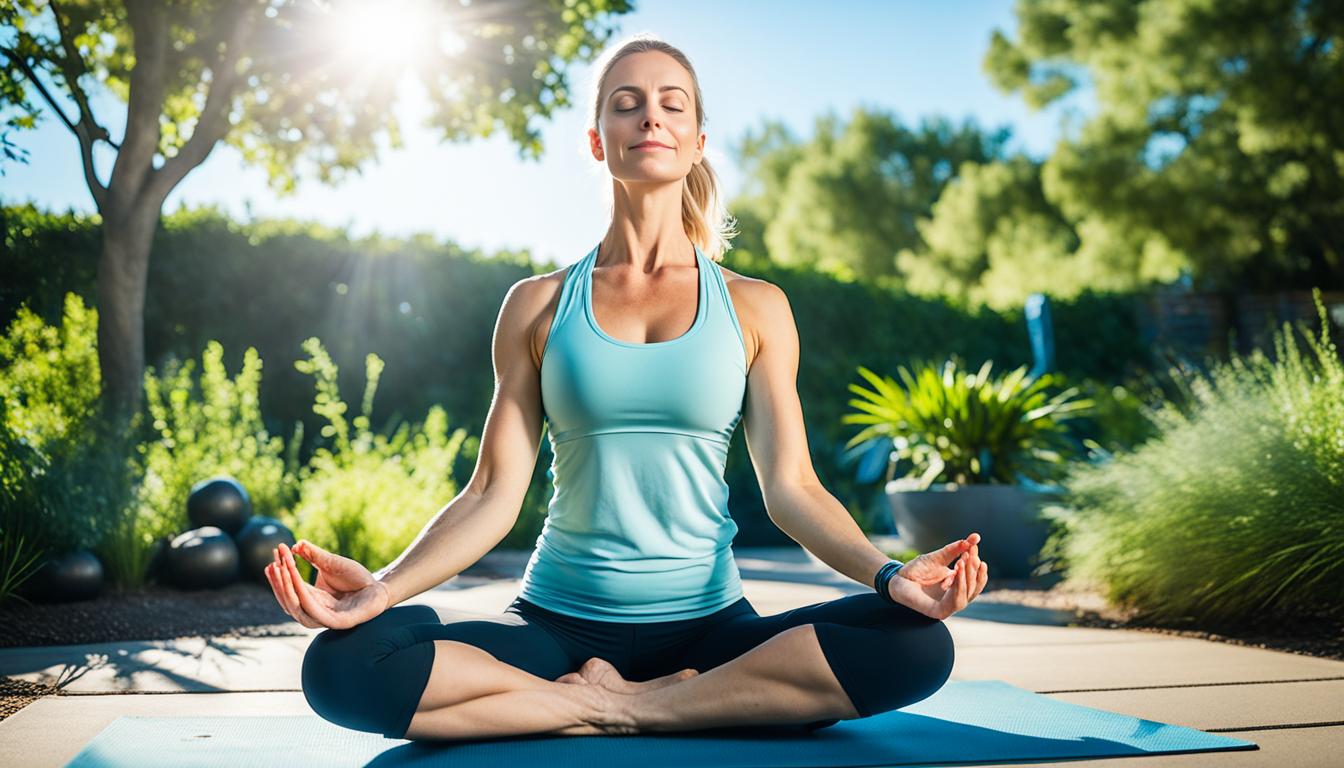
Fitness enthusiasts know the value of a healthy body through exercise and diet. But have you thought about meditation? It can boost your well-being and fitness performance. Meditation can help you achieve mind-body balance and improve mental clarity.
It can also reduce stress and enhance physical abilities. Adding meditation to your routine can be a game-changer.
This guide will help you start meditating as a beginner. You’ll learn about the benefits of fitness meditation and basic techniques. We’ll also cover how to overcome common challenges.
You’ll gain tools to make meditation part of your daily life. It will become a valuable addition to your workout routine.
We’ll explore creating a meditation space and choosing the best time to meditate. You’ll also learn how to bring mindfulness into your physical activities. This guide will equip you for a transformative journey.
You’ll improve your fitness level and overall well-being. Get ready to unlock your full potential through meditation.
Key Takeaways
- Discover the benefits of fitness meditation for improved mental clarity, stress reduction, and physical performance
- Learn how to create a dedicated meditation space and choose the optimal time for your practice
- Master basic meditation techniques such as breathing exercises, body scan meditation, and mindfulness meditation
- Explore different types of meditation that complement your fitness routine, including yoga, walking, and Qi Gong meditation
- Gain insights on overcoming common challenges and developing a consistent meditation practice for long-term success
Understanding the Benefits of Meditation for Fitness
Meditation offers numerous benefits for fitness enthusiasts. It enhances physical performance and overall well-being. Adding meditation to your fitness routine can help you reach your goals more effectively.
Improved Mental Clarity and Focus
Meditation improves mental clarity and focus for fitness. Regular practice trains your mind to be more present and attentive. This leads to better concentration during workouts.
A clear, focused mindset helps you push through challenging exercises. It also helps maintain consistent intensity throughout your fitness sessions.
Reduced Stress and Anxiety
Stress and anxiety can hinder fitness goals. They release cortisol, which can disrupt muscle growth and sleep patterns. Meditation is a powerful tool for reducing stress and anxiety.
It helps you approach workouts with a calmer mind. Managing stress through meditation equips you to handle physical and mental challenges better.
“Meditation is a vital way to purify and quiet the mind, thus rejuvenating the body.” – Deepak Chopra
Enhanced Physical Performance
Meditation directly impacts physical performance. It improves mind-body connection, developing greater awareness of your body’s needs. This leads to better exercise form and reduced injury risk.
The relaxation effects of meditation can improve sleep quality. Good sleep is crucial for muscle repair and overall physical performance.
| Meditation Benefit | Impact on Fitness |
|---|---|
| Improved mental clarity and focus | Better concentration during workouts |
| Reduced stress and anxiety | Improved sleep quality and recovery |
| Enhanced mind-body connection | Better form and reduced risk of injury |
Meditation can greatly benefit your fitness journey. Make it a regular part of your routine. You’ll experience positive effects on mental clarity, stress reduction, and physical performance.
With continued practice, you’ll be better equipped to tackle your fitness goals. You’ll have renewed energy and enthusiasm for your workouts.
Preparing for Your Meditation Practice
Setting up a good space and routine is key for meditation. A good setup helps you have a better and more fun experience. Let’s look at how to create a space and choose the best time.
Creating a Dedicated Meditation Space
A special meditation spot helps bring peace and calm. When picking a place to meditate, think about these things:
- Choose a quiet area where you can minimize distractions and noise.
- Ensure the space is comfortable, with adequate ventilation and a pleasant temperature.
- Opt for a clutter-free environment to promote mental clarity and focus.
- Incorporate elements that create a calming atmosphere, such as plants, candles, or soft lighting.
Your meditation space should feel like a safe place. It’s where you can relax and focus on your practice.
Choosing the Right Time to Meditate
The best time to meditate is different for everyone. It depends on your schedule, energy, and what you like. Here are some things to think about:
| Time of Day | Benefits | Considerations |
|---|---|---|
| Morning | Sets a positive tone for the day, enhances mental clarity and focus | May require adjusting your wake-up time |
| Afternoon | Provides a midday break, reduces stress and anxiety | Finding a quiet space at work or during a busy day may be challenging |
| Evening | Helps unwind and release the day’s tensions, promotes better sleep | May be difficult to stay awake and focused if you’re tired |
Pick a time when you can focus without feeling rushed. Make sure it fits well with your daily routine.
The most important thing is to be consistent with your meditation practice, regardless of the time of day you choose.
A good space and time help build a strong meditation habit. Remember, doing it regularly is what brings the most benefits.
Stay committed to your practice and well-being. You’ll see positive changes over time with consistent effort.
Mastering Basic Meditation Techniques
Learning basic meditation techniques can help you find calm and relaxation. These foundational skills will set you on the path to wellness. You’ll soon enjoy the many benefits meditation offers for fitness and overall health.
Breathing Exercises for Relaxation
Breathing exercises are key to meditation and relaxation. They help quiet your mind and focus on the present. The 4-7-8 technique is a simple yet powerful breathing exercise.
- Sit comfortably with your back straight and relax your shoulders.
- Place the tip of your tongue against the roof of your mouth, just behind your front teeth.
- Exhale completely through your mouth, making a whooshing sound.
- Close your mouth and inhale quietly through your nose for a count of four.
- Hold your breath for a count of seven.
- Exhale completely through your mouth, making a whooshing sound, for a count of eight.
- Repeat this cycle three more times for a total of four breaths.
Regular practice of this exercise can reduce stress and improve sleep. It also promotes overall relaxation and well-being.
Body Scan Meditation
Body scan meditation involves focusing on different parts of your body. You bring awareness to any sensations, tension, or discomfort you feel. Here’s how to practice:
- Lie down comfortably on your back, with your arms at your sides and your palms facing up.
- Close your eyes and take a few deep breaths, allowing your body to settle.
- Begin by focusing your attention on your toes, noticing any sensations or feelings in this area.
- Gradually move your attention up through your feet, ankles, calves, knees, thighs, and hips, pausing at each area to observe any sensations.
- Continue moving your awareness up through your torso, chest, back, shoulders, arms, hands, fingers, neck, and finally, your head.
- If you notice any tension or discomfort, imagine your breath flowing into that area, helping it to relax and release.
- Once you’ve scanned your entire body, take a few more deep breaths and gently open your eyes when you feel ready.
Mindfulness Meditation
Mindfulness meditation focuses on the present moment. It involves observing thoughts, feelings, and sensations without judgment. Here’s how to practice:
- Find a quiet, comfortable place to sit, either on a cushion or a chair.
- Close your eyes and take a few deep breaths, allowing your body to relax.
- Bring your attention to your breath, noticing the sensation of the air moving in and out of your nostrils or the rise and fall of your chest.
- When you notice your mind wandering, gently redirect your attention back to your breath without judging yourself.
- Continue focusing on your breath for 5-10 minutes, or longer if you feel comfortable.
- When you’re ready to end your practice, gently open your eyes and take a moment to observe how you feel.
Regular mindfulness practice can improve focus and reduce stress. It also enhances overall well-being and mental clarity.
Meditation is a vital way to purify and quiet the mind, thus rejuvenating the body. – Deepak Chopra
Incorporating Meditation into Your Fitness Routine
Meditation in your fitness routine can boost your mind-body connection. It leads to better well-being and physical performance. Add meditation before or after workouts, or on rest days.
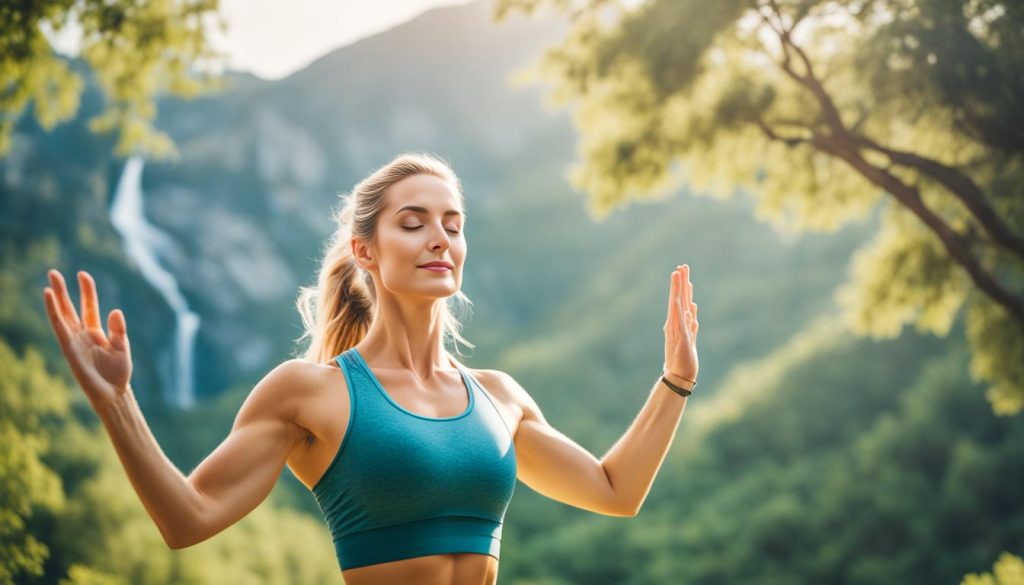
Meditation with fitness offers many benefits. It helps you focus during workouts, improving form and technique. This focus reduces injury risk and pushes you to achieve better results.
Meditation also speeds up recovery by lowering stress. After intense exercise, meditating calms your mind and body. This helps you recover faster and tackle your next workout with renewed energy.
“Meditation is a powerful tool for anyone looking to enhance their fitness routine. By cultivating mindfulness and inner peace, you can unlock your full potential both in and out of the gym.” – Sarah Thompson, Certified Meditation Instructor
Here are ways to add meditation to specific fitness activities:
- Yoga Meditation: Focus on your breath and body sensations during poses. This deepens your yoga experience and reduces stress more effectively.
- Mindful Running: Pay attention to your breath, footsteps, and body motion while running. This helps maintain pace and prevents mental fatigue on long runs.
- Meditative Strength Training: Focus on your breath and targeted muscles during each rep. This improves muscle activation and mind-muscle connection.
| Fitness Activity | Meditation Integration Technique |
|---|---|
| Yoga | Focus on breath and bodily sensations during poses |
| Running | Pay attention to breath, footsteps, and body in motion |
| Strength Training | Focus on breath and targeted muscle groups during reps |
Adding meditation to your fitness routine strengthens your mind-body connection. It boosts physical performance and speeds up recovery. Embrace meditation to transform your fitness journey into a more mindful experience.
Overcoming Common Challenges in Meditation
Meditation can be challenging at times. You might face distractions, restlessness, or lack of motivation. Let’s explore these obstacles and how to overcome them.
Dealing with Distractions
External distractions like noise can disrupt your meditation. Find a quiet space or use earplugs to block unwanted sounds. Internal distractions, such as wandering thoughts, are also common.
When your mind drifts, gently refocus on your breath. It’s normal for thoughts to arise. Simply observe them without judgment and let them pass.
Managing Restlessness and Discomfort
Restlessness or discomfort can make meditation difficult. Adjust your posture or use props like cushions for support. Focus on your breath moving through your body to calm your mind.
Some discomfort is normal when you’re new to meditation. With practice, it will likely improve over time.
Staying Motivated and Consistent
Keeping up with meditation can be tough without immediate results. Set realistic goals and celebrate small progress. Try tracking your sessions in a journal or app.
Find an accountability partner or join a meditation group. Sharing experiences with others can provide support and encouragement.
“The greatest meditation challenge is to be consistent. It’s not about perfection, but rather about showing up for yourself each day.”
Overcoming meditation challenges takes patience and self-compassion. By addressing these issues, you’ll enjoy the benefits of regular meditation. It will become a valuable part of your fitness journey.
Exploring Different Types of Meditation for Fitness
Meditation can boost your fitness routine and overall well-being. Yoga, walking, and qi gong meditation offer unique benefits for your fitness journey. Let’s explore these practices and their impact on your health.
Yoga Meditation
Yoga meditation deepens your mind-body connection during poses. It helps you focus on breath and bodily sensations. This practice builds awareness, flexibility, and balance.
You’ll learn to be present and let go of distractions. Yoga meditation promotes relaxation and mental clarity.
Walking Meditation
Walking meditation combines mindfulness with gentle exercise. Focus on each step, your feet touching the ground, and your breathing. This practice reduces stress and improves mental clarity.
It’s a refreshing break from your usual fitness routine. You can enjoy nature or a peaceful environment while meditating.
Qi Gong Meditation
Qi gong meditation balances life energy in your body. It uses gentle movements, breathing exercises, and visualization techniques. This practice promotes relaxation and reduces stress.
Qi gong can improve body awareness and posture. It may also boost your energy levels.
| Meditation Type | Key Benefits |
|---|---|
| Yoga Meditation | Improves flexibility, balance, and mind-body awareness |
| Walking Meditation | Combines mindfulness with low-impact cardiovascular exercise |
| Qi Gong Meditation | Cultivates energy flow, reduces stress, and enhances well-being |
Try these meditation types in your fitness routine. They can help you nurture your mind and body. You’ll discover a more balanced approach to wellness.
Fitness Meditation: Combining Mindfulness with Physical Activity
Mindfulness in fitness can boost your physical and mental well-being. It deepens the mind-body connection during strength training and cardio. This leads to better performance and a more rewarding workout experience.
Mindful Strength Training
Mindful strength training means focusing on each movement and muscle engagement. Pay attention to proper form, breath, and body sensations. This awareness helps you target muscles better and reduce injury risk.
Before each exercise, set an intention and visualize the target muscles. Focus on muscle contractions, breathing rhythm, and core stability. This mindful approach strengthens the mind-muscle connection.
It can lead to better strength gains and body awareness. You’ll develop a deeper understanding of your physical capabilities.
Mindful Cardio Exercises
Mindfulness can enhance your cardio workouts like running, cycling, or swimming. Bring your attention to the present moment and physical sensations. This approach transforms your workout experience.
When running mindfully, notice your footsteps, the ground beneath you, and your breath. Feel how your body moves and your muscles engage. This practice brings calm and joy to your workout.
Mindfulness in exercise is not about perfection or achieving a specific outcome. It’s about cultivating a non-judgmental awareness of your body and mind, accepting whatever arises, and finding joy in the process.
Mindful cardio can make your fitness routine more enjoyable and sustainable. It helps reduce stress and improve endurance. You’ll gain a deeper appreciation for your body’s abilities.
| Mindful Fitness Practice | Benefits |
|---|---|
| Mindful Strength Training | Improved form, reduced risk of injury, enhanced mind-muscle connection |
| Mindful Cardio Exercises | Increased endurance, reduced stress, greater enjoyment of the activity |
| Overall Mindfulness in Exercise | Heightened body awareness, improved focus, deepened mind-body connection |
Combining mindfulness with exercise offers more than just physical gains. It creates a balanced and fulfilling fitness journey. Mindful strength training and cardio can transform your approach to wellness.
Developing a Consistent Meditation Practice
A regular meditation practice can boost your fitness and well-being. Set realistic goals, track progress, and adjust as needed. This approach creates a sustainable routine that fits your lifestyle.
Setting Realistic Goals and Expectations
Start with achievable meditation goals that fit your schedule. Begin with short 5-10 minute sessions. Gradually increase duration as you become more comfortable.
Quality matters more than length in meditation. Consider your fitness commitments and personal preferences when planning your practice.

Tracking Your Progress and Adjusting Your Practice
Keep a meditation journal or use an app to record your experiences. Note how meditation affects your mental clarity and stress levels. Celebrate your successes and be patient during challenges.
Be open to adjusting your practice based on your needs. Try different techniques or times of day to find what works best. Meditation is personal, so experiment to discover your ideal routine.
“The most important pieces are consistency and a willingness to dedicate time to meditation. Frequency is more important than duration.”
– Kelly McGonigal, PhD, Author of The Joy of Movement
Consistency is key in developing a rewarding meditation practice. Be patient with yourself and enjoy the benefits. Your meditation journey can enhance both your fitness and overall well-being.
Advanced Meditation Techniques for Fitness Enthusiasts
Ready to boost your fitness journey? Let’s explore advanced meditation techniques. Visualization, guided imagery, and loving-kindness meditation can greatly benefit fitness enthusiasts.
Visualization and Guided Imagery
These techniques use vivid mental images to boost relaxation and focus. They can help improve athletic performance and overcome fitness challenges.
Your mind can create positive outcomes in your fitness pursuits. Engage your imagination to tap into this powerful tool.
Here’s how to practice visualization and guided imagery:
- Find a quiet, comfortable space where you can sit or lie down without distractions.
- Close your eyes and take a few deep breaths, allowing your body and mind to relax.
- Begin to visualize yourself in a specific fitness scenario, such as running a marathon or lifting weights.
- Engage all your senses as you create a vivid, detailed mental image of the experience. Imagine the sights, sounds, smells, and physical sensations associated with the activity.
- Focus on positive outcomes, such as crossing the finish line with ease or successfully completing a challenging set of repetitions.
- If you encounter any obstacles or challenges in your visualization, imagine yourself overcoming them with confidence and grace.
- Spend 5-10 minutes immersed in your visualization, allowing yourself to fully experience the positive emotions and sensations associated with success.
- Slowly open your eyes and take a few deep breaths, carrying the positive energy and confidence from your visualization into your day.
Loving-Kindness Meditation
Loving-kindness meditation, or Metta, cultivates feelings of love and compassion. It promotes self-compassion, reduces stress, and fosters a positive mindset for fitness enthusiasts.
This technique involves sending positive wishes to yourself and others. Here’s how to practice:
- Find a quiet, comfortable space where you can sit without distractions.
- Close your eyes and take a few deep breaths, allowing your body and mind to settle.
- Begin by silently repeating phrases of loving-kindness towards yourself, such as “May I be happy, may I be healthy, may I be at peace.”
- Gradually expand your loving-kindness wishes to include loved ones, friends, and even those with whom you may have conflicts or challenges.
- If you encounter any resistance or difficult emotions, simply acknowledge them without judgment and continue to focus on the phrases of loving-kindness.
- Spend 5-10 minutes immersed in this practice, allowing the feelings of love, compassion, and goodwill to permeate your being.
- Slowly open your eyes and take a few deep breaths, carrying the positive energy and compassion from your meditation into your day.
These techniques can enhance your performance, recovery, and overall well-being. With practice, they’ll become valuable tools in your fitness journey.
Integrating Meditation into Your Daily Life
Daily meditation can be easily incorporated into your lifestyle. Find moments in your routine for mindfulness practice. This can reduce stress, improve focus, and enhance overall well-being.
Identify times for meditation during your day. Try meditating during your commute, lunch break, or before bed. These short sessions can make a big difference.
Mindfulness extends beyond formal meditation. Apply it to everyday activities like eating, walking, or talking. Savor each bite when eating, noticing flavors and textures.
During walks, pay attention to your surroundings. Feel your feet touching the ground and focus on your breath. In conversations, practice active listening without judgment.
Consistency and patience are key to integrating meditation. Start with short sessions and gradually increase their duration. Celebrate your progress, no matter how small.
Be kind to yourself when facing challenges. Make daily meditation a priority. Infuse mindfulness into your routine for a more present and balanced life.