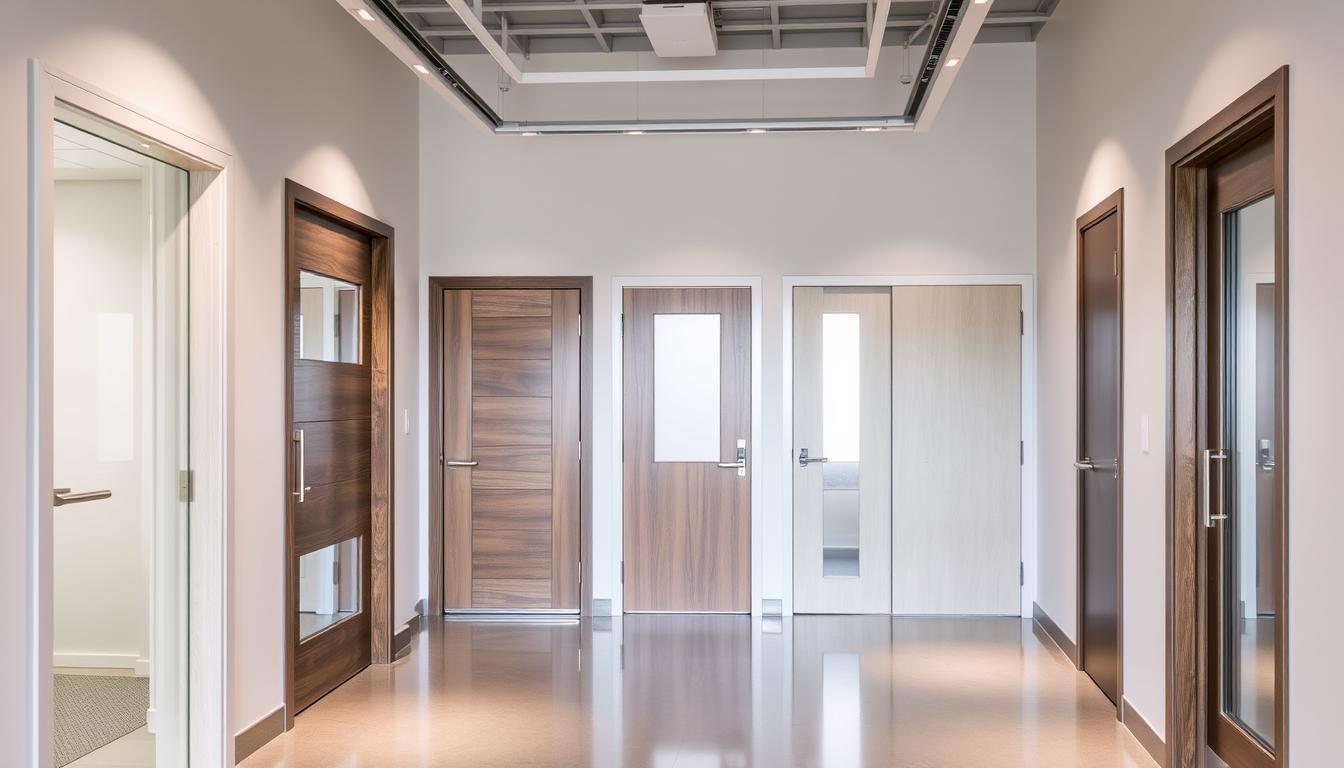
The global interior doors market is set to hit $22.1 billion by 2027. Interior specialty doors are a big part of this growing industry. And they’re changing how commercial spaces look and work.
These doors are unique. They’re made specifically for the needs of commercial settings. They improve fire safety and sound control in businesses and public spaces.
No wonder, interior specialty doors are special. Here’s where they’re used and why they’re important for modern businesses.
Key Takeaways
- Interior specialty doors are designed to address the unique needs and challenges of commercial settings.
- These doors offer enhanced functionality, improved safety, and refined aesthetics compared to standard interior doors.
- Commercial applications of interior specialty doors include offices, healthcare facilities, schools, and more.
- Specialty doors can enhance the overall experience and efficiency of commercial spaces.
- Understanding the different types of interior specialty doors and industry regulations is crucial for commercial projects.
Defining Interior Specialty Doors
Interior specialty doors are specifically made for commercial settings. They have specialized features, materials, and construction. They differ from standard interior doors in many ways.
What Sets Them Apart?
These doors tackle the challenges of commercial spaces head-on. They usually have fire-rating, sound insulation, and enhanced security features. Such qualities make them perfect for offices, hospitals, schools, and busy commercial areas.
Materials and Construction
Interior specialty doors use materials for top performance and durability. They may be made of wood, steel, or special composites. Each material gives unique benefits in strength, fire resistance, and energy efficiency.
The construction of these doors is meticulous and detailed. They usually have reinforced frames and specialized hardware. This ensures they meet the strict standards required in commercial settings.
Understanding interior specialty doors helps in making smart choices. Building owners can select the best doors for safety, privacy, or style. The right door can meet the business’s specific needs effectively.
“The right interior specialty door can transform a commercial space, balancing functionality and design to create an environment that is both practical and visually appealing.”
Commercial Applications of Interior Specialty Doors
Interior specialty doors serve multiple purposes across different commercial spaces.
In retail stores, these doors create zones, maintain climate control, and manage traffic flow. They also uphold the desired aesthetic.
Restaurants and hospitality venues use them to separate dining areas and control noise levels.
Offices and commercial workspaces benefit from interior specialty doors for privacy and acoustic management. They also address specialized needs like fire safety and sound insulation.
Healthcare facilities rely on these doors for sterile environments and access control.
Educational institutions use these doors to divide spaces and manage acoustics. They also help comply with safety regulations.
In industrial and manufacturing settings, the doors segregate work areas and regulate temperature.
Interior specialty doors provide versatile solutions for many different commercial spaces. They integrate seamlessly with each environment’s unique requirements. These doors enhance commercial applications, functionality, and safety across different sectors.

Interior Specialty Doors: Advantages in Commercial settings
Interior specialty doors boost both functionality and aesthetics. They meet the unique needs of commercial buildings and improve user experience by creating an appealing atmosphere.
Enhancing Functionality
Commercial interior specialty doors focus on efficiency. They optimize space for productivity. These doors meet a wide range of needs in modern commercial environments.
- Fire-rated doors: Providing the needed protection against the spread of flames and smoke, fire-rated interior specialty doors are an important safety feature in commercial buildings.
- Sound-proof doors: These doors effectively block noise, creating a more peaceful and focused work atmosphere, which is essential in open-plan offices or shared workspaces.
- Security-focused doors: Specialty doors with advanced locking mechanisms and access control systems help protect sensitive areas and valuable assets within commercial settings.
Aesthetic Considerations
Interior specialty doors also enhance visual appeal. Designers carefully weigh in their impact on the space. These doors blend seamlessly with the surrounding decor and architectural style.
| Design Feature | |
|---|---|
| Aesthetic Impact | |
| Customizable finishes | Interior specialty doors can be tailored with a wide range of finishes, allowing them to match the desired design aesthetic, from modern to traditional. |
| Glazed panels | Incorporating glass panels into the door design can enhance the sense of openness and natural light, creating a visually appealing and inviting atmosphere. |
| Unique shapes and sizes | Specialty doors come in various shapes and sizes, letting designers create dynamic and visually striking entryways that contribute to the overall design scheme. |
Interior specialty doors meet practical needs and visual goals. So, they make the overall commercial space experience better.
Types of Interior Specialty Doors
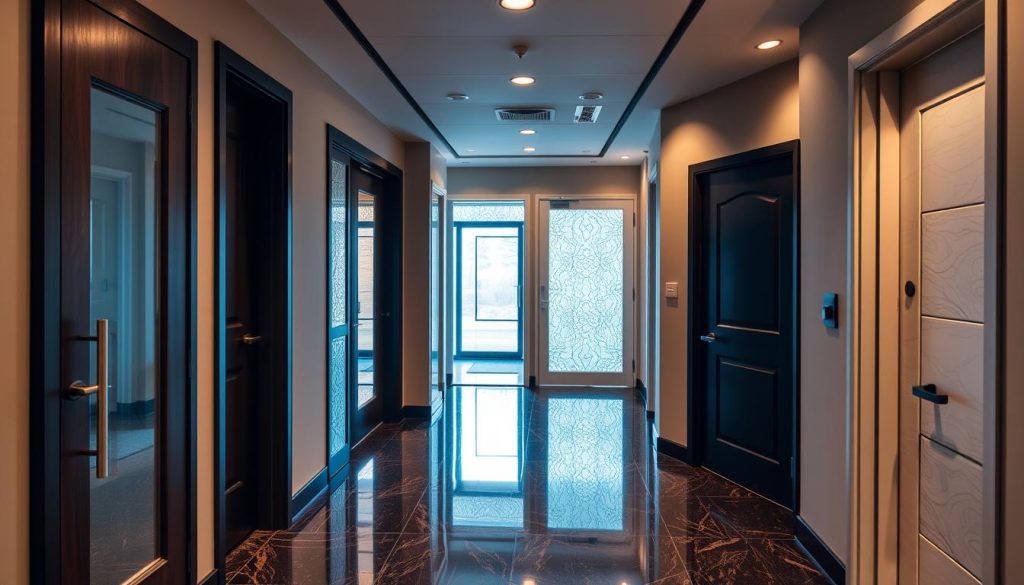
Interior specialty doors serve many commercial needs. Fire-rated and sound-proof doors are two main types. Both types boost safety, function, and sound control in business settings.
Fire-Rated Doors
Fire-rated doors use special materials to resist high heat. These doors stop fire and smoke from spreading.
You’ll find them in offices, medical centers, and stores. They protect people and property when it matters most.
Sound-Proof Doors
Sound control is very important in many business spaces. Sound-proof doors block noise well so they create calm, productive areas.
These doors are perfect for private talks and focused work. You’ll see them in offices, studios, and meeting rooms.
| Interior Specialty Door Type | Key Features | Common Applications |
|---|---|---|
| Fire-Rated Doors |
- Constructed with fire-resistant materials
- Designed to withstand high temperatures
- Prevent the spread of fire and smoke
- Offices
- Medical facilities
- Retail stores
| Sound-Proof Doors |
- Provide superior sound insulation
- Minimize noise transmission
- Create a quiet, focused environment
- Private offices
- Recording studios
- Meeting rooms
“Investing in the right interior specialty doors can greatly boost the safety, functionality, and acoustic performance of any commercial space.”
Industry Standards and Regulations
Industry standards and regulations are necessary for interior specialty doors in commercial settings. They ensure safety, performance, and compliance. These guidelines help property owners, architects, and installers choose and maintain doors properly.
- The NFPA (National Fire Protection Association) standards govern fire-rated doors. These doors resist fire and smoke spread, protecting lives and property. Commercial buildings must follow these standards to meet local fire codes.
- Sound-proof doors have specific acoustic performance standards. The American Society of Testing and Materials (ASTM) sets these standards. They ensure doors effectively reduce noise, creating quiet, productive commercial environments.
Compliance with these standards is a legal requirement and necessary for safety. Selecting doors that meet these guidelines ensures employee and customer well-being. It also helps businesses follow local building codes.
“Compliance with industry standards and regulations is not just a box to check, but a commitment to creating a safe and efficient commercial environment.”
Staying current with door standards is necessary as commercial real estate evolves. Understanding these guidelines helps owners make informed decisions and ensure occupant safety and maintain building integrity.
Sustainability and Energy Efficiency
Interior specialty doors support sustainable and energy-efficient design in commercial buildings. They offer eco-friendly features that boost a building’s green performance. These doors help achieve sustainability goals in commercial spaces.
Green Building Certifications
Interior specialty doors are important for green building certifications like LEED and WELL Building Standard. These certifications reward energy efficiency and occupant well-being. Sustainable doors can earn points towards these prestigious green building awards.
Door manufacturers now offer products that meet green building requirements. They use recycled materials and incorporate energy-efficient glazing. So these doors improve a commercial space’s energy performance and environmental impact.
Enhancing Commercial Spaces with Specialty Doors
Interior specialty doors offer safety, functionality, and beauty, creating a better environment for everyone in commercial settings. Understanding these doors and following regulations helps you choose the right ones for your project, ensuring a safe and productive space.