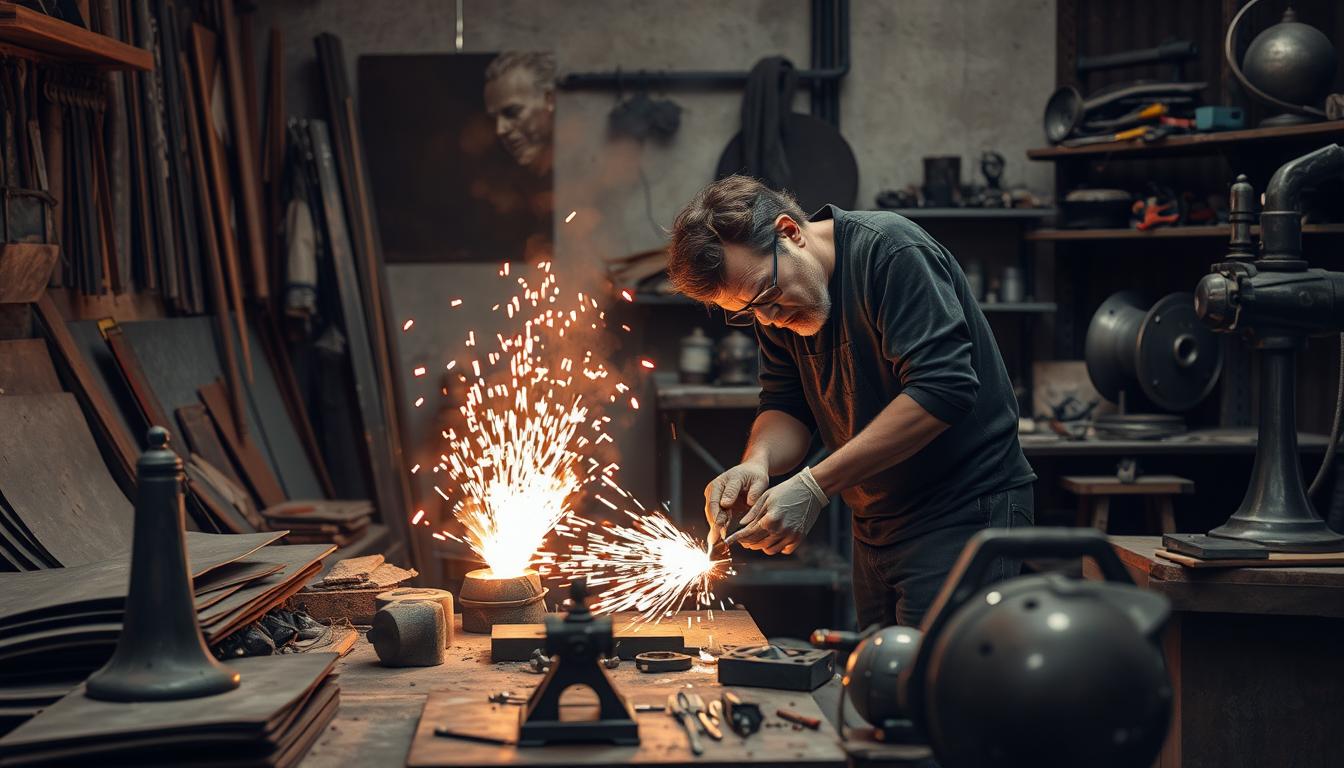
Metal fabrication turns simple slabs into stunning sculptures. It’s where creativity meets craftsmanship, producing captivating results. This art form transforms ordinary materials into extraordinary works.
Raw materials become unique, expressive, and functional creations through metal fabrication. Elaborate sculptures adorn public spaces, catching the eye. Intricate architectural metalwork adds character to buildings.
Key Takeaways
- Metal fabrication transforms raw materials into artistic and functional creations
- Skilled artisans blend creativity and technical expertise to produce unique metal works
- Metal fabrication encompasses a range of techniques, from welding to cutting and shaping
- Artistic metal fabrication results in captivating sculptures, architectural elements, and custom furnishings
- The fusion of form and function is a hallmark of exceptional metal fabrication
The Art of Metal Fabrication
Metal fabrication turns raw materials into amazing art. Skilled artisans use various techniques to create stunning pieces. Their craftsmanship in cutting, shaping, and welding is truly captivating.
Craftsmanship Behind Artistic Metal Fabrication
Artistic metal fabrication requires deep knowledge of materials and methods. Artisans carefully choose metals like stainless steel, aluminum, or copper. Each metal has unique properties and uses.
These experts use forging, welding, and shaping to create beautiful works. They make captivating sculptures, functional art, and architectural wonders.
Examining Various Methods
- Shearing, an efficient and precise cutting technique, is well-suited for high-volume production.
- Torch cutting, while suitable for thick metals, may result in a rougher edge, while water jet cutting provides clean and precise cuts.
- Bending in metal fabrication requires careful calculation of angles, dimensions, and tolerances to ensure accuracy and precision.
- Welding, a versatile and strong joining method, is used in various industries such as steel fabrication.
- Adhesive bonding offers design flexibility, improved stress distribution, and reduced weight compared to traditional fastening methods.
Skilled artisans blend these techniques to create inspiring art. Their deep understanding of metal fabrication shines through in their work.
“The true beauty of metal fabrication lies in the harmonious integration of form, function, and craftsmanship.”
Metal Fabrication: Transforming Raw Materials
Metal fabrication creates products by manipulating raw materials. This technique spans industries from manufacturing to art. It involves welding, cutting, forming, and machining to shape metal into finished products.
The Industrial Revolution boosted metal fabrication’s efficiency. Steam hammers and rolling mills were key technologies. In the 20th century, electric welding methods like MIG and TIG revolutionized metal joining.
Computer-aided design (CAD) and CNC machining enable precise designs. Laser and plasma cutting have increased efficiency and accuracy. These advancements have transformed modern metal fabrication.
Bending, welding, and cutting are crucial to metal fabrication. Choosing the right material, process, and quality standards is essential. These factors ensure successful metal fabrication projects.
Laser cutting allows precise shaping without physical contact. Punch presses carve, cut holes, and add perforations to metal. Stamping creates indentations without making holes in metal workpieces.
Forming bends metal into shapes without cutting or breaking. Machining processes like milling and drilling achieve final shapes and finishes. MIG welding fuses thick materials, while TIG welding is precise for thin materials.
Steel is popular in structural metal fabrication. It has an excellent strength-to-weight ratio. Commercial fabrication produces items like guardrails, sinks, and decorative fixtures.
Metal fabrication uses automation and CAD software. Advanced machinery includes laser cutters and robotic welding systems. Common processes are cutting, casting, milling, and forging.
Key tools in metal fabrication include shears and press brakes. Metal rollers curve sheets, while beam coping machines shape steel beams. Laser and plasma cutters provide precise cutting.
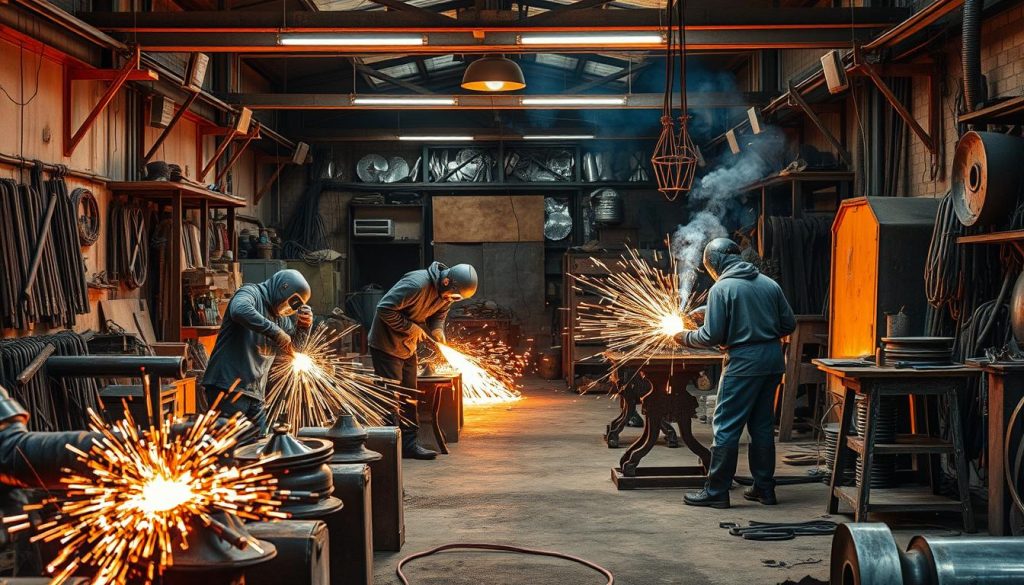
Unleashing Creativity with Welding Supplies
Welding supplies are key to turning raw materials into stunning metal art. Artists use various techniques to bring their visions to life. These methods create strong, durable pieces that can withstand time and weather.
The Creative Possibilities
Different metals offer unique creative options. Stainless steel is durable and resists corrosion. Copper is malleable with a warm, reddish-brown hue.
Mild steel is affordable and easy to work with. It’s popular among both beginners and pros. Various welding machines let artists choose the best tool for their needs.
Structural Integrity and Durability
Welding techniques range from traditional to advanced. Artists adapt their approach based on materials, thicknesses, and design needs. Safety gear protects against metalworking hazards.
Proper storage and maintenance of supplies ensure long-lasting, consistent performance. This care is crucial for the success of metal art projects.
| Material | Characteristics | Applications |
|---|---|---|
| Stainless Steel | Durable, corrosion-resistant | Intricate designs, outdoor art |
| Copper | Malleable, warm color | Unique shaping, decorative pieces |
| Mild Steel | Affordable, easy to manipulate | Beginner projects, structural elements |
Metal artists draw inspiration from many sources. They create unique pieces that blend form and function. By mastering techniques, artists can push the boundaries of metal art.
“Custom metal welding at RC Portable Welding & Fabrication is a blend of art and engineering, providing a unique service that turns ideas into tangible, functional art.”
RC Portable Welding & Fabrication is known for excellence. They tackle challenging projects with skill and attention to detail. Their experience ensures high-quality, durable custom metal welding projects.
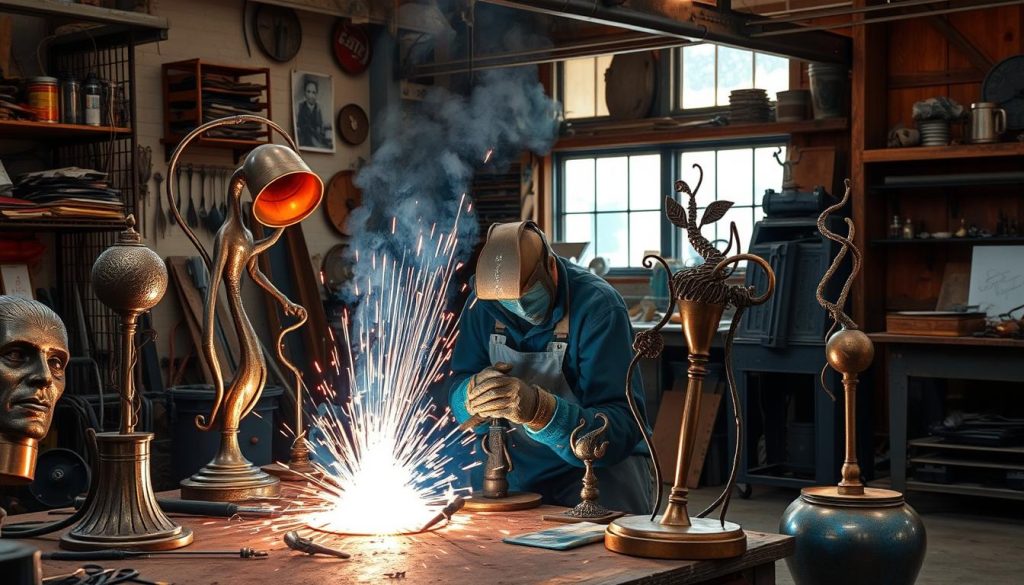
Digital fabrication is changing custom sheet metal projects. Laser cutting and CNC machining offer precise, flexible designs. The industry is also moving towards eco-friendly options.
Exploring Fabrication Techniques
Metal fabrication uses various techniques to transform raw materials into functional creations. These methods combine precision and artistry to unlock metal’s potential. They shape innovative products for artistic and industrial use.
Cutting and Shaping
Cutting is a key fabrication method that has evolved from manual sawing. Now, it includes advanced laser and waterjet cutting techniques. This technique is vital in many industries, from automotive to aerospace and fashion.
Several factors affect cutting techniques in fabrication. These include precision, versatility, efficiency, cost, material limits, and maintenance. CNC machines and laser cutting have changed automotive manufacturing. They improve precision, reduce production times, and boost profits.
Forming and Machining
Forming shapes metal into specific configurations through bending, rolling, and stamping. Folding bends materials, especially sheet metal, to achieve desired angles or shapes. It uses a press brake machine.
Folding has many uses in construction, aerospace, automotive, and everyday items. It’s used in electronics casings too. Folding techniques consider precision, flexibility, efficiency, and material thickness limits. Elastic recovery and tooling costs are also important.
The XYZ Building showcases folded metal facades. It highlights how design and function blend in modern architecture. Machining removes material from metal to achieve precise dimensions and finishes. CNC machining automates this process using digital designs.
Milling machines drill or cut shapes into solid materials. Lathes shape cylindrical, conical, or spherical objects by rotating the material. Heat treating heats and cools metal in a controlled way. This achieves desired mechanical properties.
| Fabrication Technique | Capabilities |
|---|---|
| Laser Cutting | Able to handle thicknesses up to 2 inches of carbon steel |
| Plasma Cutting | Ideal for parts up to 2 inches thick, commonly used for stainless steel, carbon, and alloy steels |
| Oxy-Fuel Cutting | Can handle plates up to 22 inches thick |
| Water Jet Cutting | Cuts metals without creating a heat-affected zone |
| Press Brakes | Can form parts up to 40 feet and longer |
The U.S. metal fabrication industry employs about 1.42 million workers. This shows how important these techniques are in manufacturing. Metal fabrication is used in many industries, including automotive, construction, and aviation.
“Metal fabrication is the backbone of modern manufacturing, seamlessly integrating art and industry to create innovative solutions that shape our world.”
Applications of Metal Fabrication
Metal fabrication is a versatile process used in many industries. It’s crucial in construction, architecture, and the automotive sector. Fabricated metal components shape our built environment, forming the backbone of buildings and infrastructure.
In the automotive industry, metal fabrication is key. It produces vehicle frames, chassis, and other components needing strength and precision.
Construction and Architecture
Metal fabrication creates structural elements for modern buildings. Structural steel is vital for beams, columns, and load-bearing components. It ensures stability and safety in structures.
This process also allows for intricate, visually striking elements. Architects and designers blend form and function seamlessly using metal fabrication.
Automotive Industry
The automotive industry depends heavily on metal fabrication. It’s used for frames, chassis, body panels, and interior fittings. These techniques create durable, precise, and attractive parts.
Metal fabrication is crucial in making modern, high-performance vehicles. It meets demands for safety, efficiency, and design.
Metal fabrication is used in medical equipment, IT, and renewable energy. Its versatility makes it essential for many products. These range from everyday appliances to specialized industrial equipment.
As technology advances, metal fabrication’s applications will grow. It will continue to shape various industries’ futures.
Metal Fabrication: Merging Art and Industry
Metal fabrication art celebrates human creativity and invention. Skilled craftspeople breathe life into metal, transforming it into remarkable pieces. New techniques and technology allow seamless fusion of art and industry.
Various metals offer unique canvases for artistic expression. Mild steel provides strength, while stainless steel boasts stain resistance. Aluminum is lightweight and corrosion-resistant. Bronze and brass alloys enhance architectural metalwork.
Henry DeFauw, a renowned metal artist, has created awe-inspiring designs for over 20 years. His company, DeFauw Design & Fabrication, collaborates with architects to bring visions to life.
Fusion Metal Art, a team of skilled fabricators, delivers diverse metal projects. They create decorative aluminum wall hangings, custom steel signs, and cast iron handrails. Their focus on varied skills highlights the blend of technical expertise and creative passion.
The metal fabrication industry continues to evolve, offering endless artistic possibilities. Raw materials, technology, and human touch create a symphony of form and function. This captivating blend inspires the next generation of metal artisans.
| Material | Characteristics | Applications |
|---|---|---|
| Mild Steel (Carbon Steel) | Less than 2% carbon content, offering strength and ease of welding, but poor weather resistance. | Various applications due to its strength and weldability. |
| Stainless Steel | At least 10.5% chromium content, along with small percentages of other elements like nickel, enhancing mechanical and chemical properties, providing stain, corrosion, and rust resistance. | Suitable for architectural and industrial applications requiring durability and corrosion resistance. |
| Aluminum | A lightweight, ductile, and malleable non-ferrous metal with excellent corrosion resistance. | Widely used in various industries, including construction, transportation, and consumer goods. |
| Bronze | An alloy of copper, tin, aluminum, and other trace elements, commonly used in architectural metalwork. | Architectural details, sculptures, and decorative elements. |
| Brass | An alloy of copper and zinc, featuring unique properties that make it a popular choice in metal fabrication. | Plumbing fixtures, hardware, and decorative elements. |
“Every project is special, and we value the team approach. It’s not about individual accomplishments, but the collective effort that makes our work truly remarkable.”
– Paul Silva, Founder of Fusion Metal Art
Conclusion
Metal fabrication transforms raw materials into awe-inspiring creations. From ancient forges to modern workshops, skilled craftspeople push boundaries with metals. Each metal has unique properties suited for various applications.
Cutting-edge techniques like laser cutting and CNC machining shape metals into intricate artworks. Metal fabrication allows for creating small, delicate pieces and large, imposing structures. Precision and quality are maintained throughout the process.
Raw materials hold endless creative possibilities in artistic metal fabrication. Industry 4.0 advancements have revolutionized the field, improving accuracy and efficiency. Metal craftspeople’s ingenuity transforms the ordinary into extraordinary, inspiring wonder.
FAQ
What is the essence of metal fabrication?
What are the key techniques used in artistic metal fabrication?
How do welding supplies play a role in metal fabrication?
What are the key fabrication techniques used in metal fabrication?
Where are the applications of metal fabrication found?
Source Links
- The Art of Metal Fabrication: Creating Beauty with Precision and Skill – https://medium.com/@newimagecreative14/the-art-of-metal-fabrication-creating-beauty-with-precision-and-skill-78e55cbeaa72
- Master the Art of Metal Fabrication: Techniques, Tools, and Trends – Atlas Manufacturing – https://atlasmfg.com/blog/metal-fabrication-3/
- The Art of Custom Metal Fabrication: Techniques and Tips – https://elemetgroup.com/custom-metal-fabrication-techniques-and-tips/
- What is Metal Fabrication: Definition, History, Types, Processes and Applications – TechniWaterjet – https://www.techniwaterjet.com/metal-fabrication/
- Phases of Fabrication: Steps for Your Next Project – https://metaltech.us/blog/phases-of-fabrication/
- What Is Metal Fabrication? – https://metalscut4u.com/blog/post/metal-fabrication.html
- Unleash Your Creativity: How to Make Metal Yard Art – https://www.americansteeldesigns.com/blogs/news/unleash-your-creativity-how-to-make-metal-yard-art
- Bring Design to Life With Custom Metal Welding | RC Portable – https://www.rcweld.com/bringing-designs-to-life-with-custom-metal-welding/
- Unleash Your Creativity with Custom Sheet Metal – Proto MFG – https://www.mfgproto.com/unleash-your-creativity-with-custom-sheet-metal/
- Exploring 3 Main Fabrication Techniques in Manufacturing – https://www.redriver.team/the-3-main-fabrication-techniques/
- No title found – https://ryersonadvancedprocessing.com/intelligence/exploring-metal-fabrication-fundamentals
- Exploring the 3 Processes of Metal Fabrication | OneMonroe – https://monroeengineering.com/blog/exploring-the-3-processes-of-metal-fabrication/
- Types of Metal Fabrication Process and their Applications – https://benchmarkabrasives.com/blogs/metal-working/types-of-metal-fabrication-process-and-their-applications?srsltid=AfmBOoqk01DMGxcKvAsLGKZcPfVFUNO2E58hKfy49NDgg-fnfK7UwOoM
- the art of metal fabrication — building Lab – https://www.buildinglab.com/newsletters/2017/5/18/the-art-of-metal-fabrication
- No title found – https://www.thefabricator.com/thewelder/article/arcwelding/combining-art-metal-and-friendship
- The Many Benefits of Metal Fabrication – Black Bull Enginering – https://blackbullengineering.co.uk/the-many-benefits-of-metal-fabrication/
- What is Metal Fabrication? – Yarbrough Industries – https://yarbroughindustries.com/what-is-metal-fabrication/
- What is Metal Fabrication: A Definitive Process Guide – WayKen – https://waykenrm.com/blogs/what-is-metal-fabrication/