A single gallon of high-quality elastomeric paint can cover up to 200 square feet of exterior surface. This paint expands and contracts with the elements, protecting your home from harsh weather. By mastering elastomeric paint application, you can boost your property’s look and resilience.
Key Takeaways
- Elastomeric paint is a specialized exterior paint that provides exceptional weather protection and durability.
- Understanding the unique properties and benefits of elastomeric paint is crucial for a successful application.
- Proper surface preparation is key to ensuring a long-lasting, seamless finish.
- Following a step-by-step guide and utilizing the right tools and techniques will lead to a professional-grade application.
- Adhering to recommended conditions and avoiding common mistakes will ensure the longevity of your elastomeric paint project.
What is Elastomeric Paint?
Elastomeric paint is a special exterior coating. It’s more flexible, durable, and weather-resistant than regular paints. It contains elastic polymers that expand and contract with buildings.
This paint seals cracks effectively. It also prevents future damage to surfaces.
Understanding the Unique Properties
The composition of elastomeric paint is key to its performance. It has elastic polymers that give it rubber-like flexibility.
This allows the paint to stretch and move with the building’s surface. It adapts to expansion and contraction without cracking or peeling.
Elastomeric paint has a thicker, more viscous consistency than standard paints. Its paste-like texture fills small cracks and crevices.
This creates a continuous, protective barrier against the elements.
Benefits of Using Elastomeric Paint
Elastomeric paint offers many advantages for exterior surfaces. Here are some key benefits:
- Superior durability and longevity, with a lifespan of up to 10-15 years
- Exceptional weatherproofing and resistance to cracking, peeling, and fading
- Effective crack-bridging capabilities, sealing existing and preventing future cracks
- Improved insulation and energy efficiency for the building
- Easier maintenance compared to traditional paints
Elastomeric paint’s unique properties make it ideal for protecting buildings. It enhances exteriors while providing long-lasting protection.
Preparing Surfaces for Elastomeric Paint Application
Proper surface prep is vital for elastomeric paint success. Clean, smooth, and primed surfaces ensure the best results. Let’s look at the key steps for a professional finish.
Cleaning and Repairing Surfaces
Start by thoroughly cleaning the surface. Remove dirt, debris, and old paint for proper adhesion. Use a pressure washer or scrub brush with detergent.
Next, repair any flaws. Fill cracks and holes with patching compound. Sand the area smooth once dry. This creates a uniform surface for even paint application.
Priming Before Painting
- Apply a primer that works with your elastomeric paint.
- Primer helps the paint stick better to the surface.
- Choose a primer made for elastomeric paints to ensure durability.
These steps set the stage for a great paint job. Surface preparation for elastomeric paint is crucial. Cleaning and repairing surfaces comes first. Priming before painting ensures the best results.
Step-by-Step Guide to Applying Elastomeric Paint
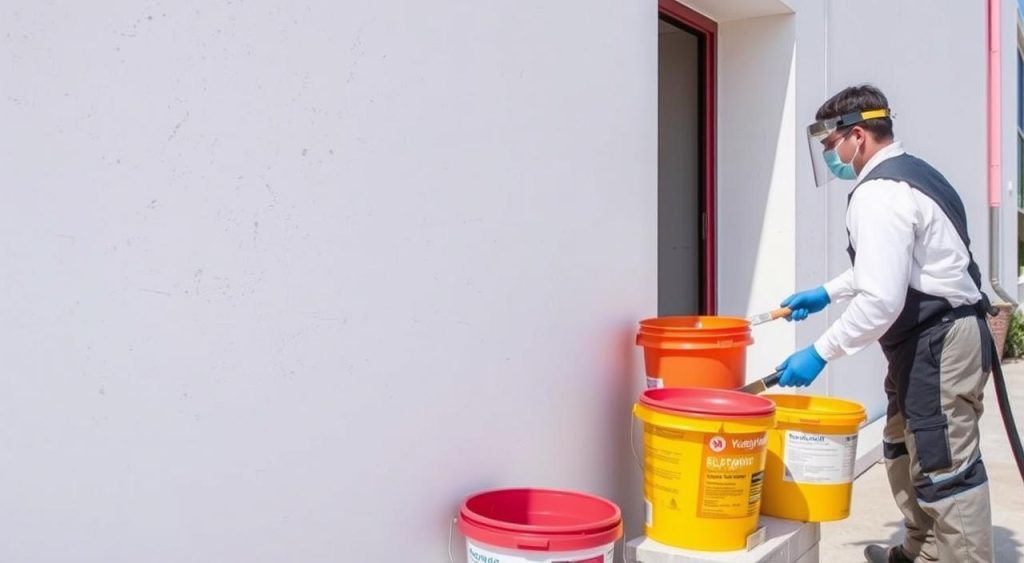
Elastomeric paint can transform your home’s exterior. This guide covers essential tools and proper application methods. You’ll learn how to achieve a smooth, even, and long-lasting finish.
Essential Tools and Materials
Before you begin, make sure you have the following on hand:
- High-quality elastomeric paint
- Paint rollers and brushes
- Paint trays and liners
- Painter’s tape
- Caulk and caulk gun
- Ladders or scaffolding (if needed)
- Protective gear (safety goggles, gloves, and coveralls)
Application Techniques
Follow these steps for a flawless elastomeric paint application:
- Prepare the Surface: Clean the surface thoroughly. Fix any cracks, holes, or uneven areas with caulk or spackle.
- Apply a Primer (if recommended): Check if a primer coat is needed before applying the elastomeric paint.
- Cut in Edges: Use a brush for edges and corners. This ensures a clean, crisp line.
- Roll the Walls: Apply paint with a high-quality roller. Work in sections to maintain a wet edge.
- Backroll: Use a dry roller after the initial coat. This ensures a uniform and textured finish.
- Apply a Second Coat: Once the first coat dries, apply a second coat for best results.
These steps will help you achieve professional-looking results. Using the right tools for applying elastomeric paint is crucial. Proper elastomeric paint application methods will protect and enhance your home’s exterior for years.
Applying Elastomeric Paint
Elastomeric paint needs a smart approach for the best results. It’s vital to know this paint’s special qualities. Mastering the right methods is key to success.
Mix the paint well for a smooth, flowing texture. This helps prevent ugly brush or roller marks. Good consistency ensures even sticking to the surface.
Different ways exist to apply elastomeric paint. Brushes work best for small, detailed spots. Rollers cover large areas faster. Paint sprayers are great for tough spots and smooth edges.
Apply thin, even coats to avoid drips or sags. Blend overlapping areas smoothly for a uniform look. These applying elastomeric paint tips will help you get great coverage.
Prep the surface before painting. Clean, dry, and smooth it out. Follow the guidelines for painting techniques. This ensures a lasting finish that protects your investment.
Tips for Successful Elastomeric Paint Application
Proper conditions are key for elastomeric paint success. Apply in moderate temperatures with low humidity and minimal wind. This ensures proper curing and adhesion to the surface.
Weather plays a crucial role in paint application. Ideal conditions help the paint bond effectively and last longer.
Recommended Conditions
Apply elastomeric paint in temperatures between 50°F and 90°F (10°C and 32°C). Keep humidity levels below 85%. Avoid direct sunlight and bad weather during application.
These conditions allow the paint to bond and cure correctly. Following these guidelines will lead to better results.
Common Mistakes to Avoid
Proper surface preparation is crucial for elastomeric paint’s lifespan. Remove all debris and contaminants before starting. Follow the manufacturer’s instructions for mixing and applying the paint.
Achieve the right thickness and coverage for best results. Skipping these steps can affect the paint’s flexibility and durability.