
The concept of “AA style” dating etiquette has sparked intense debate on Chinese social media platforms like Weibo.
This controversial practice, where both parties split the bill equally, challenges traditional dating norms in China.
Proponents argue it promotes equality, while critics see it as a sign of a lack of romance. The debate has gained significant traction, reflecting changing attitudes towards dating culture in China.
Key Takeaways
- The “AA style” dating trend is causing a stir on Chinese social media.
- The practice challenges traditional dating norms.
- Proponents see it as a sign of equality.
- Critics argue it lacks romance.
- The debate reflects changing attitudes towards dating.
What is "AA Style" Dating and Why Does It Matter?
In the realm of modern Chinese dating, the term ‘AA Style’ has emerged as a controversial topic, challenging conventional norms. “AA Style” dating, also known as “AA Zhi” in Chinese, refers to the practice of splitting bills equally between partners on dates.

The Meaning Behind "AA " (AA Zhi)
The term “AA” is derived from the English abbreviation for “Arithmetic Average” or “Alike Allocation,” symbolizing the equal division of expenses. This concept has transitioned from a simple financial arrangement to a symbol of modern dating philosophies, reflecting changing attitudes towards gender roles, financial independence, and equality in relationships.
From Restaurant Bills to Relationship Philosophies
Initially, “AA Style” dating was about splitting restaurant bills. However, it has evolved to represent a broader philosophy affecting how individuals perceive their relationships. It’s not just about who pays; it’s about the underlying values of equality, mutual respect, and financial independence that this practice represents.
Why This Debate Matters Beyond China
The discussion around “AA Style” dating is significant not only within China but also globally. As cultures become increasingly interconnected, the way people date and perceive financial responsibilities in relationships is influenced by diverse practices. The “AA Style” debate offers insights into how different societies are navigating the complexities of modern dating, making it a relevant topic for anyone interested in cultural and social trends.
Traditional Chinese Dating Etiquette: The Unwritten Rules of Paying
Traditional Chinese dating etiquette is characterized by a strong emphasis on the man paying. This cultural norm has been a cornerstone of Chinese dating culture for decades, influenced by traditional gender roles and societal expectations.
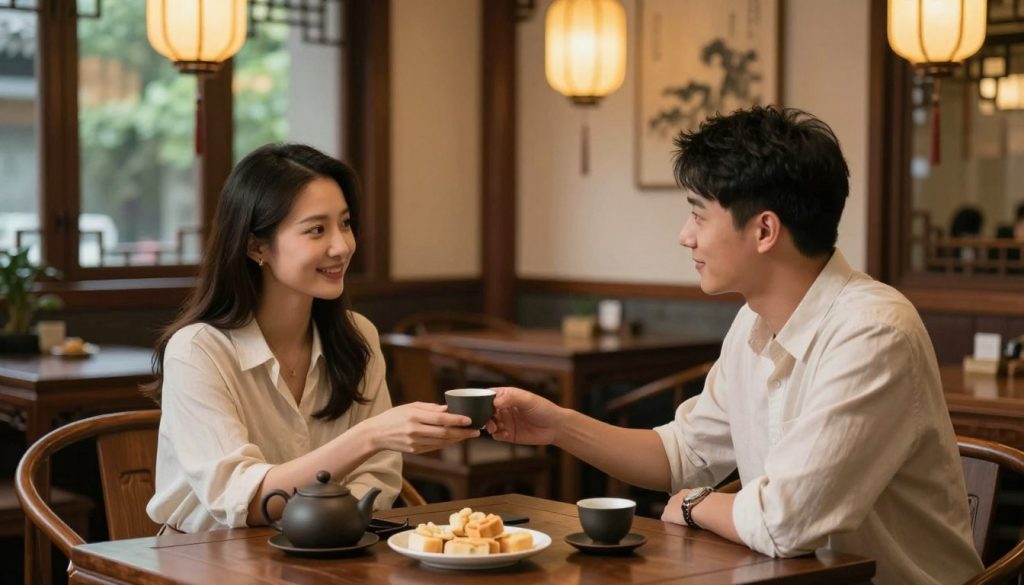
The Man-Pays-First Cultural Norm
The expectation that the man will pay on dates is deeply ingrained in Chinese culture. This norm is rooted in traditional gender roles, where men are often seen as the primary breadwinners. The act of paying is viewed as a sign of respect and a demonstration of a man’s ability to provide for his partner.
Courtship as Investment: Traditional Gender Expectations
In traditional Chinese culture, courtship is often seen as an investment in the potential future together. Men are expected to invest financially in their partner as a sign of commitment and seriousness about the relationship. This expectation is closely tied to traditional gender roles, where men are expected to be the primary providers.
Family Pressure and the Marriage Market Mentality
Family pressure plays a significant role in shaping dating etiquette in China. The concept of “marriage market mentality” refers to the competitive environment where individuals are evaluated based on their marriage potential. Financial demonstrations, such as the man paying on dates, are seen as crucial in this context.
The Role of Bride Price and Financial Demonstrations
The practice of bride price, or “pin jin,” is a significant aspect of Chinese wedding culture. It involves the groom’s family giving a substantial amount of money or gifts to the bride’s family. This practice is closely tied to the expectation of financial demonstrations during courtship.
Regional Variations in Dating Payment Customs
Dating payment customs vary significantly across different regions in China. For instance, in more economically developed cities like Shanghai and Beijing, there is a greater tendency towards splitting bills or adopting a more flexible approach to payment.
| Region | Common Payment Practice | Influencing Factors |
|---|---|---|
| Urban Areas (e.g., Shanghai, Beijing) | Splitting bills or flexible payment arrangements | Economic independence, modernization |
| Rural Areas | Man pays | Traditional gender roles, less economic independence |
| Tier 2 Cities | Mix of man paying and splitting bills | Balancing traditional expectations with modern practices |
AA Dating Culture China: How the 50/50 Movement Took Root
As “AA style” dating gains traction in China, it’s clear that this trend is more than just a passing fad. The shift towards bill-splitting in dating scenarios reflects deeper changes in the economic and social fabric of Chinese society.

The Timeline: When Bill-Splitting Became Controversial
The concept of “AA style” dating, or bill-splitting, began to gain momentum in the early 2010s. This was a period of significant economic growth in China, with rising living costs, especially in major cities like Shanghai and Beijing.
As more young professionals entered the workforce, they began to question traditional dating norms where one partner, typically the man, was expected to bear the full cost of dates.
Young Professionals Leading the Charge for Change
Young professionals in China are driving the “AA style” dating movement. This demographic is characterized by their financial independence and a desire for equality in relationships.
For many, splitting bills is not just about sharing expenses; it’s a statement about mutual respect and financial autonomy.
Economic Realities Behind the Shift
The economic landscape in China has undergone significant changes in recent years, contributing to the rise of “AA style” dating.
Rising Living Costs in Major Cities
Cities like Shanghai and Shenzhen have seen a surge in living costs, making it challenging for young professionals to afford the traditional dating model where one person pays.
The high cost of housing, education, and daily living expenses has led to a more pragmatic approach to dating, where splitting costs is seen as a practical solution.
The Student Debt and Career Pressure Factor
Many young Chinese professionals are burdened with significant student debt and face intense career pressure. In this context, the financial strain of dating can be overwhelming.
“AA style” dating offers a way to alleviate some of this pressure, allowing couples to enjoy social activities without the financial burden being shouldered by one partner.
By understanding these economic realities, it becomes clear why “AA style” dating has become a popular choice among young Chinese professionals.
The Weibo Explosion: Viral Stories That Divided the Nation
Weibo, China’s Twitter-like platform, became the battleground for a heated debate on “AA style” dating, with viral stories dividing the nation. The controversy surrounding “AA style” dating, which involves splitting bills on dates, reached new heights as users shared their personal experiences and opinions on the platform.
The Most Controversial AA Dating Stories on Chinese Social Media
The “AA style” dating debate gained significant traction on Weibo, with several stories going viral and capturing the attention of the nation. One such story was particularly noteworthy.
The Restaurant Receipt That Broke the Internet
A restaurant receipt showing a couple splitting their bill went viral, sparking a heated debate about the etiquette of dating and bill-splitting. The receipt, which was widely shared on Weibo, became a symbol of the changing attitudes towards dating and financial independence.

Celebrity opinions on “AA style” dating further fueled the debate. Some celebrities came out in support of the practice, citing its promotion of financial equality, while others argued that it undermined traditional dating norms. Their comments were widely shared and discussed on Weibo, contributing to the growing controversy.
Hashtag Wars: #AADating vs. #RealMenPay
The debate on Weibo was further amplified by hashtag wars, with #AADating and #RealMenPay becoming the rallying cries for opposing sides. Users passionately argued their positions, with some advocating for the equality of “AA style” dating and others insisting that men should take on the traditional role of paying.
| Hashtag | Supporters’ Argument | Opponents’ Argument |
|---|---|---|
| #AADating | Promotes financial equality and independence. | Undermines traditional dating norms and masculinity. |
| #RealMenPay | Upholds traditional masculinity and chivalry. | Perpetuates gender inequality and outdated stereotypes. |
How Douyin and Xiaohongshu Amplified the Debate
The debate was not limited to Weibo; other social media platforms like Douyin (China’s TikTok) and Xiaohongshu (a lifestyle-focused platform) also played significant roles in amplifying the discussion. Short videos and posts on these platforms further spread the controversy, reaching a wider audience and drawing in more participants.
The Gender Battle in Comment Sections
Comment sections on Weibo and other platforms became battlegrounds for gender debates, with users expressing strong opinions on the matter. The discussions often became heated, reflecting deeper societal tensions and changing attitudes towards gender roles and financial responsibilities in dating.
Do Chinese Men Really Expect Women to Pay? The Honest Answer
As the “AA Style” dating phenomenon continues to unfold, a crucial question remains: do Chinese men really expect women to split the bill? Recent surveys and polls provide valuable insights into the dating expectations of Chinese men and women.
What Surveys and Polls Actually Show
Surveys conducted on Chinese dating platforms and social media reveal that the majority of men do not expect women to pay. According to a survey by Zhilian, a popular Chinese dating app, 62% of men prefer to pay for the first date, while only 21% prefer to split the bill. However, on subsequent dates, the preference for splitting bills increases.
A poll on Weibo showed that 55% of respondents believed that men should pay for the first date, while 31% thought it should be split equally. These statistics indicate a diverse range of opinions on the matter.

Men's Perspectives: Between Pride and Practicality
Chinese men’s views on “AA Style” dating are influenced by both pride and practicality. Some men feel that paying is a matter of pride and a way to show respect to their date.
The Fear of Being Called "Stingy"
One major concern for men is the fear of being perceived as “stingy” if they don’t pay. A Zhihu discussion revealed that many men feel pressured to pay to avoid being labeled as such.
When Men Actually Prefer Splitting Bills
On the other hand, some men prefer splitting bills as it is seen as a more equal and modern approach to dating. This preference is often linked to the economic realities faced by young professionals in China.
Women's Varied Responses to AA Dating Proposals
Women’s responses to “AA Style” dating proposals vary widely. Some appreciate the equality it brings, while others see it as a sign of a lack of romance or interest from their partner.
A Douyin survey showed that 45% of women preferred splitting bills, citing it as a fair and modern practice. However, a significant percentage still preferred men to pay, highlighting the complexity of dating expectations.
The Test Date Phenomenon
The “test date” phenomenon, where the first date is seen as a test of compatibility, has also influenced attitudes towards bill-splitting. Some men and women view the willingness to split bills as a sign of mutual respect and compatibility.
In conclusion, the question of whether Chinese men expect women to pay is complex and multifaceted. Surveys and polls show a range of opinions and preferences, highlighting the need for a nuanced understanding of modern Chinese dating culture.
Financial Independence vs. Traditional Dating Values in Modern China
Chinese society is witnessing a significant clash between the rising financial independence of women and traditional dating norms. This tension is redefining the landscape of dating in China, as modern values collide with long-standing cultural expectations.
The Rise of Financially Independent Chinese Women
The growing number of Chinese women achieving financial independence is a key driver of this change. With more women in the workforce and holding significant economic power, their expectations and behaviors in dating are shifting.
Career Success and Dating Expectations
Career success is increasingly influencing dating expectations among Chinese women. Women who are financially independent are more likely to seek partners who respect their economic autonomy and are open to modern dating practices.
The "Leftover Women" Stereotype Meets Financial Power
The traditional “leftover women” stereotype, which once stigmatized women who were not married by a certain age, is being challenged by the financial power of modern Chinese women. These women are redefining what it means to be successful and desirable, beyond traditional marriage.
Economic Pressure on Young Men in Today's China
Meanwhile, young men in China are facing their own set of economic pressures that impact their dating lives. The traditional expectations of men as providers are being tested by the rising costs of living and the economic realities of modern China.
Housing, Cars, and the Marriage Material Checklist
Traditional markers of a man’s suitability for marriage, such as owning a house or a car, are still prevalent. However, the economic strain of meeting these expectations is leading some men to reconsider their stance on “AA style” dating.
Why Some Men See AA Dating as Liberation
For some men, the “AA style” dating, where costs are split equally, is seen as a liberation from the financial burden of traditional dating norms. It allows them to date without the pressure of being the sole provider.
Can Equality and Romance Coexist?
The debate over whether equality and romance can coexist in modern Chinese dating is ongoing. While some argue that financial independence promotes equality, others believe it may detract from the romantic aspect of dating.
What Dating App Profiles Reveal About Real Preferences
Dating app profiles offer insights into the real preferences of Chinese singles. They reveal a complex picture of what men and women are looking for in partners, with financial stability, emotional maturity, and shared values being highly sought after.

The interplay between financial independence and traditional dating values in China is complex and multifaceted. As the country continues to evolve economically and socially, its dating culture is likely to reflect these changes, potentially leading to a more balanced and equitable approach to relationships.
The Deeper Divides: Class, Region, and Generational Gaps
As “AA style” dating continues to spark heated discussions, underlying class, regional, and generational gaps come into focus. The controversy surrounding bill-splitting in China is not just about dating etiquette; it reflects broader socioeconomic disparities and cultural differences across various demographics.
Beijing and Shanghai vs. Third-Tier Cities: Different Dating Economies
The economic landscape varies significantly between major cities like Beijing and Shanghai, and third-tier cities. In metropolitan areas, the cost of dating is higher, and the concept of “AA style” dating is more prevalent due to the financial independence of women and a more progressive outlook on relationships.
In contrast, third-tier cities often have a more traditional view of dating, where the man is expected to bear the expenses. This difference in dating economies highlights the regional disparities in how “AA style” dating is perceived and practiced.
The Generation Gap: Boomers vs. Gen Z on Splitting Bills
The generational divide plays a crucial role in shaping attitudes towards “AA style” dating. Baby boomers and older generations tend to view traditional dating norms as the standard, where the man pays for the date.
Why Parents Are Horrified by AA Dating
Parents from older generations are often horrified by the idea of “AA style” dating because it contradicts their traditional values. They see it as a sign of a lack of chivalry or a reflection of a woman’s unwillingness to be supported by a man.
Gen Z's Pragmatic Approach to Relationships
On the other hand, Gen Z views “AA style” dating as a practical and egalitarian approach to relationships. For them, splitting bills is a matter of financial independence and equality, rather than a reflection of romantic values.
Income Inequality and Dating Compatibility
Income inequality is another significant factor that influences attitudes towards “AA style” dating. Couples with significant income disparities may find it challenging to navigate the financial aspects of dating.
In some cases, the higher earner may feel resentful about paying more, while the lower earner may feel uncomfortable with the imbalance. “AA style” dating can be seen as a way to mitigate these feelings and create a more balanced financial dynamic in the relationship.
Education Levels and Attitudes Toward Bill-Splitting
Education level also plays a role in shaping attitudes towards bill-splitting. Generally, individuals with higher education levels tend to be more open to the idea of “AA style” dating, viewing it as a more modern and equitable approach.
This openness is often associated with a broader acceptance of gender equality and financial independence. As education levels rise, so does the likelihood of embracing “AA style” dating as a norm.
Where Chinese Dating Culture is Headed
The “AA Style” dating phenomenon has ignited a national debate, potentially redefining the future of Chinese dating culture. As the dust settles, it’s becoming clear that the traditional norms are being challenged, and new practices are emerging.
Emerging Middle Ground: Flexible Payment Models
In the midst of the “AA Style” controversy, a more nuanced approach to dating expenses is gaining traction. Couples are beginning to favor flexible payment models that balance equality with romance.
Taking Turns vs. True 50/50 Splits
One approach gaining popularity is the “taking turns” method, where each person pays for a date or meal on alternate occasions. This approach is seen as a compromise between the traditional male-pays model and the “AA Style” 50/50 split.
The "I'll Get This, You Get Next" Compromise
Another emerging trend is the “I’ll get this, you get next” compromise, which allows couples to share expenses while maintaining a sense of chivalry and mutual respect. This approach is being hailed as a more flexible and equitable solution.

Lessons from South Korea, Japan, and Taiwan
As China navigates its dating culture shift, it’s looking to other East Asian countries for inspiration. South Korea, Japan, and Taiwan offer valuable insights into how cultural and economic factors can shape dating norms.
How Economic Changes Will Shape Future Dating Norms
Economic changes are likely to play a significant role in shaping the future of Chinese dating culture. As the economy continues to evolve, dating norms will likely adapt to reflect changing financial realities and social expectations.
The Possibility of New Cultural Scripts
The ongoing debate around “AA Style” dating has created an opportunity for new cultural scripts to emerge. As Chinese society continues to evolve, it’s possible that entirely new dating norms will develop, blending traditional values with modern sensibilities.
Conclusion
The “AA style” dating debate has brought to the forefront the complexities of modern dating in China, highlighting the tension between traditional values and evolving social norms.
As Chinese society continues to grapple with the implications of the 50/50 split on dating expenses, it is clear that the future of dating in China will be shaped by the interplay between economic realities, cultural expectations, and individual preferences.
The conclusion of the “AA dating culture China” phenomenon is far from over, with various factors influencing the trajectory of dating norms in the country.
Ultimately, the “AA style” dating debate serves as a reflection of the changing values and aspirations of young Chinese adults, who are seeking to balance financial independence with romantic expectations.