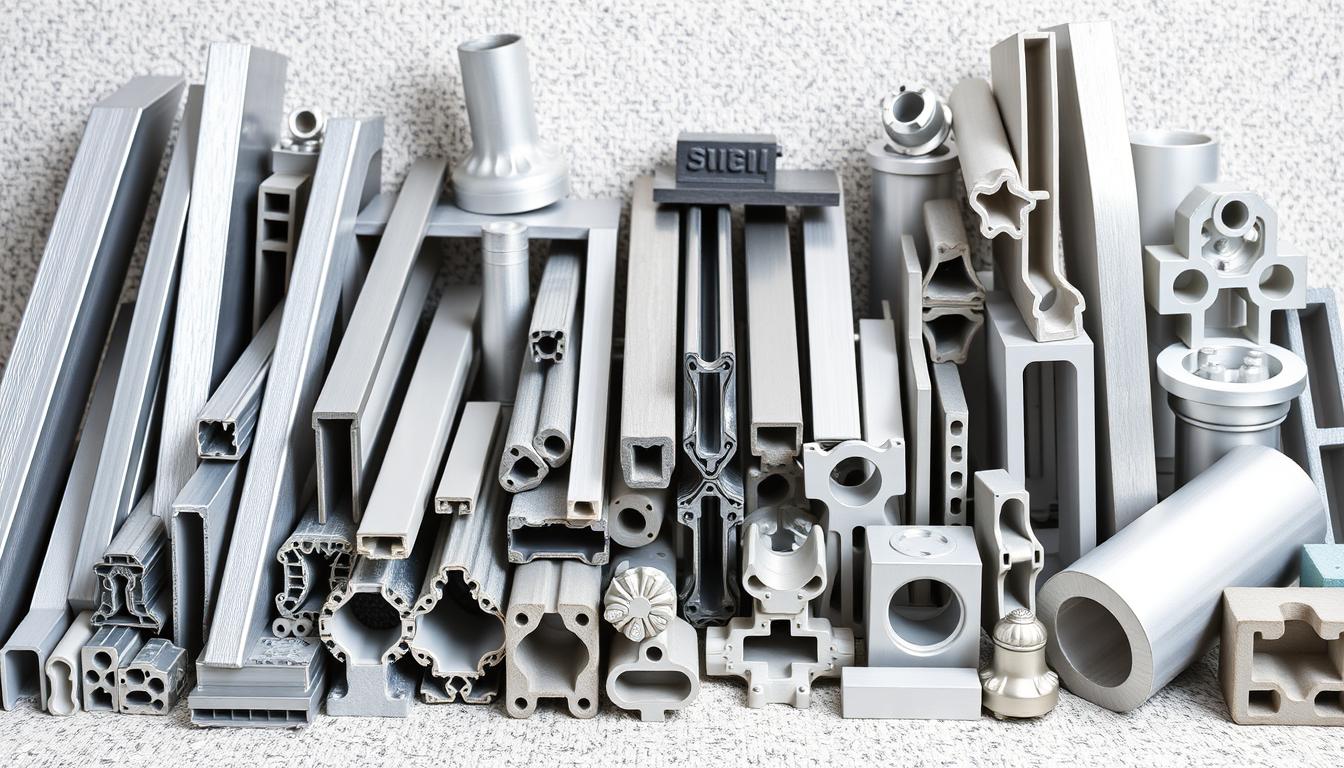
Aluminum is a versatile metal shaped for many different industries and applications. Extrusion and casting are two common methods for shaping aluminum. If you’re planning to use aluminum shapes in your next project, you need to understand the differences between these methods.
Key Takeaways
- Aluminum is a versatile material that can be shaped through extrusion or casting processes.
- Extrusion offers advantages such as complex designs, high dimensional accuracy, and cost-effectiveness for large-scale production.
- Casting is suitable for products with simpler geometries or lower production volumes.
- The choice between extrusion and casting should be based on design, performance, cost, and production efficiency requirements.
- Understanding the strengths and limitations of each shaping method is necessary for selecting the right aluminum shape for your project.
Understanding Aluminum Shapes
Aluminum is a versatile metal that’s lightweight, durable, and resistant to corrosion. These qualities make it popular in many industries. Aluminum shapes are used in construction, transportation, and more.
Composition and Properties
Aluminum is a silvery-white metal with low density. It conducts heat and electricity well, and resists corrosion effectively. With these properties, it’s ideal for many applications.
Aluminum can be molded, extruded, or cast into various shapes. Because of this, it can meet specific design and performance needs.
Versatility and Applications
Aluminum’s versatility is a major advantage. It can be shaped into simple extrusions or complex castings. Common aluminum shapes include:
- Sheets and plates for use in construction, transportation, and manufacturing
- Rods and bars for structural support and industrial applications
- Tubes and pipes for plumbing, HVAC systems, and various industrial uses
- Profiles and extrusions for windows, doors, and architectural elements
- Castings for automotive parts, machinery, and consumer goods
Aluminum shapes are used in building, transportation, and consumer goods. They’re also found in industrial equipment.
It’s all because of its versatility that allows designers and engineers to create products that meet specific project needs. This makes aluminum shapes valuable in many industries.
“Aluminum’s unique properties make it an indispensable material for a wide range of applications, from the built environment to consumer products.”
Aluminum Shape: The Extrusion Process
Aluminum extrusion shapes aluminum into different profiles and forms. This process pushes aluminum through a die to create complex shapes. It’s a primary technique for making simple bars, tubes, and intricate custom designs.
Understanding aluminum extrusion helps unlock the material’s full potential. It’s necessary for maximizing its use in your projects.
Advantages of Aluminum Extrusion
Aluminum extrusion gives many benefits for various applications:
- Design Flexibility – Extrusion allows for complex, customized aluminum shapes. This enables greater design freedom and meets specific project needs.
- Cost-Effectiveness – Compared to other methods, aluminum extrusion is relatively cheaper. So, it’s a cost-effective solution for many projects.
- Material Efficiency – Extrusion minimizes waste by efficiently pushing aluminum through the die. This results in less scrap and a more sustainable process.
- Strength and Durability – Extruded aluminum components have an exceptional strength-to-weight ratio. They’re ideal where weight and structural integrity matter.
- Surface Finish – Extrusion allows for various surface finishes. Options range from smooth to textured or anodized.
Understanding these advantages helps you make informed decisions. You can choose the best manufacturing process for your project. This ensures optimal performance, cost-efficiency, and design flexibility.

Aluminum Casting: An Alternative Shaping Method
Aluminum casting involves pouring molten aluminum into a mold to solidify. This technique creates a wide range of parts, from complex shapes to intricate designs.
The process starts by melting raw aluminum in a furnace. Then, the molten metal is poured into a prepared mold. The mold can be made of sand, metal, or other materials.
As the aluminum cools, it takes the mold’s shape. This results in the final aluminum casting. Casting allows for intricate details that may be hard to achieve through extrusion.
| Aluminum Extrusion | Aluminum Casting |
|---|---|
| Produces long, continuous shapes | Allows for complex geometrical shapes |
| Limited to shapes that can be pushed through a die | Offers more design flexibility |
| Generally more cost-effective for high-volume production | Can be more economical for low-to-medium volume production |
Choosing between extrusion and casting depends on project needs. Think about the desired shape, production volume, and cost. Understanding each method’s strengths helps make informed decisions.
Extrusion vs. Casting
Choosing between aluminum extrusion and casting involves weighing several important factors. Your project’s design and performance needs are primary considerations. Cost and production efficiency also play a big role in this decision.
Design and Performance Requirements
Aluminum extrusion shines in creating complex, precise shapes. It’s perfect for projects needing intricate designs with hollow profiles and internal channels. Casting, however, excels in producing parts with complex surface details and undercuts.
Extruded aluminum parts often have higher strength-to-weight ratios and better dimensional stability. This makes them ideal for demanding applications. But casting can produce parts with unique properties like enhanced thermal conductivity or specific corrosion resistance.
Cost and Production Efficiency
| Factor | Extrusion | Casting |
|---|---|---|
| Initial Investment | Typically higher due to the cost of the extrusion die | Generally lower, as the mold cost is often less than the extrusion die |
| Tooling Flexibility | Extrusion dies can be modified or replaced, allowing for greater design flexibility and production changes | Casting molds are more rigid and can be more challenging to modify |
| Production Rates | Extrusion can achieve higher production volumes and faster cycle times | Casting may have lower production rates, but can be more cost-effective for smaller production runs |
| Material Utilization | Extrusion usually has lower material waste, as the process is more efficient in utilizing the raw aluminum | Casting can result in higher material waste, depending on the complexity of the part and the casting process used |
Carefully assess your project’s design and performance needs when choosing between extrusion and casting. Think about the cost and production efficiency of each method. This will help you make an informed decision for your aluminum shaping needs.
Making the Right Choice
Aluminum extrusion and casting are two primary techniques in shaping this metal. Understanding these methods help you choose the best aluminum shape for your project. Each method has unique benefits that can be customized to your needs.
Aluminum’s lightweight and corrosion-resistant properties make it popular across industries. Extrusion allows precise control of complex shapes. Casting offers cost-effective mass production capabilities.
The right choice impacts your project’s design, performance, and cost-effectiveness. Consider design requirements, production efficiency, and material properties when deciding. Aluminum’s versatility can be the foundation for your next innovative creation.