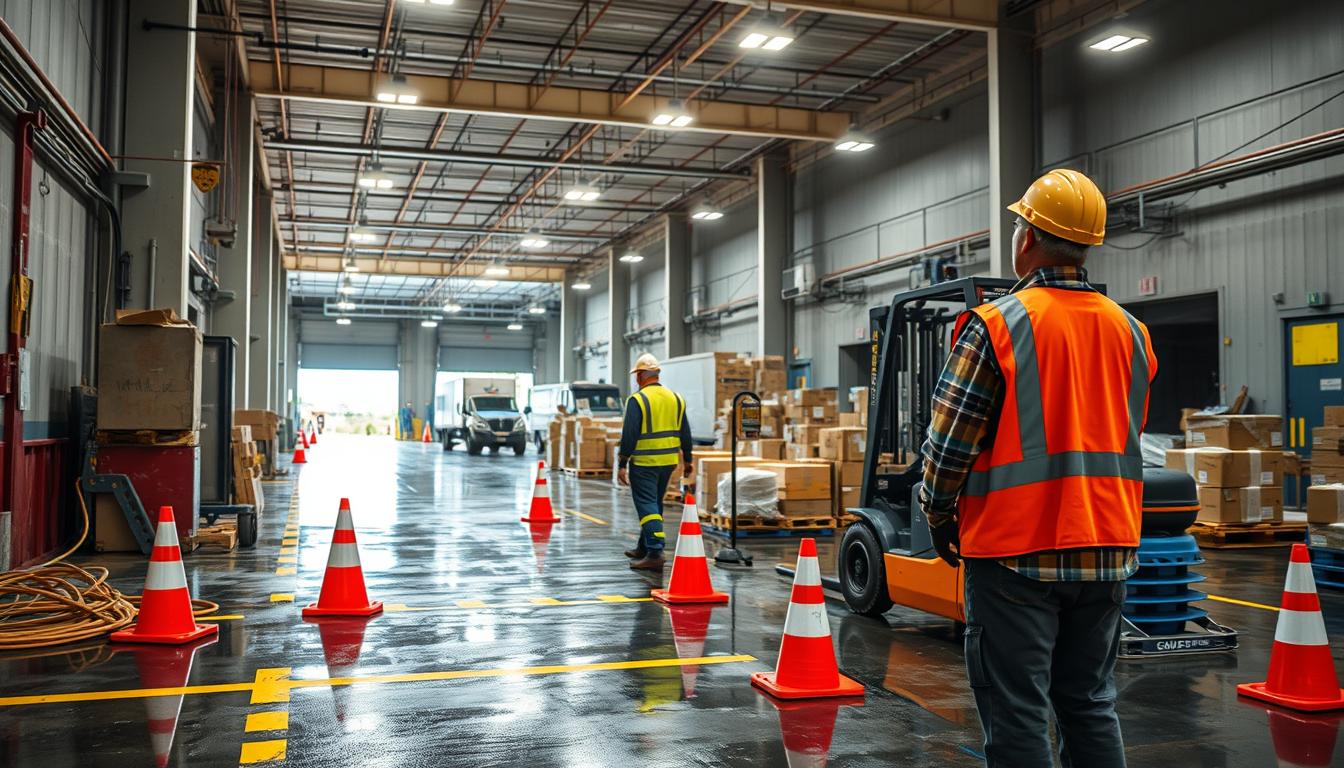
Loading docks are vital for American commerce. They move billions of tons of goods worth trillions yearly. Yet, these busy hubs can be dangerous if not managed well.
OSHA reports that 25% of warehouse accidents happen at loading docks. For every injury, there are about 600 near-misses.
Here are some common loading dock hazards and ways to prevent accidents.
Key Takeaways
- Loading docks are one of the most dangerous areas in warehouses, with 25% of all industrial accidents occurring there.
- Proper use of safety equipment, such as trailer restraints and dock levelers, can greatly reduce the risk of accidents.
- Maintaining a clear and organized loading dock, with proper handling techniques and personal protective equipment (PPE), is necessary for worker safety.
- Adhering to OSHA regulations and seeking expert assistance can help ensure a safe and efficient loading dock operation.
- Investing in safer and more efficient equipment, like vertically positioned dock levelers, can lead to longer-lasting and more appealing facilities for customers.
Introduction to Loading Dock Hazards
Loading docks are high-risk areas where serious injuries can occur. Identifying hazards and management are very important. These areas face slips, trips, falls, and vehicle collisions.
Other risks include improper loading procedures and being struck by trucks or objects. Manual handling, chemical exposure, and poor maintenance add to the dangers.
Unfamiliar layouts and lack of knowledge about lifting devices increase worker and driver risks even more.
Statistics on Loading Dock Accidents
Ontario’s data shows serious injuries and deaths in shipping areas over the last decade. Workers have died from being pinned between docks and trucks.
Other fatal incidents involve being struck by falling items or dock plates. External trucking firms bring unique risks to shipping areas.
Different procedures, yard layouts, and unfamiliar equipment contribute to these dangers.
Importance of Addressing Loading Dock Safety
To ensure loading dock safety, employers must follow Ontario’s Occupational Health and Safety Act. Supervisors must control hazards, ensure compliance, and provide training and equipment. Workers should report hazards, join training, and follow safety rules.
To promote safety, Environmental Health & Safety sets guidelines and does inspections on loading docks.
| Hazard | Incident Rate (per 10,000 full-time workers) |
|---|---|
| Slips, Trips, and Falls | 27 |
| Contact with Objects or Equipment | 24 |
| Nonfatal Forklift Accidents | 9,000 (median of 13 days off work) |
“Addressing loading dock safety is necessary to protect employees, avoid worker’s compensation claims, and prevent OSHA investigations.”
Failing to Use Proper Restraints
Trailer restraints are major tools for loading dock safety. They lock trailers in place, stopping “trailer creep” during loading and unloading. This prevents serious risks like employees stepping into open air or crushed legs.
By using trailer restraints, we can greatly reduce injuries from unexpected vehicle movements. These devices keep workers safe at the loading dock.
Role of Restraints in Preventing Accidents
Trailer restraints lower the risk of forklift fall-through accidents at loading docks. By securely anchoring the trailer to the dock, these restraints prevent any unintended movement or separation during loading and unloading operations. This added layer of safety not only safeguards workers and equipment but can also lead to reduced insurance premiums for companies.
Aside from safety, using vehicle restraints may even lead to lower insurance rates for companies.
Proper Use and Training for Restraints
Over 25% of industrial accidents happen at loading docks. For every accident, there are about 600 near-misses. This shows how important proper restraint usage is.
Workers need training to spot hazards and use restraints properly. Training programs should cover restraint importance, hazard recognition, and basic warehouse safety. This helps reduce accidents and injuries at the loading dock.
| Type of Incident | Incidents per 10,000 Full-Time Workers |
|---|---|
| Falls, Slips, and Trips | 27 |
| Contact with Objects or Equipment | 24 |
“The use of trailer restraints lessens the odds of injuries from unexpected vehicle movements at the loading dock.”
Skipping Dock Levelers
Dock levelers are important for safe loading docks. They bridge the gap between trailers and platforms. These devices prevent dangerous height differences that could cause accidents
In cold storage, proper use of dock levelers helps keep energy in and pests out. Linking them with trailer restraints boosts safety and efficiency.
The Purpose and Benefits of Dock Levelers
Dock levelers make loading operations safe and smooth. They create a secure path between trailers and docks. This prevents gaps that could lead to accidents.
These devices fit various trailer heights. They provide a stable platform for loading and unloading. This flexibility enhances safety and speeds up work.
Using dock levelers has many perks.
| Benefits of Dock Levelers |
| Safer transition between trailer and dock |
| Accommodate varying trailer heights |
| Enhance productivity and efficiency |
| Reduce the risk of falls, forklift accidents, and product damage |
Good dock levelers make loading areas safe. They cut risks in dock operations. Investing in them protects your staff and goods.
“Proper use of dock levelers helps maintain a safe and efficient loading dock operation. They play a big role in preventing hazardous gaps and height differences that can lead to serious accidents.” –
Excessive Personnel on the Loading Dock
Keeping the right number of workers on loading docks contributes to safety and efficiency. Too many people increase accident risks. In 2018, over 6,600 workers were hurt or killed on docks, ramps, and plates.
Opening trailer doors puts workers in danger of truck and forklift traffic. Drivers may not watch for people walking in the yard. And this can lead to struck-by accidents.
A study found that over 94,000 forklift-related injuries happen yearly. More than seven percent of deaths were from forklifts falling off docks.
Vertical Storing Levelers as a Solution
Many places now use vertical storing levelers to solve this problem. These devices are inside the building. Trucks can back in fully without unsafe door opening.
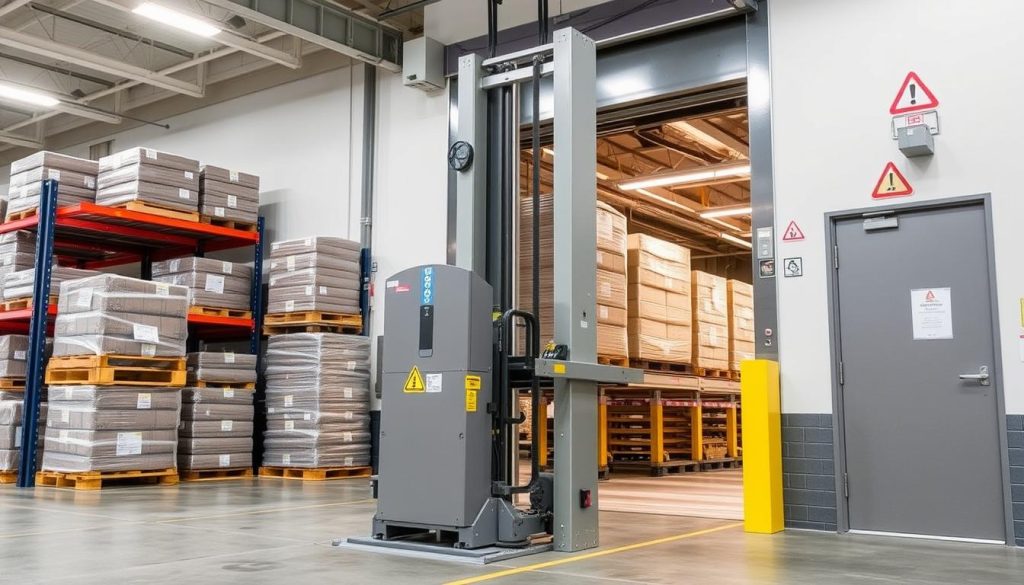
This setup reduces workers exposed to dock hazards. It greatly lowers the chance of incidents happening. Using vertical storing levelers also improves safety and productivity. It also protects a company’s most valuable asset – its employees.
OSHA Regulations for Loading Docks
Warehouses must follow strict OSHA rules for loading dock safety. These rules protect workers from common hazards. OSHA highlights risks like forklifts falling off docks and products hitting employees.
To stay safe and follow rules, warehouses need to meet key OSHA requirements. These steps help create a secure loading dock area.
Key OSHA Requirements for Loading Dock Safety
OSHA rule 29 CFR 1910.28(b)(1)(i) requires barriers for docks with a four-foot or higher drop. Forklifts often cause accidents at loading docks. OSHA stresses slow forklift driving and secure dock plates.
Workers must stay away from dock edges. Visual warnings near edges are necessary. “Dock jumping” by employees is not allowed.
OSHA also sets safety rules for dock ladders and stairs. Bars are recommended as safety barriers to prevent falls. OSHA also suggests limiting traffic during loading and keeping docks clean. Following these rules keeps loading docks safe and compliant.
In 2018, $19 trillion in goods used loading docks. That year, loading docks saw about 6,000 worker injuries. Common hazards include slips, loose dock plates, and improperly chocked trailer wheels. Other risks are carbon monoxide exposure, back injuries from bad lifting, and forklift falls.
Proper ventilation prevents carbon monoxide buildup. Trailers should park close to docks to avoid accidents. These practices help keep loading docks safe and within rules.
Preventive Measures for Loading Dock Safety
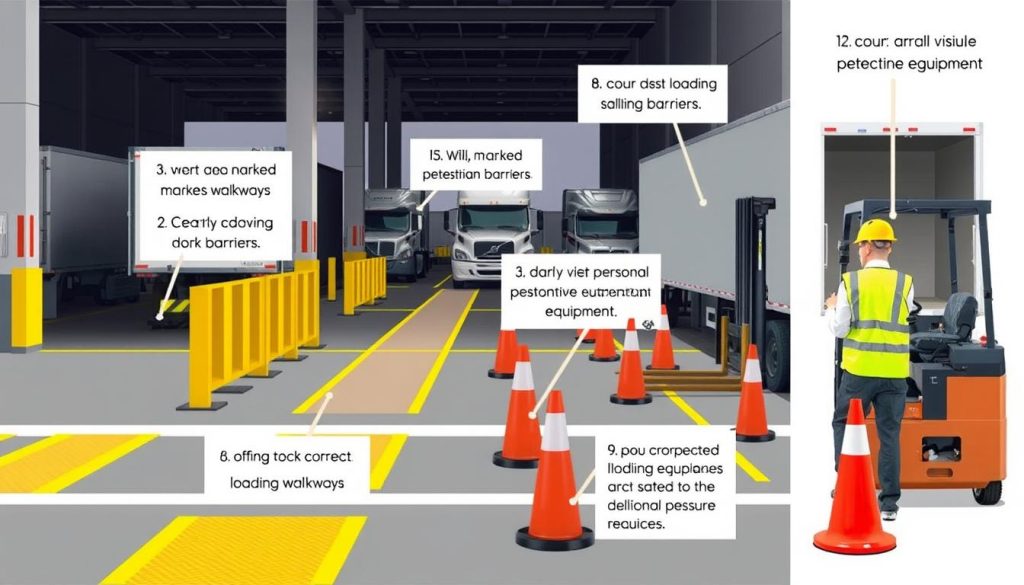
Safety at loading docks requires a well-rounded approach. Trailer restraints prevent “trailer creep” and secure trailers in place. Good lighting helps workers spot hazards and move safely.
These measures can greatly reduce accidents at loading docks. They protect workers and create a safer work environment.
| Hazard | Preventive Measure |
|---|---|
| Slip and trip hazards | Maintain clean, dry, and level dock surfaces |
| Falls off dock edges | Install guardrails and protective barriers |
| Unsecured dock plates | Properly secure dock plates to prevent injuries |
| Unchocked trailer wheels | Chock trailer wheels to prevent unintended movement |
| Carbon monoxide inhalation | Ensure proper ventilation and monitor air quality |
| Back injuries from lifting | Train employees on proper lifting techniques |
| Collisions with vehicles | Establish clear traffic patterns and signage |
“Ensuring compliance with safety regulations and best practices is essential for protecting workers and optimizing loading dock operations.”
A complete safety program tackles these areas. It lowers accident risks at loading docks and boosts work efficiency.
Prioritizing Safety at the Loading Dock
Loading docks are very important yet hazardous areas in warehouse operations. Over 25% of industrial accidents happen at loading docks. For every accident, there are about 600 near-misses. Addressing these hazards is necessary for employee safety and OSHA compliance.
Loading dock accidents can cause serious injuries or fatalities. Mishaps during operations may damage goods, vehicles, and equipment. Implementing safety measures creates a safer and more efficient environment.
Regular maintenance keeps loading dock areas hazard-free. Comprehensive employee training helps prevent accidents. High-quality equipment like dock levelers and bumpers further boost safety during loading and unloading.
By focusing on loading dock hazards conclusion and loading dock safety best practices, businesses can thrive. This will lead to a safer work environment, and eventually a stronger, more competitive organization.