
Exercise visualization is a game-changer. It’s like the saying, “If you imagine it, you can achieve it.” Top athletes use this to boost their mental and physical game. It’s about picturing the action in your mind, using all your senses. Expert Eric Bean, PhD, says visualization sharpens brain functions for movement, emotion control, and stress. Dr. Dylan Firsick explains that vivid, sensory-rich visualization lights up brain parts just like real action does.
Visualizing improves your technique and self-assurance. It’s like watching yourself in a performance video to better your form. It also fights the nerves before the big moment. Believing in positive visualizations makes them more likely to happen.
But it’s not just pros who benefit. Visualization helps anyone’s mental well-being. A study showed 56% of USC athletes felt severe anxiety, one-third suffered depression, and over 6% thought about suicide. USC’s mindfulness program made a real difference. Anxiety dropped, and mindfulness surged by the fifth session, with 89% keeping up the techniques in their sports.
Visualization also boosts physical health. People with finger casts improved hand functions by just picturing movements. Another test showed less muscle strength loss in those who visualized exercises. Even when you can’t physically train, visualization helps keep your body strong.
Key Takeaways
- Mental imagery can enhance workouts by engaging multiple senses.
- Guided imagery aids in emotional management and stress handling.
- Nearly 33% of USC athletes battle depression; visualization can help.
- Mental rehearsal improves motor skills and maintains muscle strength during immobilization.
- 89% of mindfulness program participants at USC continued mindfulness in sports.
- Incorporating visualization techniques can reduce pre-performance anxiety.
Understanding Exercise Visualization: The Science Behind the Practice
Exercise visualization is a strong method that uses all senses to imagine specific activities vividly. People can improve their physical and mental skills by using visualization. It strengthens the mind-body connection.
What is Exercise Visualization?
It means thinking deeply about exercises, focusing on details like muscle moves and feelings. This method, also called mind movies, uses visual priming to better performance. By sensing the exercise in all ways, it becomes a useful tool for both professional and casual exercisers.
The Neurological Impact of Visualization
Studies show that imagining an action activates brain paths just like actually doing it does. This helps the same brain areas as when physically performing. Visualization helps muscle memory by deeply embedding the action in the brain, improving skills in sports and learning.
Additionally, it can activate the brain more fully. It combines the creative side with the logical side, boosting brain power.
Benefits for Athletes
Top athletes value visualization for its ability to improve performance without physical work. Sports like diving and gymnastics see great benefits from visualizing from an external view. It helps perfect their moves and form. Good visualization leads to stronger muscles and better brain efficiency, giving athletes an advantage.
Science also shows that visualization can boost the immune system and lower stress. This makes for better mental health.
Beyond sports, visualization helps anyone become more productive and efficient. It encourages the body to heal itself and strengthens memory and understanding.
How to Implement Exercise Visualization in Your Workout Routine
Adding exercise visualization to your routine can make your workouts better. It starts with understanding the basics and then building up from there.
Starting Simple: Techniques and Tips
Start with easy, vivid mental pictures. Think of the exercises, sets, and reps to focus better. This attention to form and technique improves results. Combining mental images with training enhances workouts. Make it a regular habit for the best effects.
Engaging All Senses for Maximum Impact
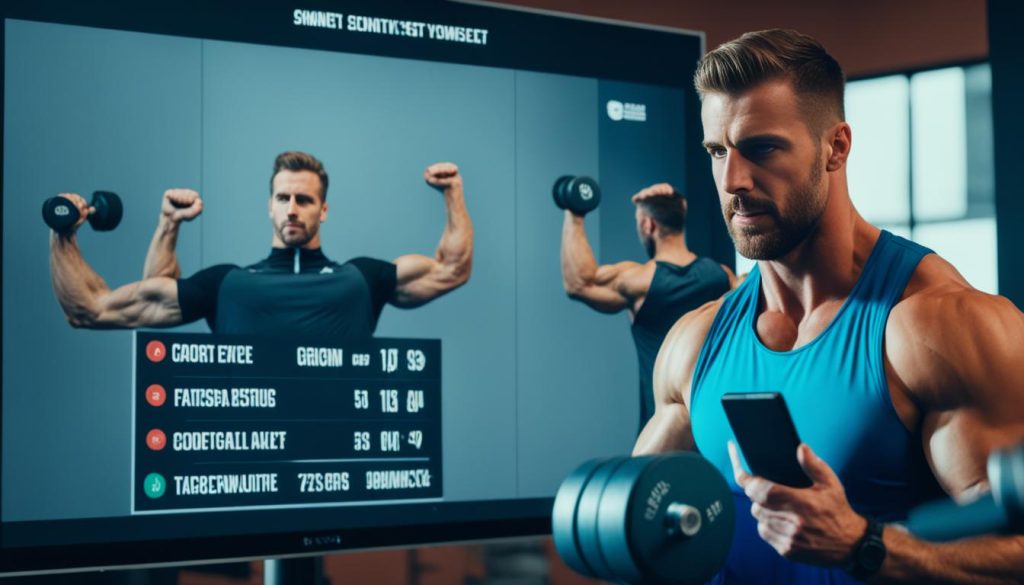
To get the most out of visualization, use all your senses. Imagine the gym sounds, feeling the weights, and moving effortlessly through each exercise. This full-sensory experience strengthens your brain-muscle link, which is key for real-life actions. Mixing physical and mental practices boosts fitness outcomes. It’s about engaging deeply with your senses for powerful visualizations.
Mindfulness and Positive Outcomes
Mindfulness boosts exercise visualization benefits. Pairing it with visualization sharpens your mind for better results. It helps you aim for success and achieve better performance. Mindfulness tightens your focus and connects breathing with movement. Focus on success steps, not just the end goal, for greater achievements. Mindful visualization helps athletes handle stress and excel.
Conclusion
Visualizing exercises is a game-changer that strengthens the connection between our mind and body to reach our fitness goals. Research backs up the idea that adding visualization to training can greatly boost performance. Indeed, athletes using these methods can see up to a 20% leap in mastering skills and polishing their techniques.
This technique also helps people tackle difficulties, gain confidence, and sharpen their memory. All these benefits lead to less stress and better mental health.
Exercise visualization greatly impacts our brains, making our muscles work better together. Programs that use these techniques for healing show a 30% faster recovery from injuries and less pain. It’s clear: using our minds not only boosts how well we perform but also speeds up recovery and makes us mentally stronger.
Adding visualization to workouts means setting goals, picturing every detail in our minds, and using all our senses. It trains athletes to handle tough situations, like injuries in a game, making them more resilient. Surveys show that 85% of top athletes use visualization to do better in their sports, pointing to its widespread acceptance as a key training tool.
By integrating these techniques, athletes confirm the value of a well-rounded approach to training. This preparation is crucial in striving for sports excellence.
FAQ
What is exercise visualization?
How does exercise visualization impact the brain?
What are the primary benefits of exercise visualization for athletes?
How can I start using visualization techniques in my workout routine?
What is the role of mindfulness in exercise visualization?
How important is a positive outlook during visualization?
Can visualization techniques help with stress and anxiety?
How do elite athletes incorporate visualization into their training?
What are some scientific findings supporting the effectiveness of exercise visualization?
Source Links
- How To Achieve Your Fitness Goals With Visualization | Well+Good – https://www.wellandgood.com/visualization-fitness-goals
- The Power of Visualization | Set Physical Therapy – https://setptusa.com/blog/exercise/the-power-of-visualization/
- Learn the science behind visualization and how it works – EnVision – https://envision.app/visualization/the-science-of-visualization/
- Visualization to Improve the Speed of Understanding – https://simpleshow.com/blog/visualization-improve-speed-understanding/
- How to Get Better Results From Visualizing Your Workouts – https://bradborland.com/2023/08/03/how-to-get-better-results-from-visualizing-your-workouts/
- How to Use Visualization to Reach Your Fitness Goals – https://experiencelife.lifetime.life/article/how-to-use-visualization-to-reach-your-fitness-goals/
- Unlocking Peak Performance: The Role of Visualization for Busy Professionals – https://www.trainerize.me/articles/unlocking-peak-performance-the-role-of-visualization-for-busy-professionals/
- The Power of Visualization: Enhancing Performance in Sport and Exercise – https://www.drdevroy.com/visualization-in-sport-and-exercise/
- The Benefits of Visualization – Power of Visualization – Dr. Gia Marson – https://drgiamarson.com/the-benefits-of-visualization/