
Welcome to this guide on protecting your finances while looking for love on apps. It’s crucial to be strict about never wiring funds to a person you’ve only met through a screen.
Romance scammers are more sophisticated than ever. They target millions on social and connection platforms. A recent safety report found one in four people using these services has been targeted by fraud.
Many struggle to tell a real profile photo from one made by AI. This guide walks you through staying safe in the world of digital romance.
We know genuine connections happen. But it’s smart to approach with awareness and caution.
We’ll cover common scammer tricks, major red flags, and how to verify someone’s identity. You’ll also learn steps to take if you’ve been targeted.
The golden rule is simple: never transfer cash to someone you only know from an app. No story, no matter how convincing, is worth that risk.
By following this advice, you can explore potential relationships while keeping your savings and identity secure.
Key Takeaways
- Financial protection is a top priority when meeting people through apps.
- Romance fraud is a widespread issue, with one in four users reporting they’ve been targeted.
- Scammers use advanced tactics, including AI-generated photos, to create fake profiles.
- Awareness and caution are essential for enjoying digital connections safely.
- This guide will teach you how to spot red flags and verify identities.
- The most important rule is to never wire funds to someone you haven’t met in person.
- Following these steps helps safeguard your finances and personal information.
Introduction to Online Dating Scams
Behind some charming profiles lies a calculated effort to manipulate trust for financial gain. These deceptive schemes are now common in the digital romance landscape.
They affect individuals from all backgrounds. Fraudsters create convincing fake profiles on popular apps and social platforms.
Their goal is to form a connection. They often chat many times a day to build a false sense of intimacy.
Overview of Scam Techniques
Scammers use stolen or AI-generated photos in a practice called catfishing. They craft detailed backstories to explain why they can’t meet.
Common tales include working overseas on an oil rig or serving in the military. The story is tailored to what they think will work on each person.
After establishing trust, they present an urgent problem. This is when they make their request for funds.
Why Caution Is Crucial
These criminals are skilled manipulators. They study human psychology to exploit emotions.
The damage is not just financial. Victims experience deep emotional hurt from a connection they believed was real.
Understanding these techniques is your first shield. Awareness helps you spot red flags before you get too invested.
Understanding Sending Money Dating Online Risks
When forming connections through apps, one rule stands above all others for financial safety. The Federal Trade Commission states it clearly: never give cash or gifts to a sweetheart you haven’t met face-to-face.
The Promise and the Pitfall
A fraudster offers the dream of romance and a future together. This promise is entirely fabricated.
The pitfall is that it’s a trap to manipulate you into wiring funds. You cannot verify a person’s true identity through a screen alone.
| Scammer’s Promise | The Harsh Reality | Your Risk |
|---|---|---|
| Deep emotional connection | False intimacy built to exploit you | Significant emotional hurt |
| Future plans together | Story tailored to gain your trust | Wasted time and hope |
| Urgent need for your help | Calculated request for funds | Financial loss you likely can’t recover |
Once cash is transferred via wire services or gift cards, it’s nearly impossible to get back. Romance scammers want it fast and irreversibly.
Your emotional investment can cloud your judgment. You might rationalize helping someone you care about.
The strict rule is simple: never wire funds to someone you only know from an app. A genuine partner would not pressure you for cash before meeting.
The Dangers of Wiring Money to Strangers from an App
Wiring funds to a stranger from a digital platform is one of the riskiest financial moves you can make. Once you initiate the transfer, it is nearly impossible to cancel or get a refund.
These transactions are designed to be final. A fraudster knows this and uses it to their advantage.
How Scammers Manipulate Trust
A scammer invests weeks building a bond. They create a false sense of intimacy through constant communication.
When they claim a sudden crisis, your emotional connection makes you want to help. They pressure you to act fast, leaving no time for doubt.
Their preferred payment methods are chosen for speed and anonymity. See why these options are so dangerous.
| Payment Method | How Scammers Use It | Key Danger |
|---|---|---|
| Wire Transfer (Western Union, MoneyGram) | They provide specific details for you to send cash. | Funds are picked up instantly and are irreversible. |
| Gift Cards (Amazon, iTunes, Google Play) | They ask you to buy cards and share the PIN codes. | Like sending cash; impossible to trace or recover. |
| Money Transfer Apps | They request a direct peer-to-peer payment. | Transactions are often immediate and hard to dispute. |
| Cryptocurrency | They direct you to transfer crypto to a digital wallet. | Completely anonymous and untraceable once sent. |
The strict rule is clear: never send money to someone you only know from an app. A genuine person would not ask.
The anonymity of these platforms lets a fraudster hide. After they get your cash, they disappear without a trace.
Any request for funds should end the conversation. Report the profile immediately to protect others.
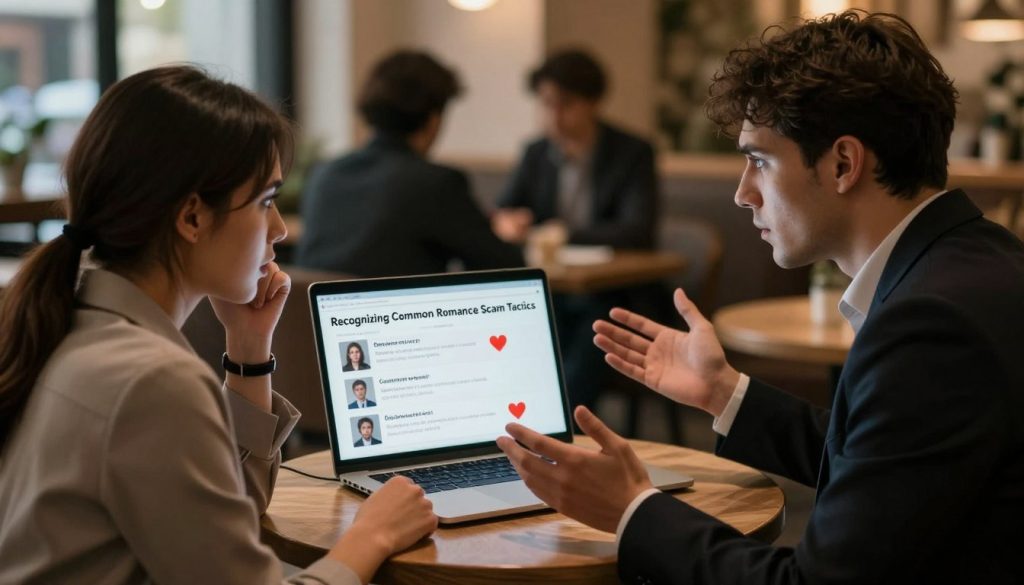
Recognizing Common Romance Scam Tactics
Recognizing the hallmarks of a fraudulent profile can save you from emotional and financial harm. The first major tactic is catfishing.
This involves a scammer creating a completely fake identity. They often use stolen photos of real people or sophisticated AI-generated images.
In extreme cases, they impersonate celebrities. One French woman lost over €800,000 to a fraudster pretending to be actor Brad Pitt.
Spotting Fake Profiles and Catfishing
Look for clear signs in a profile. Genuine accounts usually have detailed personal information and many social connections.
Fake profiles often seem too perfect. Their pictures may look like professional model shots.
Watch for inconsistencies between their story and their profile details. A common warning is a refusal to video chat or meet.
Red Flags in Messaging and Communication
Pay close attention to how someone communicates. Romance scammers often try to move the conversation off the app very quickly.
They use overly romantic language right from the start. Their messages can feel scripted or generic.
They will always have an excuse to avoid a face-to-face video call. Blaming a broken camera or poor internet is a classic trick.
They often claim jobs like working on an oil rig or serving overseas. These stories explain why they can’t meet you.
Trust your instincts. If something feels off, it probably is. A real person interested in a genuine connection will be willing to verify who they are.
How Romance Scams Operate: From Emergency Requests to Fake Stories
The mechanics of a romance scam follow a predictable, manipulative script designed to exploit your goodwill. After building trust, the fraudster reveals their true goal.
This progression from affection to a plea for help is calculated. Nearly one-quarter of these cons involve fake medical or legal crises, according to the Federal Trade Commission.
Using Personal Emergency Stories as a Ruse
Scammers fabricate urgent problems to trigger your empathy. The story is always designed to make their request seem reasonable.
Common fake emergencies include:
| Fake Story | Their Request | Emotional Hook |
|---|---|---|
| Emergency surgery or sick relative | Funds for medical bills | Your compassion for health |
| Stuck abroad without funds | Cash for a plane ticket or visa | Your desire to finally meet |
| Wrongfully arrested | Help with legal fees or bail | Your sense of justice |
In an inheritance variation, they claim a windfall but need your help to access it. They frame it as an investment in your future.
Pressure Tactics and Urgency in Money Requests
The plea for help always comes with intense pressure. Scammers create artificial urgency to shut down your critical thinking.
They insist the situation is time-sensitive. This prevents you from consulting a friend or verifying the story.
When they ask for money, it sounds logical within their fabricated crisis. They might need it for a child’s care or to escape trouble.
Be warned. If you send funds once, they will invent new emergencies. They continue until you stop, then they vanish completely.
Spotting and Avoiding Fake Profiles on Dating Apps
Your first line of defense against digital deception is learning to scrutinize the profiles you encounter. A fake profile is often the first tool in a scammer‘s playbook.
Knowing the signs can protect your heart and your personal information.

Profile Inconsistencies and Limited Personal Details
Look closely at the details. Does the stated age match the person in the photos?
Watch for conflicting information about their job or location. A story that changes over time is a major red flag.
Genuine profiles share specific hobbies and interests. Fake ones often have a sparse “about me” section filled with generic phrases.
Check their linked social media. A real person usually has friends and regular activity.
A profile with zero followers and a new account is suspicious. This table highlights key differences to watch for.
| Signs of a Fake Profile | Signs of a Genuine Profile | Action to Take |
|---|---|---|
| Photos look like model shots or are inconsistent | Photos show everyday, candid moments | Perform a reverse image search |
| “About me” is vague or copied from elsewhere | Details are unique, specific, and personal | Ask specific questions about their interests |
| Social media links are dead or have no friends | Active social accounts with connections | Check for authentic engagement |
| Rushes to move conversation off the app | Happy to keep chatting on the platform initially | Be wary of immediate requests to switch apps |
Be extra cautious with profiles that seem too perfect. Exceptionally attractive photos and tales of great wealth are designed to lure you in.
Stick to well-known apps with strong safety features. Reputable platforms work harder to verify users and remove fakes.
Trust your gut. If a profile feels off, it’s better to swipe left and move on.
The Role of Reverse Image Search in Identifying Scams
Before you trust a charming profile, take five minutes to see if their image tells a different story elsewhere on the web. A reverse image search is one of the most powerful tools you can use for this.
This simple check helps verify if someone’s photos are genuine or stolen. It scans the internet to find where else that same picture appears.
Steps to Effectively Conduct a Reverse Image Search
First, save the person’s profile picture to your device. Right-click on it and select “Save image as.”
Next, go to Google Images or a similar tool. Click the small camera icon in the search bar to upload your saved file.
You can also paste the direct URL of the image. The image search engine will then show you all the websites using that same picture.
Review the results carefully. Look to see if the photo is linked to a different name or identity.
Is it a stock photo from a modeling site? Does it appear on multiple profiles with various details? These are major red flags.
If the reverse image check reveals a mismatch, stop communicating immediately. It’s a clear sign of a scammer.
While some fraudsters use hard-to-trace AI photos, this search remains a vital first defense. Make it a standard practice when meeting new people.
Protecting Your Financial Information and Privacy
Beyond requests for cash, fraudsters often target your sensitive data for long-term identity theft. Guarding your personal information is just as critical as protecting your wallet.
A scammer can use stolen details to open new credit lines or take loans in your name. This damage can haunt your finances for years.
Safe Money Transfer Practices
The fundamental rule remains absolute. Never wire funds to a person you only know from an app.
Also, never provide your bank account or credit card numbers. A genuine connection will never ask for this access.
If someone pressures you, it’s a major red flag. End the conversation and report their profile immediately.
Securing Your Personal Data Online
Start by using a strong, unique password for each dating platform. Enable two-factor authentication for an extra security layer.
Never share those verification codes with anyone. Be wary of seemingly innocent questions about your first pet or birthplace. These are common security answers.
If you’ve already shared financial details, contact your bank or credit card company right away. Monitor accounts for strange activity.
Consider an identity theft protection service. It can watch for fraud and help recover your identity if needed.
Legal and Reporting Measures Against Online Dating Scams
Legal measures and reporting tools provide powerful ways to fight back against romance fraud. Your action helps protect others.
Always report a suspicious profile, even if you didn’t lose funds. Each report builds a case for authorities.
How to Report Scam Attempts
Start by reporting directly on the app where you met the person. Platforms like Hinge and Tinder have a “report” button in chats.
This can get the scammer banned quickly. Next, file a report with the Federal Trade Commission at ReportFraud.ftc.gov.
The FTC uses your details to spot patterns and stop scams. They also give you personalized steps to guard your identity.
New laws are emerging to help. The U.S. House passed the Romance Scam Prevention Act in June 2025.
If it becomes law, apps must alert you if a previously banned user messages you. This is a big step forward.
| Reporting Avenue | How to Report | Key Benefit |
|---|---|---|
| Dating App | Use the report feature in the profile or chat. | Removes the scammer from the platform fast. |
| Federal Trade Commission | File at ReportFraud.ftc.gov. | Triggers investigation and offers recovery guidance. |
| Other Authorities | Contact the FBI for crypto fraud or the DoD for military impersonation. | Targets specialized fraud networks effectively. |
Involving Financial Institutions and the FTC
If you wired any funds, contact your bank immediately. They may freeze a transaction or help document the fraud.
The Federal Trade Commission can use your report to track dating scam networks. Your information helps them take legal action.
Reporting serves a dual purpose. It might help you recover losses and certainly helps shut down operations.
You protect future targets by speaking up. Your report is a powerful tool against this online dating scam.
Tips for a Safe Online Dating Experience
Navigating digital romance safely requires a blend of optimism and smart precautions. You can enjoy meeting new people while keeping your guard up.
Following a few key steps makes a big difference. These tips help you stay open to genuine connections.
Staying Alert and Keeping Conversations on the App
Reputable dating sites and apps have built-in safety features. These systems monitor for sketchy behavior.
Keep your chats on the official platform initially. Scammers often push to switch to other apps quickly.
They do this to avoid detection. Staying put lets the app’s guardrails protect you.
Verifying Identities Before Meeting In-Person
Ask for a video call early on. A genuine person will happily show their face.
Endless excuses about a broken camera are a major red flag. This simple step verifies who you’re talking to.
Take the relationship slowly. Rapid declarations of love are a pressure tactic.
Talk to friends or family about your new connection. They can spot warning signs you might miss.
Stick to well-known dating platforms with strong safety records. Your vigilance is your best protection.
Conclusion
The path to safe digital romance is paved with awareness, caution, and a few non-negotiable rules. Protecting yourself requires constant vigilance and an unwavering commitment to your financial boundaries.
Remember the major red flags: reluctance to video chat, rushed intimacy, and any request for funds or personal details. Scammers craft stories to exploit your trust and desire for connection.
If you encounter a scammer, don’t feel ashamed. Report them to the platform and the Federal Trade Commission. Your report protects other people.
Genuine connections are absolutely possible on reputable apps. Verify a person‘s identity and talk to friends. And that’s why it matters to be strict. Never wire money to someone you only know from an app. Share this knowledge to help everyone stay safer.

