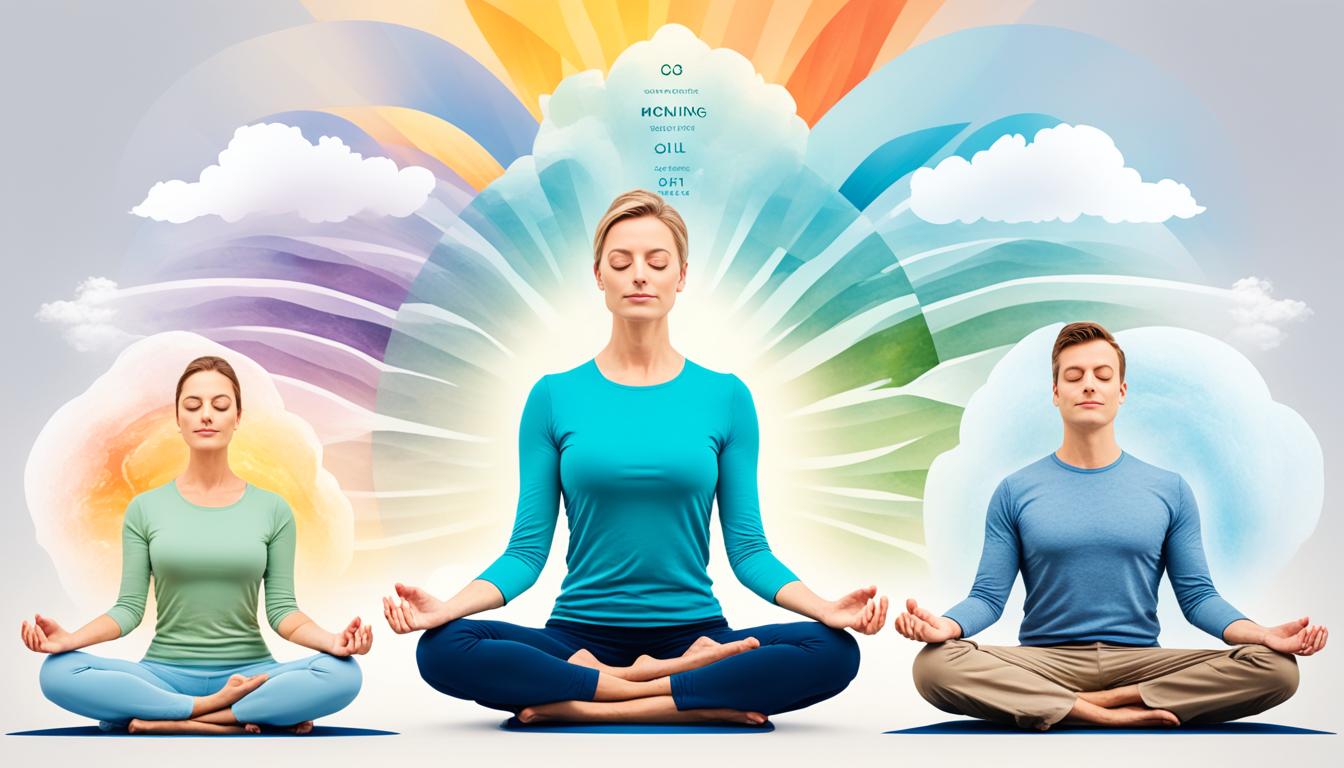
Meditation and self hypnosis are popular mindfulness practices for relaxation and personal growth. Both techniques offer paths to better mental health and well-being. However, they have distinct characteristics and approaches.
These practices involve focusing the mind, but they work differently. Understanding their unique features can help you choose the right technique for your needs.
Knowing the differences between meditation and self hypnosis is vital. It helps you decide which method suits your personal development goals best.
Each practice has specific benefits and applications. By learning about them, you can make an informed choice for your self-improvement journey.
Key Takeaways
- Meditation and self hypnosis are both popular mindfulness practices for relaxation and stress relief
- While they share some similarities, meditation and self hypnosis have distinct differences
- Meditation involves focusing the mind on the present moment, while self hypnosis utilizes guided suggestions
- Understanding the unique characteristics of each practice can help you choose the most suitable technique
- Incorporating meditation or self hypnosis into your routine can support mental health and personal growth
Understanding Meditation: A Brief Overview
Meditation is an ancient practice rooted in Eastern traditions. It has gained popularity worldwide due to its many benefits. Let’s explore meditation’s history, types, and advantages.
The History and Origins of Meditation
Meditation originated in ancient Eastern spiritual and religious traditions. Hinduism and Buddhism used it for spiritual enlightenment and inner peace. These practices have spread globally over time.
Meditation has adapted to different cultures and evolved into diverse forms. It now appeals to people from all backgrounds.
Different Types of Meditation Techniques
There are several meditation techniques, each with its unique focus. Some popular forms include:
- Mindfulness meditation: This technique involves focusing on the present moment. It observes thoughts and feelings without judgment.
- Transcendental meditation: Practitioners use a personal mantra to achieve deep relaxation. This method helps transcend ordinary thinking.
- Loving-kindness meditation: Also known as Metta, this practice cultivates love and compassion. It focuses on goodwill towards oneself and others.
- Focused attention meditation: This technique involves concentrating on a single object. It helps develop mental clarity and focus.
The Benefits of Regular Meditation Practice
Regular meditation offers many benefits for mental and physical well-being. These advantages are scientifically proven.
- Stress reduction: Meditation significantly reduces stress levels. It promotes relaxation and calms the mind.
- Improved emotional well-being: Regular practice helps manage emotions. It can decrease anxiety and alleviate depression symptoms.
- Enhanced cognitive function: Meditation improves focus, concentration, and memory. It also enhances decision-making skills.
- Increased self-awareness: Observing thoughts and emotions leads to greater self-understanding. This promotes personal growth.
“Meditation is a way of being, not a technique. Meditation is not about trying to get anywhere else — it is about allowing yourself to be exactly where you are and as you are, and for the world to be exactly as it is in this moment.” – Jon Kabat-Zinn
Meditation offers much to our modern lives. By understanding its techniques and benefits, we can experience its transformative power.
Incorporating meditation into daily routines can lead to positive changes. It’s a powerful tool for personal growth and well-being.
Exploring Self Hypnosis: An Introduction
Self hypnosis is a powerful way to access your subconscious mind. It involves deep relaxation and heightened focus. This technique taps into inner resources and uses suggestion for personal growth.

To start self hypnosis, find a quiet, comfy space without distractions. Use guided visualizations and muscle relaxation techniques. These help you enter a calm, suggestible state with inward-directed awareness.
In this state, you can talk to your subconscious mind. Plant positive suggestions that match your goals. Repeat these ideas often to change limiting beliefs and habits.
“The subconscious mind is a powerful ally in the journey of personal transformation. Through self hypnosis, we can harness its potential to overcome obstacles and unlock our true potential.” – Dr. Jane Thompson, Clinical Hypnotherapist
Regular self hypnosis practice offers many benefits. These include boosted self-confidence and improved focus. It can also enhance creativity and problem-solving skills.
Other advantages are better stress management and emotional resilience. Self hypnosis may speed up recovery from trauma. It can also help with positive behavior changes.
- Increased self-confidence and self-esteem
- Enhanced focus, creativity, and problem-solving abilities
- Improved stress management and relaxation skills
- Greater emotional resilience and ability to cope with challenges
- Faster recovery from physical and emotional trauma
- Facilitation of positive behavior changes, such as quitting smoking or losing weight
Self hypnosis lets you shape your thoughts and behaviors. It opens doors to personal growth and change. Keep exploring this method to unlock your subconscious mind’s potential.
The Science Behind Meditation and Self Hypnosis
Meditation and self hypnosis are powerful practices that can transform your brain and body. Neuroscience research shows they’re more than just relaxation techniques. These practices have profound effects on our mental and physical well-being.
How Meditation Affects the Brain and Body
Regular meditation can significantly change brain structure and function. It increases alpha and theta wave activity, linked to relaxation and deep meditation states. Meditation also boosts gray matter in brain regions for attention, emotional control, and self-awareness.
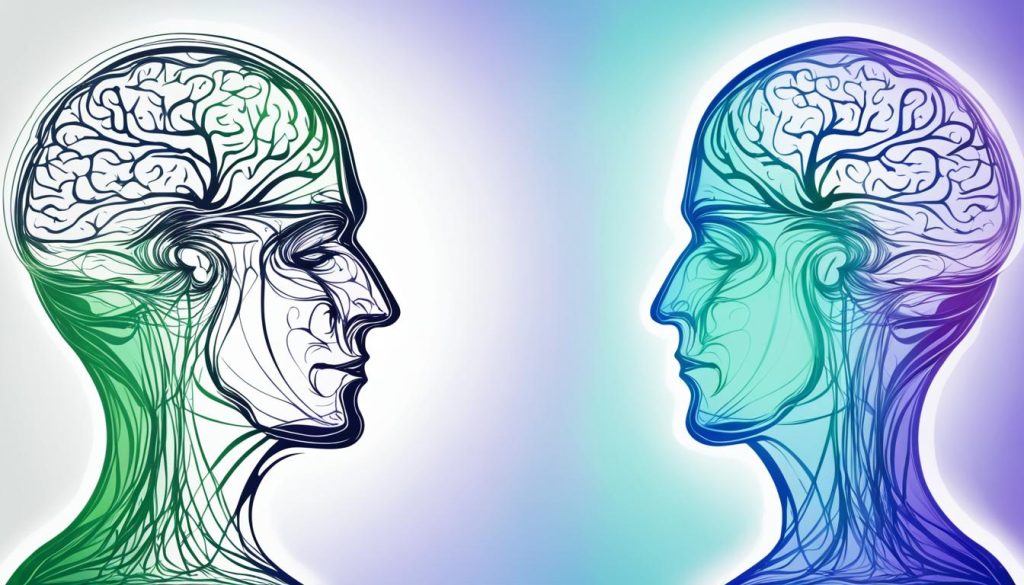
Meditation influences physiological processes throughout the body. It can lower blood pressure, boost immune function, and reduce inflammation. These changes contribute to overall health and may help manage various conditions.
The Psychological and Physiological Effects of Self Hypnosis
Self hypnosis allows access to the subconscious mind, enabling powerful mental reprogramming. During a session, the body enters deep relaxation. This state is marked by slower breathing, less muscle tension, and a lower heart rate.
Self hypnosis can reduce stress, anxiety, and negative thought patterns. It helps replace limiting beliefs with empowering ones, fostering personal growth. This practice also enhances performance, improves sleep quality, and manages pain.
| Meditation Effects | Self Hypnosis Effects |
|---|---|
| Increased alpha and theta brain waves | Induces a hypnotic trance state |
| Enhanced gray matter density in brain regions | Facilitates subconscious reprogramming |
| Reduced blood pressure and inflammation | Promotes deep relaxation and stress reduction |
| Improved immune function and overall well-being | Enhances performance and manages pain |
Meditation and self hypnosis can truly transform our mental and physical health. They harness neuroplasticity and tap into the subconscious mind. With these practices, we can unlock personal growth and healing, one breath at a time.
Meditation vs Self Hypnosis: Key Differences
Meditation and self hypnosis both promote relaxation and inner focus. However, they have distinct differences. Understanding these can help you choose the best technique for your needs.
The Role of Conscious Awareness
Meditation aims to maintain present-moment awareness. It involves observing thoughts and emotions without judgment. Self hypnosis, however, involves entering a trance state with diminished conscious awareness.
This trance depth allows greater access to the subconscious mind. It makes individuals more receptive to hypnotic suggestions and subconscious reprogramming.
Guidance and Suggestion in Self Hypnosis
Meditation is self-directed, focusing on breath or mantras without external guidance. Self hypnosis often uses scripts or recordings with specific suggestions.
These hypnotic suggestions aim to change thoughts, feelings, or behaviors. They provide guided imagery to help achieve desired changes.
The Depth of the Experience
Both practices induce relaxation, but self hypnosis leads to a deeper state. In this trance, you may feel detached from your surroundings.
You’ll also be more receptive to hypnotic suggestions. Meditation, however, keeps you alert and aware of your internal experience.