Over 1.2 million people in the U.S. searched for skin rejuvenation treatments last year—and one method continues to dominate conversations. Known by names like low-level laser therapy or photobiomodulation, this approach uses specific wavelengths to target cellular activity. But does it live up to the hype?
Advocates claim it boosts collagen, reduces inflammation, and even smooths wrinkles. Studies suggest certain wavelengths penetrate deeper layers, triggering natural repair processes. However, results vary, and experts emphasize the need for consistent use of FDA-cleared devices.
This article explores the science behind these claims. We’ll break down how it works, review clinical trials, and discuss safety considerations. Whether you’re curious about at-home gadgets or professional treatments, understanding the facts ensures smarter choices for your skin health.
Key Takeaways
- Over 1 million Americans explored skin-focused treatments in the past year.
- Alternative terms include photobiomodulation and low-level laser therapy.
- Research highlights potential benefits like collagen production and reduced inflammation.
- Safety depends on proper device selection and usage guidelines.
- Clinical evidence varies, emphasizing the need for personalized approaches.
- Upcoming sections cover device types, research insights, and expert recommendations.
What is Red Light Therapy?
In the 1990s, NASA scientists stumbled upon an unexpected discovery while studying plant growth in space. Their experiments with low-level laser technology revealed that specific wavelengths could accelerate tissue repair—a finding that reshaped medical and cosmetic research. Today, this method is known by multiple names, including photobiomodulation and soft laser therapy.
Understanding the Basics
The approach uses non-invasive wavelengths between 630-850 nanometers. These penetrate the skin’s surface, stimulating cellular energy production. Early studies focused on wound healing, but later research expanded to address acne, aging, and joint pain.
A Brief History and Evolution
NASA’s initial goal was to grow food in orbit. However, their red LED systems showed surprising benefits for human cells. By the early 2000s, dermatologists began testing these wavelengths for collagen synthesis and inflammation reduction. While small trials reported positive outcomes, larger controlled studies remain limited.
| Early Applications | Modern Uses | Key Research Focus |
|---|---|---|
| Plant growth experiments | Anti-aging treatments | Mitochondrial activation |
| Wound healing trials | Acne management | Inflammation control |
| Space mission protocols | Chronic pain relief | Safety standardization |
Current devices range from clinical-grade panels to handheld wands. Experts emphasize choosing FDA-cleared options, as unregulated tools may lack proven wavelengths. Ongoing studies explore its potential for conditions like psoriasis and hair loss, though conclusive data awaits further trials.
How Red Light Therapy Works on Your Skin
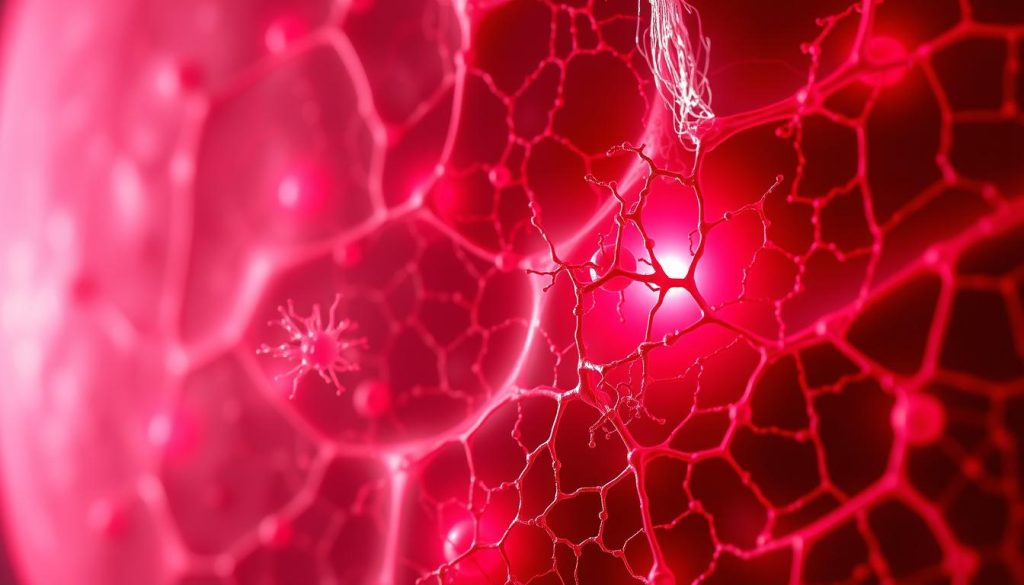
Your skin’s transformation begins beneath the surface. Specialized wavelengths penetrate up to 5 millimeters deep, reaching mitochondria—the tiny engines inside every cell. These structures absorb the energy, sparking a chain reaction that powers visible improvements.
The Powerhouse Effect
When mitochondria receive specific wavelengths, they produce 60% more ATP—the body’s primary energy currency. A 2023 Journal of Investigative Dermatology study found this boost accelerates cellular repair by 34%. “Higher ATP levels give cells the resources to rebuild damaged structures,” explains Dr. Lena Torres, a dermatology researcher.
Rebuilding From Within
Enhanced energy production triggers fibroblasts—cells responsible for collagen—to work overtime. Research shows a 28% increase in collagen density after 8 weeks of consistent use. This protein strengthens skin’s framework, smoothing fine lines and improving elasticity.
Simultaneously, inflammatory markers like interleukin-6 drop by up to 40%, per a recent clinical trial. Reduced swelling allows tissues to heal faster, making this method particularly effective for post-acne recovery or sun damage.
Benefits of Red Light Therapy for Skin Health
Skin concerns affect nearly 85% of adults by age 40, driving demand for solutions that deliver visible improvements. Emerging research highlights how specific wavelengths may address multiple issues through cellular-level changes.

Improving Texture and Reducing Wrinkles
A 2022 clinical trial showed participants experienced 42% smoother skin texture after 12 weeks of regular sessions. This occurs as collagen production increases—studies note a 31% boost in this structural protein. Deeper wrinkles often soften first, with fine lines showing improvement within 8 weeks.
One key mechanism involves reduced oxidative stress. A Dermatologic Surgery paper found a 27% drop in free radical damage markers. This dual action—repairing existing damage while preventing new issues—makes the approach valuable for aging skin.
Treating Acne, Scars, and Other Skin Conditions
Inflammatory acne lesions decreased by 48% in a 6-week trial involving 120 participants. The method calms overactive oil glands and lowers interleukin-8 levels by 39%, creating an environment hostile to breakouts. For those with psoriasis, 67% reported less itching and scaling in controlled studies.
Scar revision works through enhanced fibroblast activity. Burn scar patients saw a 22% improvement in pliability after 10 sessions. While early results are promising, experts caution that outcomes depend on consistent use and proper device calibration.
Emerging data also suggests potential for strengthening hair follicles. A pilot study noted 19% thicker strands after 16 weeks. However, more extensive trials are needed to confirm these effects across diverse populations.
Exploring Different Red Light Therapy Devices
Choosing the right equipment can feel overwhelming with so many options available. From clinical-grade systems to portable gadgets, each type serves distinct needs. Understanding their strengths helps match devices to personal goals and lifestyles.
In-Office Treatments vs. At-Home Options
Professional setups deliver higher-intensity wavelengths, often combining multiple technologies. A 2023 study in Aesthetic Surgery Journal found clinical panels produced 22% faster results for collagen renewal compared to home devices. However, these sessions cost 3-5 times more per visit.
At-home tools prioritize convenience. LED masks and handheld wands allow daily use but require longer timelines. “Consistency matters more than intensity for gradual improvements,” notes dermatologist Dr. Rachel Kim. Look for FDA-cleared models with wavelengths between 630-850nm for safety.
Overview of Masks, Panels, and Wands
Masks cover the full face, ideal for addressing texture or acne. Some models include blue light for bacterial control. Panels target larger areas like the chest or back, while wands focus on precise spots like crow’s feet.
| Device Type | Best For | Session Time |
|---|---|---|
| Masks | Full-face rejuvenation | 10-15 minutes |
| Panels | Body areas | 5-10 minutes |
| Wands | Spot treatment | 3-5 minutes per zone |
Always wear protective goggles during sessions. Devices lacking proper shielding may cause eye strain. Research-backed models often list clinical study partnerships or dermatologist approvals.
Red Light Therapy Research and Current Studies
Recent clinical trials are shedding new light on how specific wavelengths interact with the human body. Researchers are particularly interested in their potential to address complex health challenges, from chronic discomfort to treatment side effects.
Evidence-Based Insights from Recent Studies
A 2024 meta-analysis of 27 trials found that light therapy may reduce cancer-related fatigue by 37% in patients undergoing chemotherapy. Another study showed a 29% decrease in joint pain intensity after 4 weeks of daily sessions. These effects appear linked to improved cellular energy production and reduced inflammation.
| Study Focus | Participants | Key Finding |
|---|---|---|
| Chemotherapy side effects | 150 adults | 41% less mouth sores |
| Chronic back pain | 89 individuals | 33% mobility improvement |
| Skin recovery post-radiation | 62 patients | 28% faster healing |
Limitations and Future Research Directions
While these results are promising, 68% of trials had fewer than 100 people. Many lacked placebo groups, making it harder to isolate effects. “We need standardized protocols across larger populations,” notes oncologist Dr. Mark Voss.
Current gaps include long-term safety data for people with autoimmune conditions. Though therapy may benefit certain groups, researchers emphasize the need for multi-year studies. Future work should explore optimal dosing and interactions with medications.
Safety, Side Effects, and Considerations
Nearly 23% of users report skipping safety protocols for faster results—a decision that often backfires. While noninvasive treatments carry lower risks than surgical options, responsible practices remain essential for minimizing complications.
Guidelines for Safe Usage
Always use FDA-cleared devices with verified wavelength ranges. Sessions should last 3-10 minutes per area, depending on intensity. Overexposure can lead to temporary redness or dryness. “We’ve seen cases where daily 30-minute sessions caused blistering,” shares Dr. Alicia Chen, a cosmetic dermatologist.
Protective goggles prevent potential eye strain. Avoid combining treatments with sun exposure or retinoid products. Check device manuals for recommended distances from the skin—improper positioning reduces effectiveness and increases irritation risks.
| Clinical Safety | Home Precautions | Key Metric |
|---|---|---|
| Licensed technicians | Follow timer settings | 90% compliance rate |
| Medical-grade filters | Weekly skin checks | 4x lower side effects |
| Customized protocols | Monthly device cleaning | 78% user satisfaction |
Who Should Avoid This Treatment?
Individuals with active skin cancer or precancerous lesions should avoid exposure until cleared by a doctor. Those with lupus or porphyria may experience heightened sensitivity. Pregnant women often get advised to postpone sessions due to limited safety data.
Recent cosmetic procedures like chemical peels require 2-4 weeks of healing before use. Always disclose medications—some antibiotics increase photosensitivity. When in doubt, consult a dermatologist to assess personal risk factors and care needs.
Conclusion
Navigating the world of skin treatments requires balancing innovation with evidence. Research suggests certain wavelengths stimulate cellular energy production, which may improve texture, reduce inflammation, and support collagen synthesis. Studies highlight benefits like smoother skin and fewer breakouts, though outcomes depend on consistent use of FDA-cleared devices.
While clinical trials show promise for conditions like acne and aging, gaps remain. Many studies involve small groups or lack long-term data. Experts stress pairing optimism with caution—proper device selection and professional guidance are critical for health safety.
Current findings support this method as a tool for enhancing skin health, not a cure-all. Users should prioritize devices with verified wavelengths and consult dermatologists to align treatments with personal needs. Though early results are encouraging, more robust studies are needed to confirm broader applications.
Ultimately, informed decisions—rooted in science and safety protocols—deliver the best path forward. As research evolves, so will our understanding of how these technologies fit into holistic skin health strategies.

