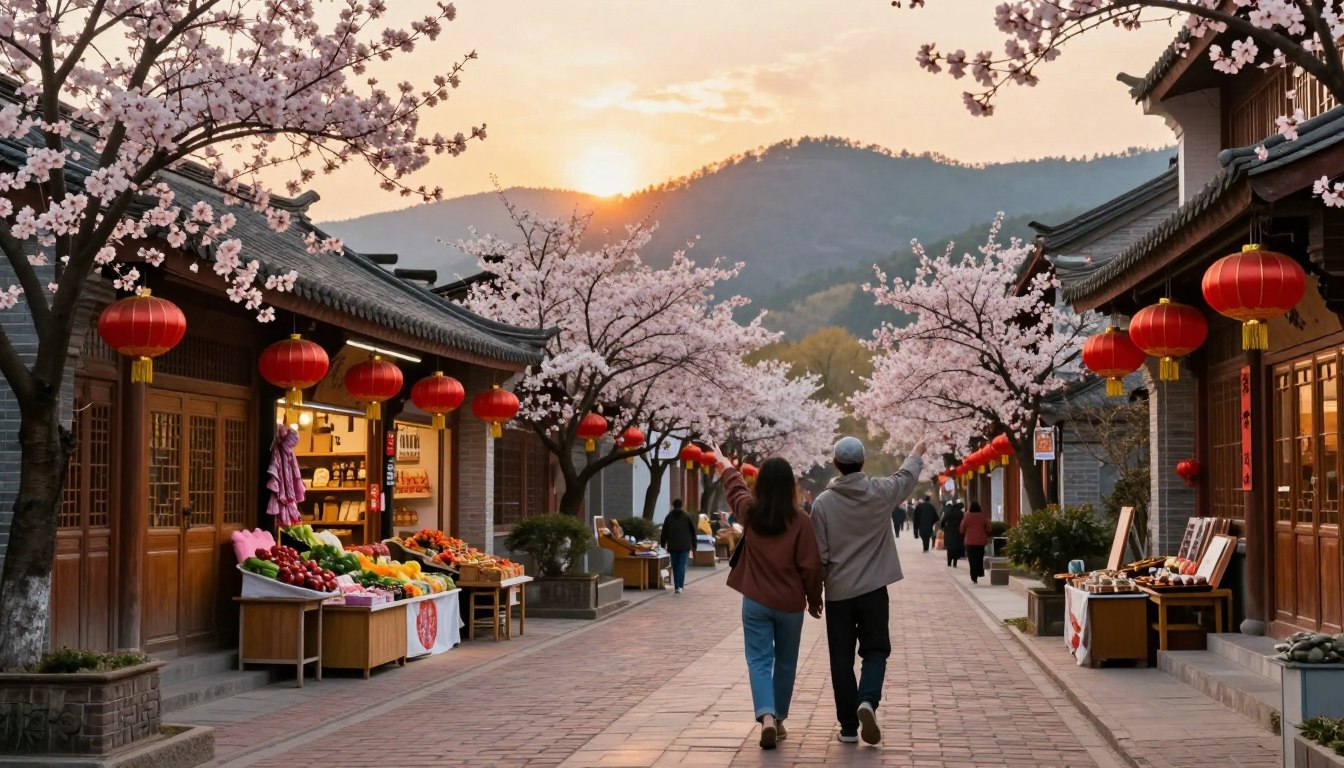
An invitation to your significant other’s family home is a major milestone. In Chinese culture, meeting the parents carries even greater weight than in the West. It’s a sign of serious commitment and an honor to be asked.
If their family lives in a rural village, be ready for a unique experience. You might encounter squat toilets and become the talk of the neighborhood. As a foreigner, you’ll likely stick out, especially in places with few international visitors.
This trip is about more than just a vacation. It’s a deep dive into your partner’s roots and family life. Understanding these cultural expectations beforehand is key to a respectful and successful journey.
Key Takeaways
- This journey represents a serious relationship milestone with significant cultural meaning.
- Meeting the family is a bigger deal in Chinese culture than in many Western contexts.
- Rural village visits come with distinct practical realities, like basic facilities.
- As a foreigner, you may receive a lot of attention from curious locals.
- Proper preparation across cultural and practical dimensions is essential.
- Each visit is unique, shaped by regional traditions and family dynamics.
- The invitation itself is an honor, indicating your partner’s serious intentions.
Exploring Cultural Expectations in Rural China
In many rural communities, a visit from a foreign suitor is interpreted as a formal courtship ritual. The family unit operates on deeply rooted traditions that can feel quite different from Western norms.
You will likely encounter a clear generational divide. Grandparents, who lived through earlier times, often hold very traditional views.
Understanding Family Traditions
There is intense pressure for women to get married before they are 25 years old. This stems from a long history where marriage secured stability.
Your partner’s parents may feel caught between modern ideas and older expectations. They often mediate between the younger generation and the grandparents.
This pressure explains why your trip carries significant weight. It’s seen as addressing years of family discussions about marriage prospects.
Encountering Local Customs and Behaviors
Local customs are often more conservative than in cities. Social interactions follow unwritten rules observed for generations.
In traditional culture, when a man visits a woman’s family, there is an unspoken assumption. It is seen as asking for permission and approval for marriage.
Young people today sometimes struggle to balance modern desires with these old expectations.
| Generation | Era | Key Mindset | View on Marriage |
|---|---|---|---|
| Grandparents | Mao Era | Traditional, focused on basics like food, housing, and family lineage. | Essential life milestone; a duty to the family. |
| Parents | Reform Era | More modern but still carry traditional pressures from their own parents. | Important, but may understand their children’s desire for choice. |
| Young People (20s-30s) | Modern China | Desire contemporary lifestyles but face intense family expectations. | Feel pressure to marry young, sometimes leading to creative solutions. |
Respecting these customs shows you value your partner’s roots. An open mind goes a long way in building a good impression.
Preparing for the Trip: Practical Advice and Tips
Your upcoming journey requires a different kind of packing list and mindset than a typical vacation. Start by researching the specific town or village. Use maps to gauge its remoteness.
Ask plenty of questions beforehand. Learn about local food specialties and family customs. This shows respect and helps you connect.
What to Pack and How to Dress
Pack for basic living conditions. Essentials include toiletries, any medications, and cash. ATMs can be scarce in a rural village.
Choose modest, comfortable clothing. This is a respectful way to dress and helps you blend in. Consider these items:
- Sturdy shoes for uneven paths
- Layers for changing weather
- A small gift from your home country

Navigating Local Amenities Like Bathrooms
Prepare for squat toilets. They are common in the countryside. Practicing the stance ahead of time can help a lot.
View this trip as part of a cultural exchange. Asking thoughtful questions demonstrates your genuine interest. Your preparation makes the entire experience smoother.
Visiting Partner Hometown China: The Family Experience
The moment you arrive, you become the focal point of an extended family gathering. Expect a warm but intense welcome from many relatives. You will shake hands and smile a lot.
Meeting all the family members is a big deal. It goes beyond just the parents. You’ll meet grandparents, aunts, uncles, and cousins. Showing respect to elders is crucial.
Gift customs are important. Be ready to present hong bao, red envelopes with money. What is expected can vary a lot. Some family units might hope for more substantial gifts.
Talk with your partner before the trip. Understand local traditions for the home region. This first time meeting sets a lasting impression. The person you are now will be discussed for a long time.
Meeting Relatives and Making a Good Impression
As a foreign man, you will be scrutinized. Your manners and treatment of your partner are watched. Follow your partner’s lead to navigate smoothly.
Financial expectations differ. Some family members have modest hopes. Others may see a foreign partner as financial security. Have an honest chat about money with your significant other.
Your behavior towards the parents and elder members is key. Address them properly and listen well. A good impression helps gain the family‘s support for your relationship.
Daily Life and Celebrations in a Rural Village
Celebrations in the countryside offer an authentic glimpse into traditions that urban areas have largely abandoned. Your daily routine will revolve around shared meals and festive rituals.
This immersive experience shows how family bonds are strengthened during special times.
Experiencing the Local Dining Culture
Be prepared to eat a lot. The dining table is the heart of the home during Chinese New Year.
You will encounter regional food you may have never tried. It is important to try everything offered. This shows respect for your hosts.
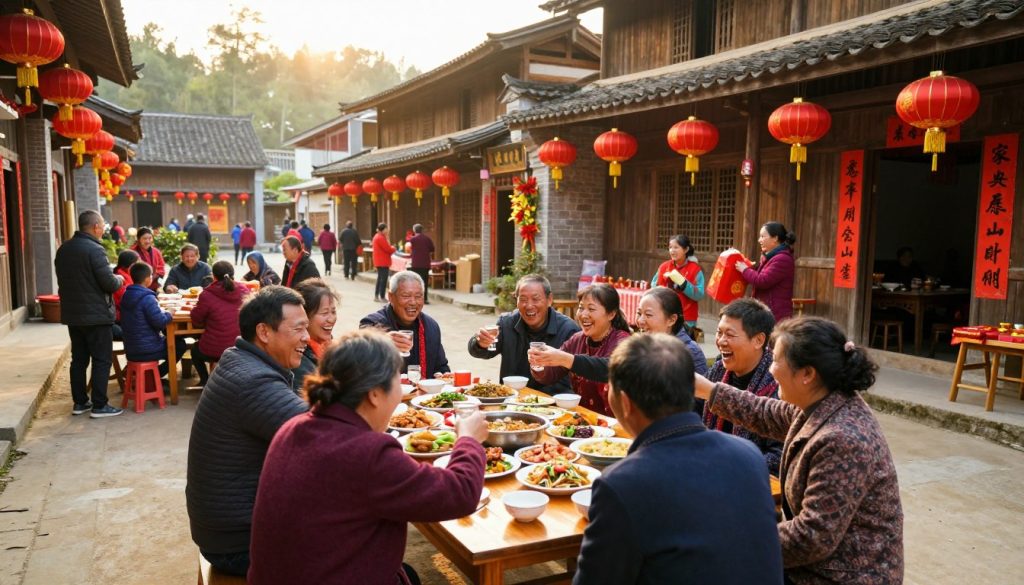
Multiple courses are served at each meal. Pace yourself across the many visits. You will spend time sitting for hours.
Toasts with strong baijiu are common. Your participation in these meals is closely watched.
Participating in Festive Traditions
The new year period is packed with customs. You might give red envelopes or light firecrackers.
Visiting temples and watching performances are common. Each region has its own unique practices.
For example, actor Aaron Kwok visits his wife’s hometown for Chinese New Year. He takes part in local traditions with his family.
Your presence during this time carries great meaning. It allows the family to see you in a meaningful context.
| Aspect | Rural Chinese New Year | Urban Celebration |
|---|---|---|
| Focus | Extended family gatherings, multi-day visits | Often shorter, nuclear family meals |
| Food Customs | Many homemade traditional dishes, eating at a lot of homes | More restaurant meals or simplified home cooking |
| Traditional Activities | Firecrackers, temple visits, ancestor worship | Shopping, watching TV galas, limited rituals |
| Social Pressure | High; bringing a date is a major statement | More relaxed, individual choice emphasized |
Bridging Language and Cultural Nuances
Effective communication during your stay relies less on vocabulary and more on cultural interpretation. You will face a dual challenge: the obvious language barrier and layers of unspoken meaning.
This is why many people find the way ideas are shared here indirect. Understanding requires seeing beyond words.
Overcoming Language Barriers
If family speaks only a local dialect, you depend completely on your significant other. They translate every chat and social hint.
Beat this limit with creativity. Use a translation app on your phone. Learn a few basic Mandarin greetings. Your smile and eager participation speak volumes.
Decoding Nonverbal Cues
Much is communicated through implication. Native speakers grasp this instinctively. You must learn to read the room.
Watch facial expressions and body language. Listen to the tone used. See how your partner reacts in different moments.
Keep in mind, a local Chinese person might struggle to explain why something matters. The culture and history are baked in too deep.
| Challenge | Verbal Strategy | Nonverbal Strategy |
|---|---|---|
| Language Gap | Use simple phrases & translation apps; ask your partner for help. | Smile warmly, nod, use respectful gestures; show you are trying. |
| Cultural Indirectness | Ask open-ended questions through your translator. | Observe reactions closely; mirror the group’s behavior. |
| Building Rapport | Express thanks and interest, even if translated. | Participate actively in meals and activities; offer help. |
Be patient. Your partner carries a heavy load as your bridge. Each part of the country has its own nuances, so learn the specific patterns for their region.
Balancing Modern and Traditional Lifestyles
Navigating the divide between China’s bustling metropolises and its tranquil countryside reveals a nation of profound contrasts. This vast country contains many different worlds within its borders.
Your significant other likely moves between these two realities. The modern city life and their ancestral village represent competing values.
Contrasts Between Urban and Rural Settings
Daily rhythms and priorities shift completely. A town in the countryside operates on community and tradition.
Urban centers focus on career and individual success. This gap has widened over the years.
| Aspect | Urban City Life | Rural Village Life |
|---|---|---|
| Pace & Priorities | Fast-paced, career-driven, individual achievement. | Slower, community-focused, agricultural cycles. |
| Cultural Values | Modern, international, open-minded. | Traditional, ancestral, conservative. |
| Expectations on Youth | More personal freedom and choice. | Strong family pressure to marry and uphold customs. |
Understanding this part of your partner’s journey is key. Their hometown experience shapes them in lasting ways.
Spending time there helps you see the whole person. It explains the blend of modern and traditional in their character.
Conclusion
Approaching this visit with genuine respect and preparation can transform a daunting test into a cherished family celebration. This journey is far more than a simple trip. It is a deep cultural immersion that tests your commitment and adaptability.
For those serious about their relationship, the experience can be overwhelmingly positive. Like the author, your significant other’s family may embrace you warmly. Their support can turn the visit into a joyful mission.
Keep in mind, this experience creates lasting impressions and obligations. The family and community will discuss your visit for years. If things don’t progress toward marriage, it can cause social harm.
Therefore, only accept the invitation if your intentions are clear. With proper preparation and an open heart, this unique journey can strengthen your bond. It offers irreplaceable insight into your partner’s roots and traditions.