
Have you ever tried to compliment someone in a foreign language and accidentally called them a garden tool? Finding love is already a significant challenge for most people in the United States. Adding a language barrier into the mix makes the entire experience much more chaotic and unpredictable.
We often hope that modern apps will bridge the gap between two different cultures. However, these digital tools frequently produce funny translations dating results that neither person expected. These unique moments become stories that friends will talk about for several years to come.
Misinterpreting a simple phrase can quickly turn a romantic dinner into a confusing event. These common translation fails usually occur when we ignore local slang or specific cultural nuances. You might think you are being charming while your partner is just trying to understand your actual meaning.
Shared laughter over these unexpected dating mishaps often creates a deeper bond between two people. Embracing the awkwardness allows you to navigate the world of international romance with a genuine smile. It is the humor found in the struggle that truly makes the journey worthwhile.
Key Takeaways
- Cultural context matters much more than a direct word-for-word interpretation.
- Digital tools often miss the emotional intent behind common romantic phrases.
- Awkward silences can easily be broken by finding humor in small errors.
- Learning local slang helps prevent major social misunderstandings during a night out.
- Patience is an essential tool when communicating with a partner from abroad.
- Every mistake is a great opportunity to build a unique and lasting story.
The Digital Cupid Dilemma
In the digital age, finding love knows no borders. The world has become a smaller, more interconnected place, where technology plays matchmaker on a global scale. The rise of online dating platforms and apps has made it possible for people from different countries and cultures to connect, communicate, and potentially fall in love.
The Rise of Global Dating
The internet has revolutionized the way we meet new people. With just a few clicks, we can now connect with potential partners from all over the world. This global dating phenomenon has opened up new avenues for people looking for love beyond their geographical boundaries.
Global dating has become increasingly popular, with many success stories making headlines. Couples from different cultural backgrounds are finding love and building lives together, thanks to the power of technology.
Why We Rely on Technology for Love
So, why do we rely so heavily on technology for love? The answer lies in its convenience and accessibility. Dating apps and websites provide a platform for people to connect with others who share similar interests and values. Translation apps, in particular, have made it possible for people who speak different languages to communicate effectively.
Here’s a look at how technology has impacted global dating:
| Aspect | Traditional Dating | Global Online Dating |
|---|---|---|
| Geographical Limitation | Limited to local area | Global reach |
| Language Barrier | Often a significant barrier | Mitigated by translation apps |
| Cultural Diversity | Limited exposure | Exposure to diverse cultures |
As we continue to navigate the complexities of love in the digital age, it’s clear that technology will remain a key player in the world of dating. By understanding the role of technology in global dating, we can better appreciate the opportunities and challenges it presents.
Why Translation Apps Struggle with Romance
Translation apps have become our go-to solution for bridging language gaps, but when it comes to romance, they often fall short. The primary challenge lies in the inherent complexity of romantic interactions, which involve a delicate dance of emotions, subtext, and cultural nuances.
Romance is not just about conveying literal meaning; it’s about evoking emotions and creating a connection. This is where translation apps, with their reliance on algorithms, often falter. The issue is two-fold, involving both the literal translation of words and the capture of emotional subtext.
The Literal Trap of Algorithms
Translation algorithms are designed to process language based on patterns and rules. While they are highly effective for straightforward communications, they can struggle with the idioms, colloquialisms, and figurative language that are common in romantic expressions. For instance, a phrase that is meant to be endearing or flirtatious might be translated literally, resulting in a confusing or even offensive message.
The literal trap of algorithms is a significant hurdle because it fails to account for the context in which a message is being communicated. A romantic phrase that is perfectly innocuous in one culture might be misconstrued in another due to differences in cultural norms and values.
Missing the Emotional Subtext
Beyond the literal meaning of words, romantic interactions are rich in emotional subtext. This subtext is crucial for understanding the true intent behind a message, whether it’s a gentle tease or a sincere declaration of love. However, translation apps often miss this subtext, focusing instead on the literal translation of the text.
The result can be a message that is devoid of the emotional nuance that makes it meaningful. For example, a phrase meant to be playful might be translated in a way that comes across as insensitive or off-putting. This not only hampers the communication of romantic intentions but can also lead to misunderstandings that might derail a budding relationship.
To overcome these challenges, it’s essential to understand the limitations of translation apps in the context of romance. By acknowledging these limitations, individuals can take steps to more effectively communicate their feelings across language barriers.
Funny Translations Dating Fails That Went Viral
Dating apps have made it easier to connect with people worldwide, but translation mistakes can turn romantic moments into comedy gold. The following stories highlight the humor and embarrassment that can result from such misunderstandings.
The Classic Restaurant Reservation Blunder
One of the most common translation fails occurs when making restaurant reservations. A couple trying to impress their date by booking a table at a fancy restaurant ended up reserving a table at a pet store instead of a bistro due to a mistranslation. The date was certainly memorable, but not exactly as they had planned!
When "I Love You" Becomes "I Like Your Shoes"
In another instance, a man’s attempt to express his love was hilariously mistranslated. Instead of saying “I love you,” his translation app said “I like your shoes.” The recipient was understandably confused, and the conversation quickly turned into a comedic exchange about footwear rather than romance.
- A French suitor accidentally declared “Je t’aime” as “I love your cat.”
- A Spanish speaker turned “Te quiero” into “I want you to eat.”
The Misunderstood Gift Exchange
Gift-giving is a significant aspect of many cultures, especially during dates. However, a simple gift can become a source of embarrassment due to translation fails. For example, a man trying to gift flowers to his date ended up giving her a bouquet of weeds instead of roses due to a mistranslation. The gesture was appreciated, but the intention was lost in translation.
These stories of funny translation fails and viral dating fails serve as a reminder of the importance of understanding the nuances of language in the digital age of dating. While translation mistakes can lead to humorous moments, they also highlight the need for more accurate and culturally sensitive translation tools.
When Compliments Turn Into Insults
Language barriers can turn even the most well-intentioned compliments into insults. This phenomenon highlights the complexities of cross-cultural communication, where the nuances of language and cultural differences play a significant role.
The way we express admiration or appreciation can be deeply rooted in our cultural background and language. When these expressions are translated or interpreted out of context, they can lead to misunderstandings.
Adjective Confusion in Foreign Languages
Adjectives are a crucial part of language, used to describe and compliment others. However, their meanings can shift significantly when translated. For instance, the adjective “cheap” can be perceived as a negative trait in many cultures, implying low quality. Yet, in some contexts, it might simply mean affordable.
Understanding the connotations of adjectives in different languages is essential to avoid unintended offense. A compliment that is meant to be flattering can quickly turn into an insult if the adjective used has a different connotation in the recipient’s culture.
| Adjective | Intended Meaning | Potential Misinterpretation |
|---|---|---|
| Cheap | Affordable | Low quality |
| Direct | Straightforward | Rude or insensitive |
| Assertive | Confident | Aggressive |
The Fine Line Between Flattery and Offense
The line between giving a compliment and causing offense is thin and can be easily crossed, especially when cultural differences are not considered. What is considered flattering in one culture might be seen as derogatory in another.
Awareness of cultural nuances is key to avoiding misunderstandings. Being mindful of the language and expressions used can help in navigating complex social interactions, especially in multicultural settings.
In conclusion, the potential for compliments to be misinterpreted as insults due to language barriers is a significant challenge in cross-cultural communication. By understanding the nuances of language and being aware of cultural differences, we can mitigate the risk of unintended offense and foster more harmonious interactions.
The Perils of Idioms and Cultural Nuance
Idioms and cultural nuances can be a minefield in translation, often leading to humorous misunderstandings. When communicating across languages, it’s not just the words that matter, but also the cultural context and idiomatic expressions that can be easily misinterpreted.
Idiomatic language is a vital part of our everyday communication, adding flavor and interest to our conversations. However, when it comes to translation, idioms can be a significant challenge. The meaning of an idiom is often not literal, making it difficult for translation algorithms to understand and convey the intended meaning accurately.
Why "Break a Leg" Doesn't Work in Every Language
The idiom “break a leg” is a well-known expression used to wish someone good luck, particularly in the context of performing arts. However, when translated literally, it can be confusing or even alarming. For instance, in some cultures, “break a leg” might be interpreted as a curse or a negative omen. This highlights the importance of understanding the cultural context behind idiomatic expressions.
In many languages, there are equivalent idioms that convey the same meaning as “break a leg.” For example, in Spanish, “mucha mierda” is used similarly to wish someone good luck. However, literal translations can lead to misunderstandings, emphasizing the need for cultural awareness in communication.
Navigating Sarcasm Across Borders
Sarcasm is another aspect of language that can be tricky to translate. It involves saying something but meaning the opposite, often to be ironic or mocking. Sarcasm relies heavily on the tone of voice, facial expressions, and cultural context, making it challenging to convey accurately in a different language.
When sarcasm is lost in translation, it can lead to confusion or misinterpretation. For example, a sarcastic comment might be taken literally, leading to unintended offense or misunderstanding. Being aware of these potential pitfalls can help in navigating cross-cultural interactions more effectively.
Understanding and navigating the complexities of idioms and cultural nuances is crucial in today’s globalized world. By being mindful of these challenges, we can improve our communication across languages and cultures, avoiding misunderstandings and fostering more meaningful connections.
Awkward First Date Conversations Gone Wrong
Navigating a first date is tricky, but add a language barrier to the mix, and it can become a comedy of errors. The excitement and nervousness of meeting someone new can be compounded by the struggle to communicate effectively, leading to some truly awkward moments.
First dates are supposed to be enjoyable, getting to know each other over a nice meal or a fun activity. However, when there’s a language barrier, even the simplest conversations can become challenging. Let’s explore some of the common pitfalls, such as the language barrier at the dinner table and misunderstanding dietary preferences.
The Language Barrier at the Dinner Table
Dinner dates are a classic, but they can quickly go awry if you can’t communicate. Imagine trying to order food, discuss your day, or share your interests, all while struggling to find the right words. The conversation can feel forced, and the silence that follows a misinterpreted phrase can be deafening.
For instance, a simple question like “How was your day?” can become a tongue-twister when translated literally, leading to confusion. The other person might respond with a puzzled look, and the conversation stalls. Using translation apps can help, but they aren’t foolproof and can sometimes lead to more confusion.

Misunderstanding Dietary Preferences
Misunderstanding dietary preferences is another common issue on a first date with a language barrier. You might intend to be polite by asking your date about their eating habits, but end up causing offense or confusion instead.
For example, asking “Do you eat meat?” might be translated in a way that sounds rude or too personal. Your date might respond hesitantly, not understanding the question or misinterpreting your intentions. This can lead to an awkward meal where you’re not sure what your date is comfortable eating.
- Be clear and simple with your questions.
- Use gestures or visual aids if necessary.
- Don’t be afraid to laugh and clarify any misunderstandings.
By being mindful of these potential pitfalls, you can navigate the challenges of a first date with a language barrier and still have a enjoyable time getting to know someone new.
Misinterpreting Intentions Through Auto-Correct
In the age of digital communication, auto-correct has become both a blessing and a curse, especially when it comes to dating. While it’s designed to simplify our interactions, it often leads to misinterpretations that can be embarrassing or worse, ruin a budding relationship.
As highlighted by a popular saying,
“The devil is in the details.”
In the context of auto-correct, this couldn’t be more true. A simple misplaced or misinterpreted word can change the entire tone of a message.
The Unintended Suggestive Text
One of the most common issues with auto-correct is the unintended suggestive text. What was meant to be a harmless message can quickly turn into something entirely different. For instance, a simple “good night” can become something much more risqué due to a misplaced correction.
Such instances not only cause embarrassment but can also lead to misunderstandings about one’s intentions. As auto-correct fails make headlines, it’s clear that this is a widespread issue affecting many.
When Predictive Text Ruins the Mood
Predictive text, while helpful in speeding up our typing, can also be a source of frustration. It often results in misinterpreted texts that can alter the intended meaning of a message. A well-meaning compliment can turn into an insult, or a casual hello can become a flirtatious advance, all due to the predictive text issues.
The key to avoiding these mishaps is being aware of the potential pitfalls of auto-correct and predictive text. By being mindful of the words we type and the corrections our devices suggest, we can mitigate the risk of misinterpreted texts.
As we navigate the complexities of digital communication, it’s essential to strike a balance between leveraging technology for convenience and ensuring that our messages are conveyed as intended.
Real-Life Stories of Lost in Translation
From accidental proposals to misinterpreted compliments, lost in translation stories reveal the intricacies and pitfalls of cross-cultural interactions.
These stories not only entertain but also serve as cautionary tales about the importance of clear communication in our increasingly globalized world.
The Traveler Who Accidentally Proposed
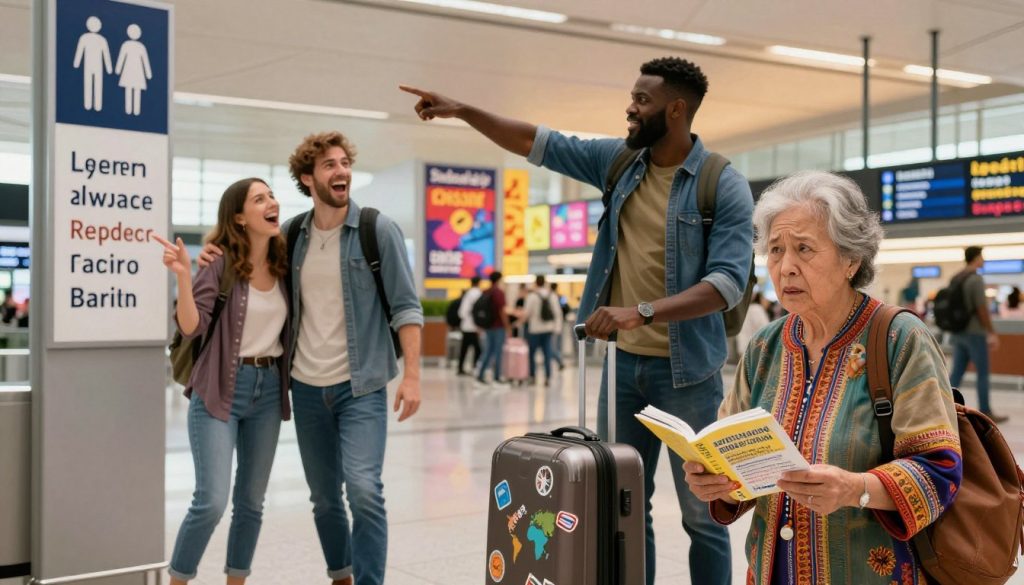
A traveler once found himself in an awkward situation when, trying to ask for directions, he accidentally proposed to a local due to a misused phrase. This humorous incident highlights the potential consequences of relying on translation apps without understanding the nuances of the local language.
The phrase “Where is the restroom?” was somehow translated into a marriage proposal, leaving both parties stunned. Such lost in translation stories remind us of the importance of learning key phrases in the local language.
The Misunderstood "I Am Hungry" Incident
In another instance, a tourist’s simple statement “I am hungry” was translated into something entirely different, leading to an uncomfortable misunderstanding. Instead of expressing hunger, the translation implied something more suggestive, causing embarrassment for both the speaker and the listener.
Such incidents underscore the need for accurate translation tools and a basic understanding of the local language to avoid cultural clashes.
Cultural Clashes in Romantic Gestures
Romantic gestures can be particularly susceptible to misinterpretation across cultures. For example, a gesture considered romantic in one culture might be seen as insensitive or inappropriate in another.
| Gesture | Culture of Origin | Potential Misinterpretation |
|---|---|---|
| Giving a bouquet of red roses | Western cultures | In some cultures, red roses may symbolize a different message or be seen as overly extravagant. |
| Writing love letters | Various | May be seen as old-fashioned or overly sentimental in cultures that prefer more direct forms of communication. |
| Public displays of affection | Western cultures | Can be frowned upon or even illegal in more conservative cultures. |
Understanding these cultural nuances is crucial for avoiding misunderstandings and ensuring that romantic gestures are received as intended.
How to Avoid Digital Heartbreak
Digital heartbreak can be avoided by adopting a few simple strategies for clearer communication. In the realm of online dating, where language barriers often pose significant challenges, being mindful of how we communicate can make all the difference.
Tips for Using Translation Tools Wisely
Translation tools can be incredibly helpful, but they are not foolproof. To use them effectively, it’s essential to understand their limitations. For instance, idioms and colloquialisms often don’t translate well, leading to misunderstandings.
Be cautious with idiomatic expressions and try to use simple, clear language when communicating with someone who speaks a different language. Additionally, double-check translations, especially for important messages, to ensure they convey the intended meaning.
| Tips | Benefits |
|---|---|
| Use simple language | Reduces misunderstandings |
| Double-check translations | Ensures accuracy |
| Avoid idioms and colloquialisms | Prevents misinterpretation |
The Importance of Learning Basic Phrases
Learning a few basic phrases in your partner’s language can go a long way in showing respect and interest in their culture. It can also help avoid embarrassing situations where a miscommunication could lead to unintended offense.
Key phrases to learn include greetings, expressions of gratitude, and basic questions like “How are you?” or “What is your name?” These phrases can be learned through language learning apps or by asking your partner to teach you.
When to Put the Phone Down and Use Body Language
While digital communication is convenient, there are times when it’s better to put the phone down and rely on non-verbal cues. Body language, facial expressions, and tone of voice can convey emotions more effectively than text.
When meeting in person, be mindful of your body language and pay attention to your partner’s non-verbal signals. This can help prevent misunderstandings and foster a deeper connection.
Conclusion
Navigating love across languages can be a minefield of misunderstandings, but it’s also a source of humor and memorable moments. The world of funny translations dating fails is filled with anecdotes that can make us laugh and cringe at the same time.
From literal translations that lose the emotional subtext to auto-correct mishaps that change the tone of a message, there’s no shortage of ways for technology to complicate our romantic endeavors. Yet, it’s in these moments of cultural and linguistic confusion that we find opportunities for growth and laughter.
By learning from these mistakes and being mindful of the limitations of translation tools, we can better navigate the complexities of cross-cultural communication. So, the next time you’re swiping through profiles or messaging a potential match, remember that a little humor and humility can go a long way in turning a potentially awkward encounter into a funny translations dating story to tell.